

ANCIENT GRAIN WISDOM
Buy Sprouted Flour Online India
Grains sprouted, gently dried and cold-milled in Mysuru — for softer rotis and a milder, naturally sweet taste.
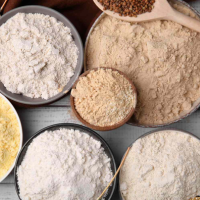
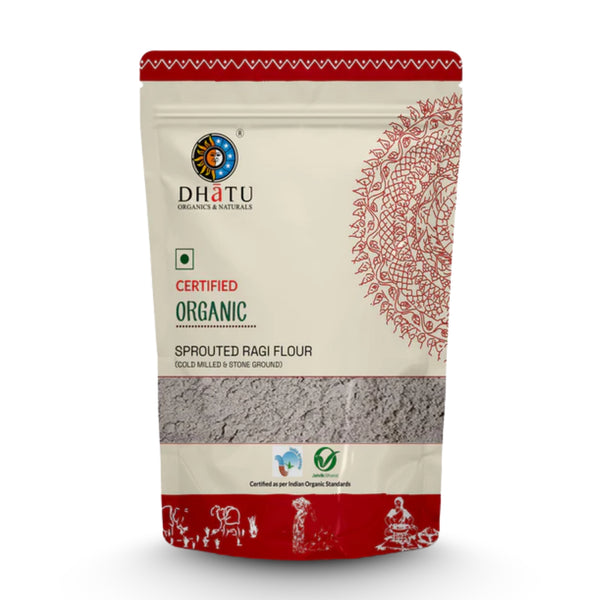
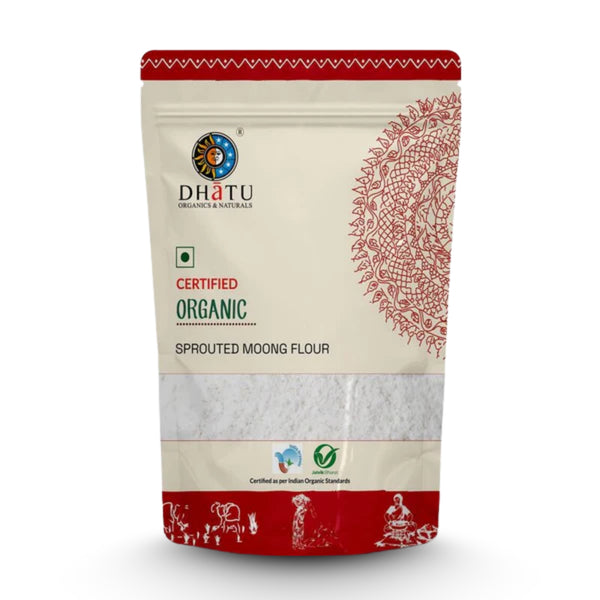
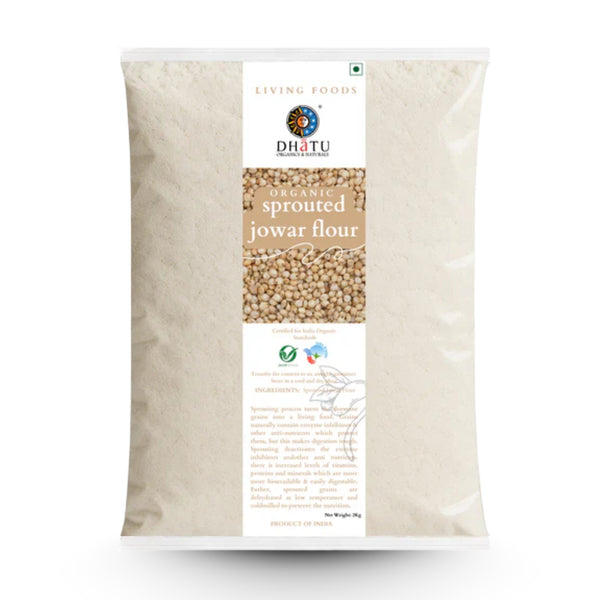
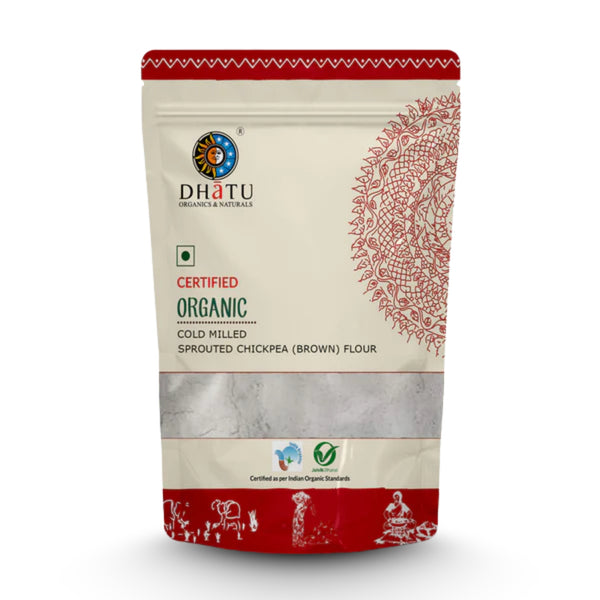
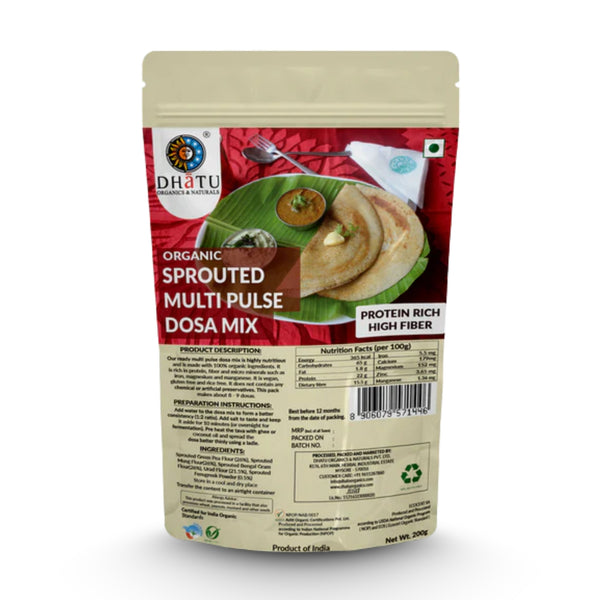
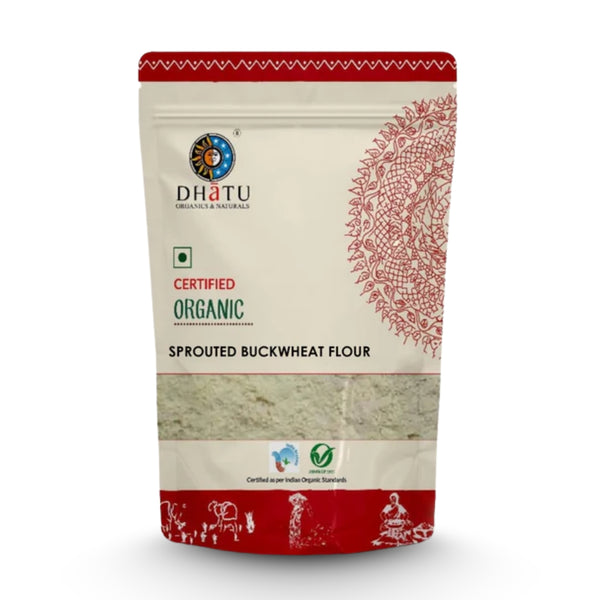


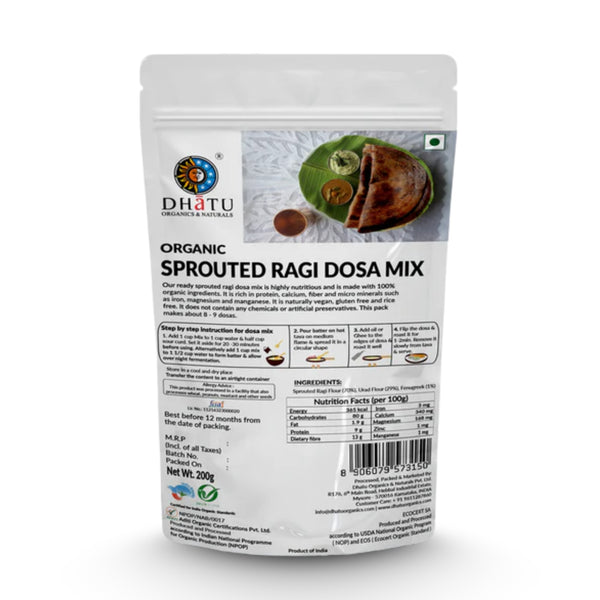
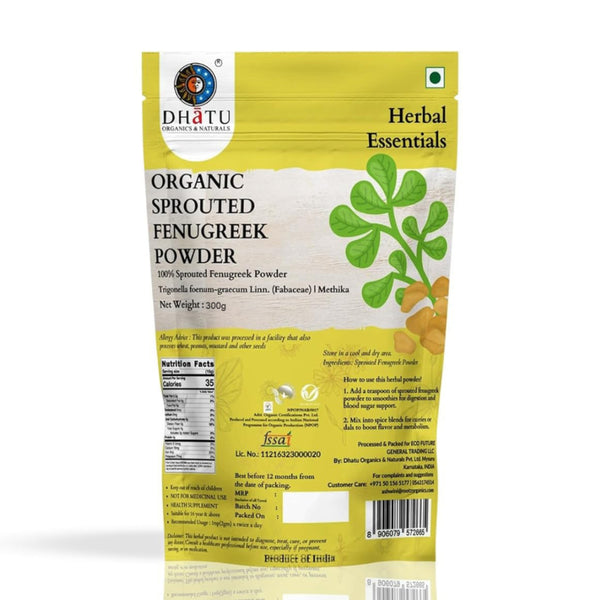
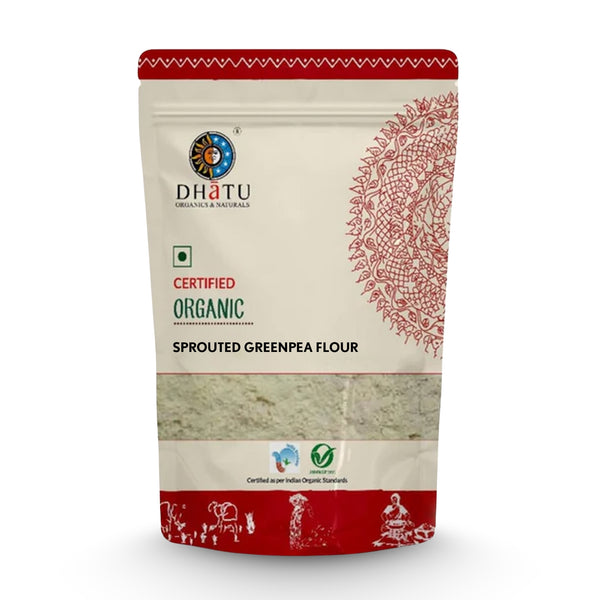

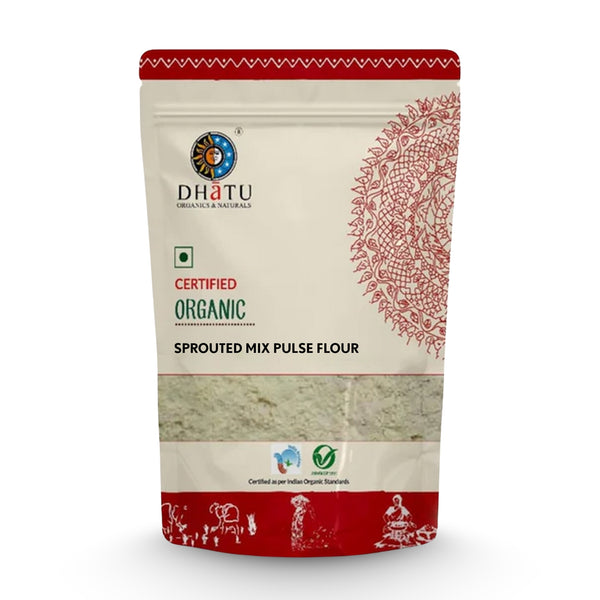


Organic sprouted flours from Dhatu Organics, Mysuru: ragi, wheat, jowar, bajra, buckwheat and pulse flours. The grains are sprouted, gently dried and cold-milled in small batches. Making sprouted flours since 2012, with free delivery across India on orders above ₹749.
Sprouted flour: quick facts
- What it is: whole grains or pulses soaked until they just begin to sprout, then dried at low temperature and cold-milled.
- Our range: ragi, wheat, jowar, bajra, buckwheat and pulse flours.
- Made by: Dhatu Organics in Mysuru, Karnataka, making sprouted flours since 2012.
- Most popular: Sprouted Ragi Flour (nachni satva), in packs from 500g to 5kg.
- Delivery: across India, free on orders above ₹749.
What is sprouted flour?
Sprouted flour is made from whole grains or pulses that are soaked in water until they just begin to germinate, then dried and milled. Sprouting is how traditional kitchens across India prepared ragi, moong and wheat for generations. It reduces phytic acid (a natural compound in grains that binds minerals) and wakes up the grain's own enzymes. Many families find sprouted flours give softer rotis and a milder, slightly sweeter taste. We dry the sprouted grain at low temperature and cold-mill it, so the flour isn't exposed to high heat.
Our sprouted flour range
- Sprouted Ragi Flour (nachni satva): our most-loved flour, with 364mg calcium per 100g. Use it for ragi mudde, rotis, dosa and porridge. Available in 500g, 1kg, 2kg and 5kg packs.
- Sprouted Wheat Flour: an everyday atta for soft chapatis and parathas. Available in 500g, 1kg, 2kg and 5kg packs.
- Sprouted Jowar Flour and Sprouted Bajra Flour: naturally gluten-free millet flours for bhakri and rotis.
- Sprouted Buckwheat Flour (kuttu): gluten-free, with all nine essential amino acids, and a favourite during Navratri fasting.
- Sprouted pulse flours (moong, brown chickpea, green pea and mixed pulse): for cheela, dosa, pakoras and protein-rich baking.
- Ready mixes: Ragi Sprouted Porridge Mix, Sprouted Ragi Dosa Mix and Sprouted Multi Millet Malt.
Buying for the whole family? Our 4kg combo packs (Ragi and Wheat, Jowar and Bajra) are the best value.
Frequently asked questions
Is sprouted flour better than regular flour?
Sprouting changes the grain before it is milled: phytic acid goes down and natural enzymes become active. Many people find sprouted flour lighter and easier to cook with. It is used exactly like regular flour, just with a softer dough and a milder taste.
Can I use sprouted flour to make rotis?
Yes. Use sprouted wheat, jowar or bajra flour just like your usual atta. Sprouted flours absorb a little less water, so add it slowly while kneading.
Is sprouted ragi flour suitable for babies?
Our Ragi Sprouted Porridge Mix is made for little ones starting solids, with no added sugar or additives. Please check with your paediatrician before introducing any new food.
How should I store sprouted flour?
Transfer it to an airtight container and keep it in a cool, dry place, or in the fridge in humid weather. Use it within the best-before date on the pack.
Also explore sprouted millet flours, whole organic millets and our complete ragi range.