

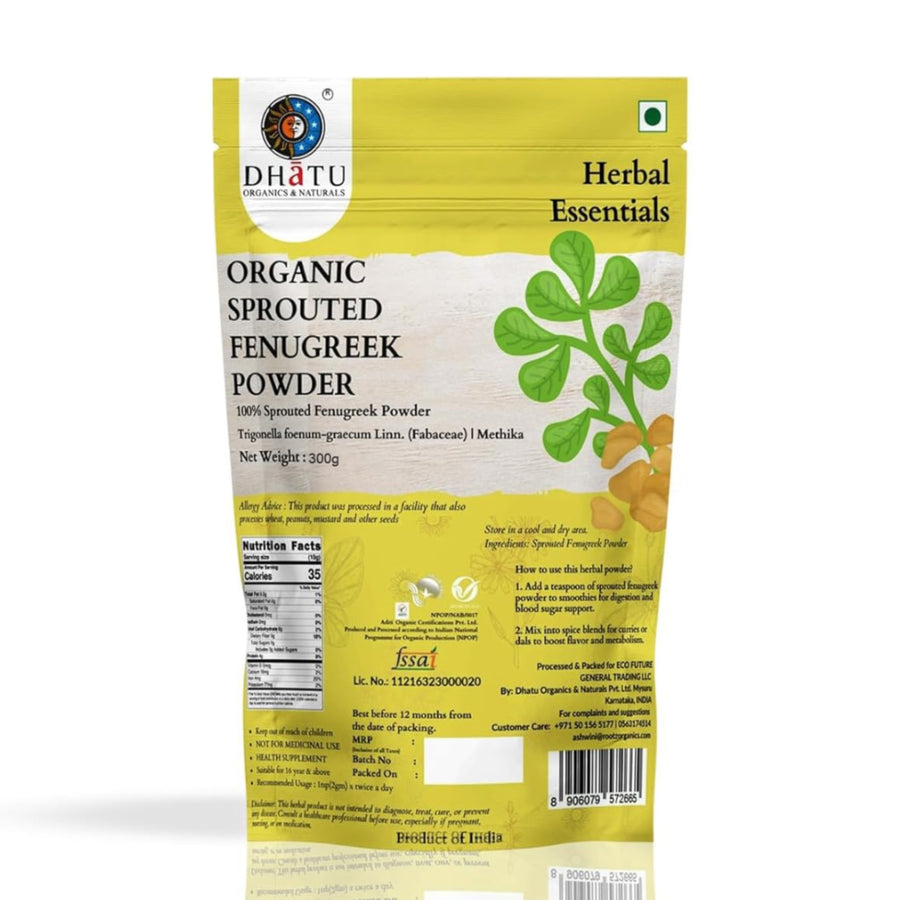
Organic Sprouted Fenugreek Powder 100g
₹ 150.00
Dhatu Organics Organic Sprouted Fenugreek Powder is made from certified organic fenugreek seeds that are first sprouted - germinated for 24-48 hours - before being dried and m... Read more ↓
100% Organic
No Additives
Free Delivery ₹749+
Organic Sprouted Fenugreek Seed Powder (Trigonella foenum-graecum)
Nutrition Facts
| Nutrient | Per serving | Per 100g | % RDA* |
|---|---|---|---|
| Energy | 16.2 kcal | 323 kcal | <1% |
| Protein | 1.15 g | 23.0 g | 2.3% |
| Carbohydrates | 2.9 g | 58.3 g | <1% |
| of which Sugars | ~0 g | ~0 g | |
| Dietary Fibre (soluble) | 1.23 g | 24.6 g | 4.1% |
| Total Fat | 0.32 g | 6.4 g | <1% |
| Iron | 1.68 mg | 33.5 mg | 9.9% |
| Calcium | 8.8 mg | 176 mg | <1% |
| Magnesium | 9.55 mg | 191 mg | 2.4% |
| 4-Hydroxyisoleucine | ~25 mg | ~0.5% |
* % RDA based on a 2000 kcal reference diet (FSSAI). Values are approximate and may vary by batch.
We deliver across India within 3–5 business days via trusted logistics partners.
- Free delivery on orders above ₹749.
- Orders dispatched within 1 business day of payment confirmation.
- Perishable goods cannot be returned once dispatched. Non-perishable items may be returned within 7 days in original, unopened condition.
- For damaged or incorrect items, contact info@dhatuorganics.com within 48 hours of delivery.
Choose Your Pack
Dhatu Organics Organic Sprouted Fenugreek Powder is made from certified organic fenugreek seeds that are first sprouted - germinated for 24-48 hours - before being dried and milled. Sprouting activates enzymes that break down phytic acid (the antinutrient that blocks mineral absorption), reduces bitterness, and significantly increases the bioavailability of proteins, iron, and soluble fibre. The result is a gentler, more nutritious form of fenugreek without the harsh bitterness of raw seed powder.
Why Sprouting Matters for Fenugreek: Raw fenugreek seeds contain high levels of phytic acid that bind to iron and zinc, preventing absorption. Sprouting reduces phytate content by 30-50%, unlocking the seed's full iron (33.5 mg/100g), zinc, and protein content - making this powder genuinely more nutritious than conventional fenugreek powder.
Ingredients
Organic Sprouted Fenugreek Seed Powder (Trigonella foenum-graecum)
100% sprouted seed. No raw fenugreek filler. No preservatives. Organically grown without pesticides or synthetic fertilisers.
Certified Organic Non-GMO Gluten-Free Vegan
Nutrition Facts
Per 100g / Per 5g serving (1 tsp)
| Nutrient | Per 100g | Per 5g |
|---|---|---|
| Energy | 323 kcal | 16.2 kcal |
| Protein | 23.0 g | 1.15 g |
| Carbohydrates | 58.3 g | 2.9 g |
| Total Fat | 6.4 g | 0.32 g |
| Dietary Fibre (soluble) | 24.6 g | 1.23 g |
| Iron | 33.5 mg | 1.68 mg |
| Calcium | 176 mg | 8.8 mg |
| Magnesium | 191 mg | 9.55 mg |
| 4-Hydroxyisoleucine | ~0.5% | ~25 mg |
Values approximate. Source: USDA FoodData Central / sprouted fenugreek literature.
Key Nutritional Highlights
- Rich in Fibre: fenugreek is naturally high in soluble fibre (about 24.6g per 100g), mainly galactomannan, which gives soaked methi its slippery texture.
- Traditional Postpartum Herb: In Indian culinary tradition, fenugreek has long been included in postpartum preparations - particularly in fenugreek ladoos made with ghee, jaggery, gond (edible gum), and nuts - a nourishing, time-honoured recipe.
- Phytonutrients for Active Lifestyles: Fenugreek contains furostanol saponins and the unique amino acid 4-hydroxyisoleucine. Research in exercising adults has shown positive associations with physical performance and body composition.[2]
- Excellent Plant Protein Source: At 23g protein per 100g, sprouted fenugreek provides all essential amino acids - an outstanding contribution for plant-based diets.
- Contains Iron: about 33.5mg iron per 100g. Sprouting is a traditional step that reduces phytic acid.
How to Use
- Warm Water or Juice: Mix 1 tsp (5g) in 200 ml warm water or juice daily, ideally 30 minutes before meals.
- Smoothie: Blend with banana, dates, and almond milk.
- Dosa or Roti Dough: Add 1-2 tsp to dosa batter or wheat roti dough for added protein and fibre.
- Postpartum Ladoo: Combine with ghee, jaggery, gond (edible gum), and nuts for traditional fenugreek ladoos.
- Face and Hair Pack: Mix with yogurt and honey for a moisturising face mask.
Suggested daily use: 1-2 tsp (5-10g) per day. Drink extra water as fibre intake increases.
Frequently Asked Questions
Is sprouted fenugreek less bitter than regular fenugreek?
Significantly less. Much of the bitterness in fenugreek comes from alkaloids in the seed coat, which are reduced during sprouting. The flavour is still recognisably fenugreek - warm and slightly maple-like - but the harsh bitterness is substantially reduced.
Does fenugreek affect the smell of sweat?
Yes - this is well-known and harmless. Fenugreek contains sotolone, a compound that imparts a maple syrup-like aroma to sweat and urine at higher doses. This is a natural characteristic of the herb and not a cause for concern.
Explore More from Dhatu Organics
- Dhatu Sprouted Flours - using the same sprouting philosophy applied to ancient grains
- Shatavari Powder - another traditional wellness herb
- All Health Supplements