OUR COLLECTION

Salt

Most table salt you buy today is heavily processed — stripped of natural minerals, bleached white, and loaded with anti-caking chemicals. Dhatu Organics brings you a curated range of natural, unref...

4 Products Certified Organic
S

4 products

Most table salt you buy today is heavily processed — stripped of natural minerals, bleached white, and loaded with anti-caking chemicals. Dhatu Organics brings you a curated range of natural, unrefined salts that retain their full mineral profile exactly as nature intended.

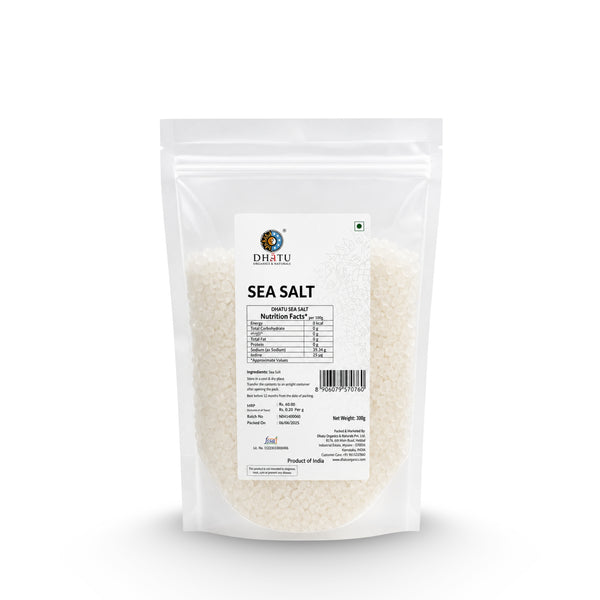
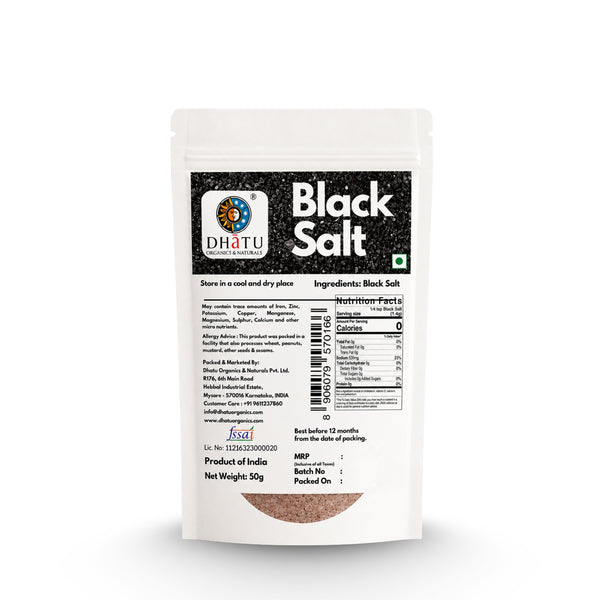
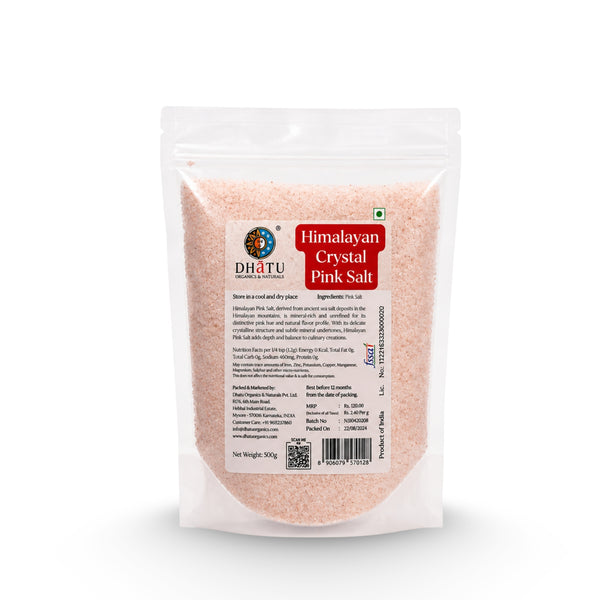
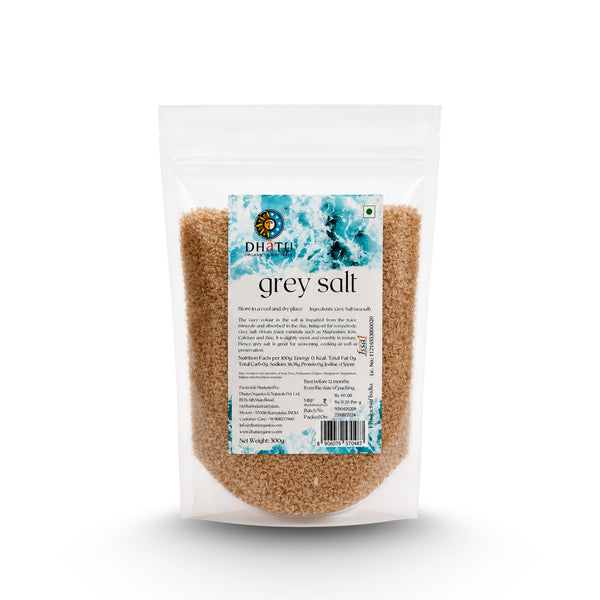
Our salt collection spans four distinct types: white sea salt, grey sea salt, Himalayan crystal pink salt (sendha namak), and black salt (kala namak). Each is sourced and minimally processed — no bleaching, no anti-caking agents (no sodium ferrocyanide, no aluminosilicates), no artificial iodination.

Why Switch to Natural Unrefined Salt?

  • Trace minerals preserved — Natural salts retain magnesium, calcium, potassium, iron, and dozens of other trace elements that refining removes completely.
  • No synthetic additives — Commercial table salt adds anti-caking agents (E535, E536, E554) and sometimes dextrose as a stabiliser. Our salts contain nothing artificial.
  • Better electrolyte balance — The natural mineral spectrum — especially potassium and magnesium — supports hydration more effectively than pure sodium chloride alone.
  • Authentic, complex flavour — Grey sea salt has a briny, earthy richness; Himalayan pink has a clean mild taste; black salt (kala namak) brings an irreplaceable sulphurous tang to chaats, raitas, and jaljeera.
  • Safe for fermentation and pickling — Free from anti-caking agents that can inhibit lacto-fermentation bacteria.

Our Salts at a Glance

  • White Sea Salt (500g | 1 Kg) — Naturally evaporated seawater salt. Clean, pure, fine-grain. Ideal for everyday cooking, baking, and pickling. ₹60 / ₹120.
  • Grey Sea Salt (500g) — Hand-harvested from mineral-rich clay-lined salt pans. Exceptionally high in magnesium (~380 mg/100g). Best as a finishing salt. ₹80.
  • Himalayan Crystal Pink Salt (500g) — Mined from 500-million-year-old Khewra deposits. Contains 84 naturally occurring trace minerals. The only salt permitted during Hindu religious fasts (vrat) — known as sendha namak. ₹120.
  • Black Salt — Kala Namak (50g) — Volcanic mineral salt with a distinctive sulphurous, egg-like aroma from iron sulfide and sodium sulfate. Essential in chaat masala, pani puri, and vegan egg recipes. ₹40.

Frequently Asked Questions

Is natural salt better than regular iodised table salt?

Iodised table salt is heavily refined — stripped of all minerals except sodium chloride, then re-supplemented with synthetic potassium iodide and anti-caking chemicals. Natural unrefined salts retain their full trace mineral profile. If your diet is varied and includes iodine-rich foods (dairy, eggs, seafood, and green vegetables), natural salt is the healthier all-round choice. If you are at risk of iodine deficiency, consult a nutritionist before switching entirely.

What is sendha namak — is it the same as Himalayan pink salt?

Yes. Sendha namak is the Hindi name for rock salt, and in most Indian contexts it refers specifically to Himalayan crystal pink salt from the Khewra mines. It is the salt described in Ayurveda as the purest and most sattvic form, and the only salt traditionally permitted during Hindu religious fasts — Navratri, Ekadashi, Maha Shivratri, and others. Its clean mild taste and rich mineral content also make it the preferred everyday choice for health-conscious households.

What is kala namak (black salt) and what are its uses?

Kala namak is a pinkish-grey sulphurous mineral rock salt, traditionally processed in a kiln with harad seeds (Terminalia chebula). Its signature sulphurous, egg-like aroma comes from hydrogen sulfide, iron sulfide, and sodium sulfate compounds formed during kiln-firing. In Indian cuisine it is irreplaceable in chaat masala, pani puri water, raita, jaljeera, and chaas. It is also widely used in vegan cooking to mimic egg flavour in scrambled tofu and chickpea omelettes. In Ayurveda it is valued as a digestive and carminative agent.

How is grey sea salt different from white sea salt?

Grey sea salt is harvested from clay-lined tidal salt pans without washing or heat processing, which preserves residual moisture and a far richer mineral payload — roughly 10× more magnesium and 5× more calcium than white sea salt. White sea salt is processed after harvesting (washed and dried), resulting in a drier, free-flowing grain. Grey sea salt is better as a finishing salt and for fermentation; white sea salt is more practical for baking and everyday measured cooking.

Do your salts contain anti-caking agents?

No. All Dhatu Organics salts are completely free from anti-caking agents. Commercial table salt typically adds sodium aluminosilicate (E554), sodium ferrocyanide (E535/E536), or silicon dioxide to prevent clumping. Our salts may clump slightly in humid conditions — that is a sign of purity, not a defect. Store in an airtight container away from moisture.

Which salt is best for people managing blood pressure?

All salts require moderation when managing hypertension — the total sodium intake from all sources is what matters. Among unrefined salts, Himalayan pink salt and grey sea salt carry a broader mineral profile including potassium and magnesium, which help moderate sodium's impact on blood pressure. Grey sea salt has a lower sodium concentration per 100g than refined salt (~33,000mg vs ~38,000mg), so you may naturally use slightly less. Always follow your physician's sodium guidelines.

How should I store natural salt and does it expire?

Natural salts are highly hygroscopic and will clump if exposed to moisture. Store in an airtight glass or ceramic container, away from the stove and humidity. Salt itself is a natural preservative and does not expire — the 'best before' date on our packaging is a regulatory requirement. When stored correctly, natural salt lasts indefinitely. If it clumps, simply crush the crystals before use — the taste and nutrition are unaffected.