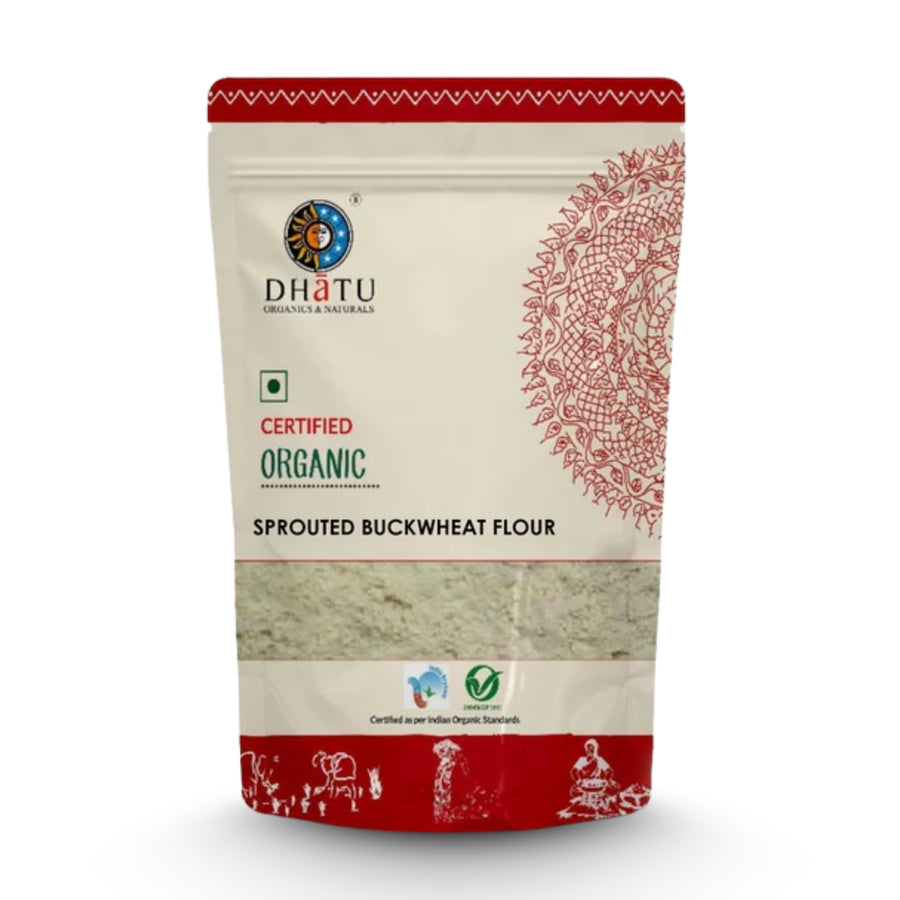
Buckwheat is not wheat — it is a flowering seed, completely unrelated to the grass family, and naturally free of gluten. Sprouting unlocks rutin and quercetin — two of the most potent naturally occurring antioxidants found in any grain flour.
What is Buckwheat?
Despite the name, buckwheat (kuttu) contains no wheat and no gluten. It is the seed of a flowering plant related to rhubarb and sorrel, making it a pseudo-grain — grain-like in use but botanically a seed. This means it is naturally gluten-free. It is also one of the few plant foods containing all 9 essential amino acids, making it a complete protein source. Sprouting is a traditional step that reduces antinutrients such as phytic acid and gives the flour a milder flavour.
Key Benefits
- Naturally gluten-free: buckwheat is a seed, not a wheat
-
High in rutin — a powerful flavonoid antioxidant that supports healthy blood vessels
- 231mg magnesium per 100g
-
Complete protein — contains all 9 essential amino acids, rare for a plant food
-
10g dietary fibre — feeds beneficial gut bacteria and supports digestive health
-
Rich in quercetin — a naturally occurring plant antioxidant
How to Use
- Use in gluten-free pancakes, crepes (galettes), and waffles
- Traditionally used for kuttu ki roti and pakoras during Navratri fasting
- Use in gluten-free pasta, noodles, and flatbreads
- Add to muffins, banana bread, and brownies (combine with other GF flours for best texture)
- Use as a thickener in gluten-free gravies and soups
- Make savoury galettes topped with vegetables and cheese
Frequently Asked Questions
Is buckwheat actually wheat?
No. Despite the name, buckwheat is botanically unrelated to wheat. It is the seed of Fagopyrum esculentum, a flowering plant in the family Polygonaceae — the same family as rhubarb. It contains no gluten. If you have coeliac disease or a wheat allergy, please contact us about how it is packed before ordering.
Why is it used for Navratri fasting?
Kuttu (buckwheat) is permitted during Hindu fasting periods (vrats) because it is not a grain in the botanical sense — it is a seed. Its use in kuttu ki roti and pakoras during Navratri and other fasts is a longstanding tradition across North India.
Does sprouted buckwheat flour taste different?
Sprouted buckwheat flour has a slightly milder, less bitter flavour than unsprouted. The characteristic earthy, nutty buckwheat taste remains but is more balanced. Many people find the sprouted version easier to incorporate into baked goods without the strong flavour being overpowering.
Can I use it 1:1 to replace wheat flour?
Not directly — buckwheat flour lacks gluten, which gives wheat dough its elasticity. For baked goods, blend with other gluten-free flours (rice flour, tapioca) or use xanthan gum. For rustic pancakes, crepes, and flatbreads, it works beautifully on its own.
What is rutin and why does it matter?
Rutin is a flavonoid antioxidant found in particularly high concentrations in buckwheat. Research shows it supports capillary strength,