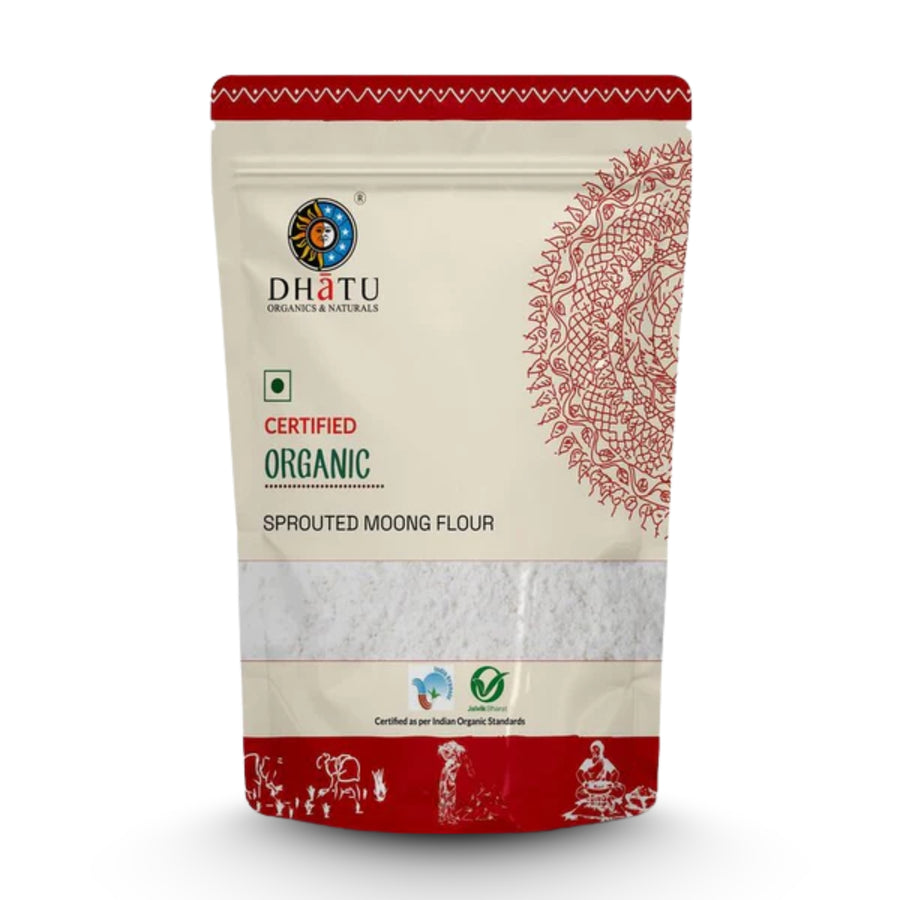
Organic moong, sprouted, dried and cold-milled into a silky flour, with about 26g of plant protein per 100g.
Why Sprouted Moong Flour?
Sprouting is a traditional way of preparing moong. As the bean begins to germinate, phytic acid (a natural compound that binds minerals) is reduced and the flavour becomes lighter and sweeter. The sprouted beans are then dried and cold-milled.
Key Benefits
-
26g protein per 100g — one of the highest protein contents of any legume flour
- Rich in folate (vitamin B9)
-
39% daily iron — in a more bioavailable form than unsprouted flour due to reduced phytate
-
Easy to digest — enzyme inhibitors removed by sprouting, significantly less gas and bloating
- Naturally gluten-free: moong contains no gluten
How to Use
- Make moong chilla (pancakes) — mix with water, salt, and spices, cook on tawa
- Add to soups, stews, and gravies as a protein and thickening agent
- Use in dosas, uttapam, and savoury crepes
- Blend into smoothies for a protein boost without the heavy texture of protein powder
- Use in laddoos, energy bars, and no-bake sweets
Frequently Asked Questions
What is the difference between regular moong flour and sprouted moong flour?
Regular moong flour is simply ground dried moong. Sprouted moong flour uses moong that has been germinated first — a process that breaks down antinutrients (phytic acid, enzyme inhibitors), increases folate by up to 40%, generates Vitamin C (absent in unsprouted), and makes proteins and minerals significantly more bioavailable. The taste is also milder and the flour is easier to digest.
Can I give it to my baby?
Many families use moong in their children's food. Please talk to your paediatrician about when and how to introduce any new food to a baby.
Is it gluten-free?
Yes. Moong is a legume and naturally contains no gluten. If you have coeliac disease, please contact us about how it is packed before ordering.
Does sprouted flour taste different?
Sprouted moong flour has a milder, slightly sweet, earthy flavour compared to regular green gram flour. It lacks the raw, beany taste that some people find off-putting in unsprouted legume flours.
How should I store it?
Store in an airtight container in a cool, dry place. Avoid moisture. Best consumed within 3 months of opening. Can be refrigerated to extend freshness during humid months.