

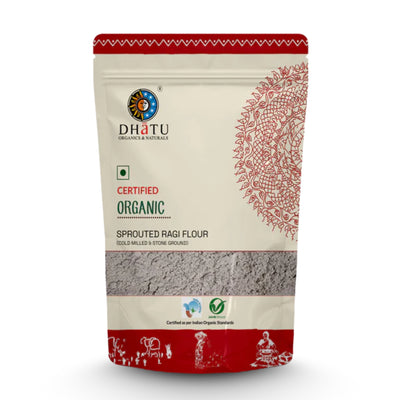
Organic Sprouted Ragi Flour 500g | Nachani Satva | Cold Milled
Highest calcium of any cereal grain
₹ 160.00
View ProductSprouted Flours
Dhatu's sprouted flours are made from grain that has germinated first — unlocking nutrients your body can actually absorb, and making every roti, dosa, and porridge gentler on digestion.
Shop Sprouted Flours →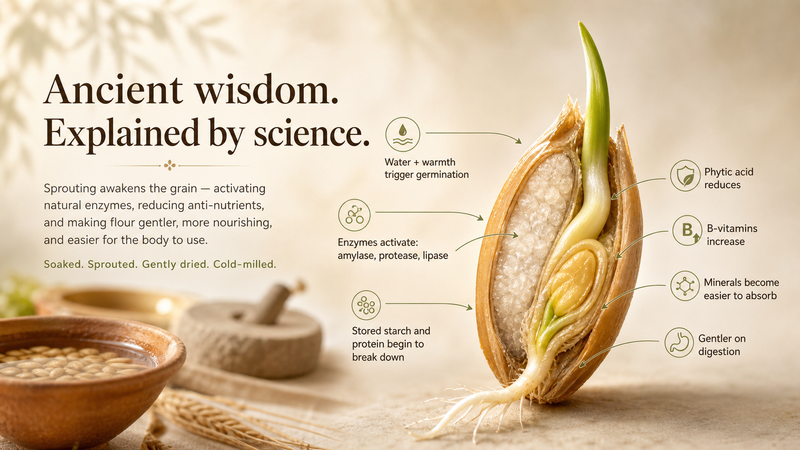
The science, simply explained
Most flour is ground from dormant grain. Sprouted flour starts differently — the grain is allowed to germinate first, and that short window of awakening changes almost everything.
Antinutrients go down. Minerals go up.
Whole grains contain phytic acid — a natural compound that binds to iron, zinc, calcium, and magnesium and limits how much your body absorbs. Sprouting breaks phytic acid down significantly, which may allow more of these minerals to become available during digestion. Especially meaningful for families relying on plant foods as their primary mineral source.
Digestion gets a head start.
When a grain sprouts, it activates its own enzymes — amylase, protease, and lipase — which begin breaking down starch, protein, and fat within the grain itself. Sprouted flours may be easier on the digestive system for this reason, and many people report feeling lighter after meals made with sprouted flour compared to conventional whole grain flour.
Vitamins that weren't there before.
Sprouting can increase B-vitamin content and generate small amounts of Vitamin C — a nutrient entirely absent in unsprouted grain flours. Vitamin C from food supports iron absorption, which makes sprouted flours a more nutritionally rounded option than regular flour, particularly for those who need iron from plant sources.
A gentler effect on blood sugar.
Sprouting converts some starch in the grain into simpler compounds and alters the structure of remaining starch. The result is a flour with a lower glycaemic impact than its unsprouted counterpart — which may support steadier energy levels and is why sprouted flours are widely chosen by people managing blood sugar.
Better in the kitchen too.
Sprouted flour tends to absorb slightly less water, develops faster, and produces softer, more pliable dough. Rotis stay softer longer. The flavour is noticeably milder — less of the bitterness sometimes associated with whole grain flour — making it easy to use every day without changing how you cook.
Side by side
Based on general nutritional research into sprouted grains. Individual results may vary.
| Attribute | Regular Whole Grain Flour | Dhatu Sprouted Flour |
|---|---|---|
| Phytic acid (antinutrient) | Present in significant amounts | Reduced through sprouting |
| Mineral availability | Partly blocked by phytic acid | May be more bioavailable |
| Digestive feel | Can feel heavy for some | Often reported as lighter |
| Taste & texture | Earthy, sometimes bitter | Milder, softer, more neutral |
| B-vitamins | Present at baseline | May be moderately higher |
| Glycaemic impact | Moderate to high (whole grain) | Generally lower |
| Best for | Everyday cooking | Families, diabetics, babies, sensitive digestion |
This comparison reflects general nutritional trends. It is not a medical claim. Consult a nutrition professional for individual dietary guidance.
The Dhatu Range
Every flour in this range begins as certified organic grain, sprouted under controlled conditions, then gently dried and cold-milled to preserve temperature-sensitive nutrients. No additives, no preservatives, no high-heat processing — as close to traditionally prepared grain flour as a modern organic kitchen can offer.
Highest calcium of any cereal grain
₹ 160.00
View Product
Gluten-free — ideal for soft jowar rotis
₹ 160.00
View Product
Grain-free, antioxidant-rich, keto-suitable
₹ 299.00
View Product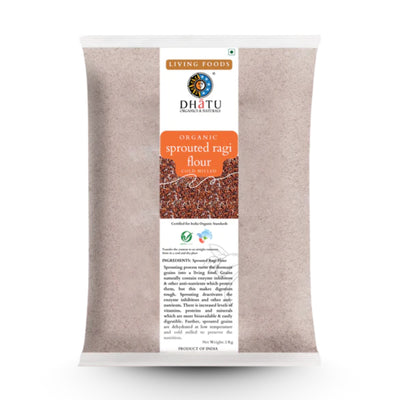
Better value for daily ragi users
₹ 320.00
View Product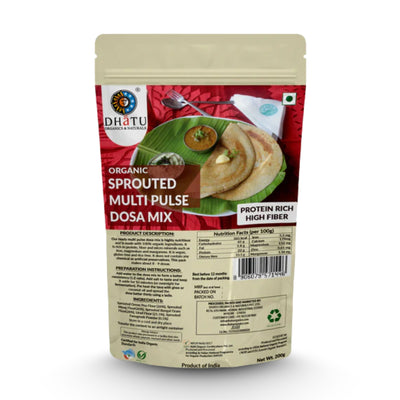
High-protein dosa with no fermentation wait
₹ 150.00
View Product

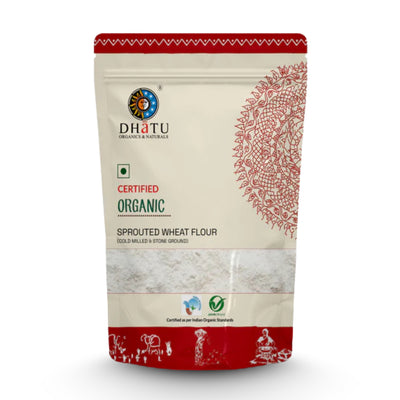
Easier on digestion than regular atta
₹ 160.00
View Product
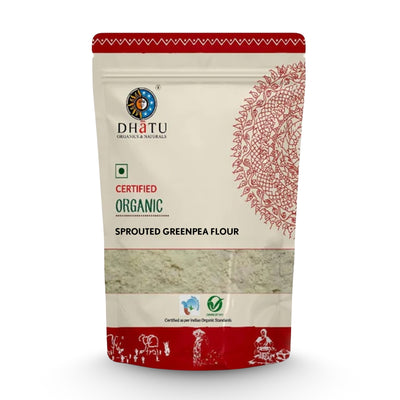
25g protein and Vitamin C for iron absorption
₹ 250.00
View Product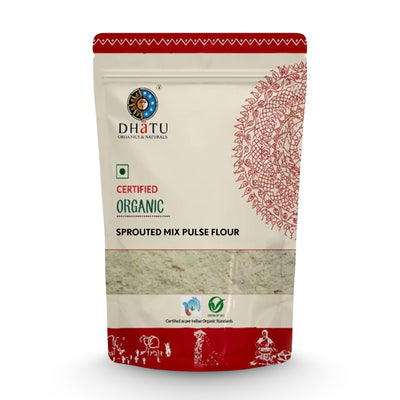
Five pulses — complete amino acid profile
₹ 140.00
View Product


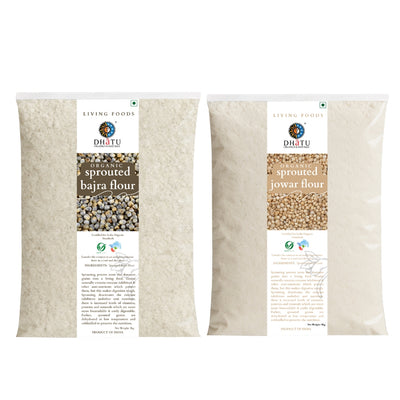
Certified organic sprouted flour
₹ 999.00
View Product
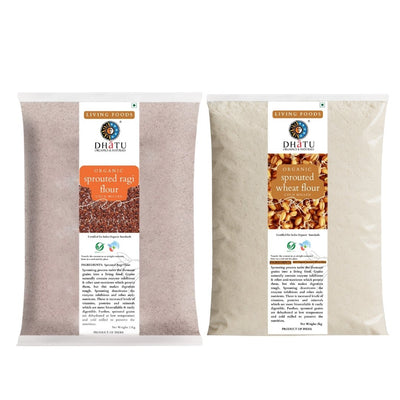
Certified organic sprouted flour
₹ 999.00
View Product
Find your flour
Every kitchen is different. Here are the most common ways our customers use each flour.
If you are looking to make your daily atta healthier, Sprouted Wheat Flour is the most direct replacement — same technique, softer result, easier on the stomach. For gluten-free households, Sprouted Jowar Flour and Sprouted Bajra Flour produce excellent rotis with a distinctly traditional flavour.
Sprouted Ragi Dosa Mix and Sprouted Pulse Dosa Mix are both ready to use without overnight soaking or fermentation. Sprouted Moong Flour blends well into existing dosa batters to add protein and folate without changing the texture.
Sprouted Ragi Flour has been used as a first food in South Indian households for generations — its calcium content and mild flavour make it ideal for kanji, porridge, and laddoos. Sprouted Moong Flour and Sprouted Mixed Pulse Flour are both baby-food safe and dissolve cleanly into soups and khichdi.
Lower glycaemic impact across the whole range makes these flours a considered choice for anyone watching blood sugar. Sprouted Jowar, Sprouted Ragi, and Sprouted Buckwheat Flour are particularly well-suited, and all are naturally gluten-free.
Sprouted Green Pea Flour (25g protein), Sprouted Moong Flour (26g protein), and Sprouted Mixed Pulse Flour (23g complete protein) are the standouts. Sprouted Brown Chickpea Flour is a clean, iron-rich replacement for regular besan in cheelas, pakoras, and kadhi.
Sprouted Buckwheat Flour is the most versatile for baking — cookies, pancakes, and crackers — with no grassy flavour. Sprouted Brown Chickpea Flour makes excellent savoury pancakes and pakora batter. Both are grain-free and keto-suitable.
Why Dhatu Organics
Certified Organic
Every grain in our sprouted range is sourced from certified organic farms. No synthetic pesticides, no chemical fertilisers.
Cold Milled, Not Heat-Treated
We cold-mill our sprouted flours to protect heat-sensitive B-vitamins and enzymes that conventional high-speed milling would destroy.
No Additives. Ever.
No preservatives, no artificial flavour, no anti-caking agents. Just grain, water, and air — a process your grandmother would recognise.
Frequently Asked Questions
Most people notice a milder, slightly sweeter flavour and a softer dough consistency. The bitterness sometimes associated with whole grain flour is significantly reduced. If you are used to whole wheat atta, the transition to sprouted wheat flour is usually immediate and easy.
In most cases, yes — especially for rotis, dosas, porridges, and pancakes. Sprouted flours may absorb slightly less water, so you may find you need a tablespoon or two less liquid. For baking (breads, cakes), minor adjustments may be needed on the first attempt.
Store in a cool, dry place away from direct sunlight. Once opened, an airtight container extends freshness. As with all cold-milled flours without preservatives, we recommend using within 3–4 months of opening.
Our Sprouted Ragi Flour and Sprouted Moong Flour are specifically noted as baby-food safe. Ragi porridge is a traditional first food in South India, used with infants from around 6 months. Always consult your paediatrician for individual guidance.
Sprouted flours are suitable for most people. Those with coeliac disease should choose our gluten-free varieties — ragi, jowar, bajra, buckwheat, or pulse flours — and avoid sprouted wheat flour. Anyone with a diagnosed legume allergy should check the ingredient list on pulse-based flours before purchasing.
Sprouted flours work in the same dishes you already make. The only difference is what happens in your body afterwards.
Shop Sprouted Flours →