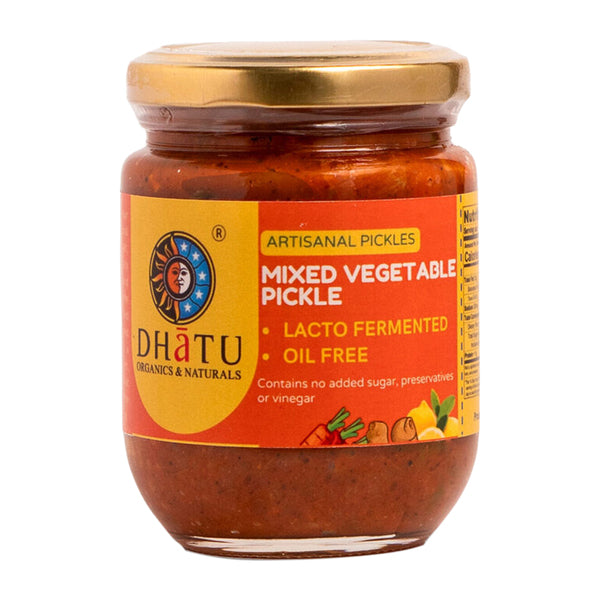
Lacto-Fermented Mixed Vegetable Pickle 250g – No Oil, No Vinegar
Dhatu Organics Lacto-Fermented Mixed Vegetable Pickle is a colourful, crunchy medley of seasonal vegetables — carrot, cauliflower, and green beans — preserved through traditi... Read more ↓
Carrot (Daucus carota), Cauliflower (Brassica oleracea), Green Beans (Phaseolus vulgaris), Lemon (Citrus limon), Sea Salt, Organic Turmeric Powder, Red Chilli, Mustard Seeds, Fenugreek Seeds
| Nutrient | Per serving | Per 100g | % RDA* |
|---|---|---|---|
| Energy | 10 kcal | 50 kcal/100g | |
| Protein | 0.36 g | 1.8 g/100g | |
| Carbohydrates | 2.0 g | 10.0 g/100g | |
| — of which Sugars | 0.7 g | 3.5 g/100g | |
| Total Fat | 0.08 g | 0.4 g/100g | |
| Dietary Fibre | 0.8 g | 4.0 g/100g | |
| Sodium | 450 mg | 2250 mg/100g | |
| Vitamin C | 5 mg | 25 mg/100g | |
| Beta-Carotene | 700 µg | 3500 µg/100g |
* % RDA based on a 2000 kcal reference diet (FSSAI). Values are approximate and may vary by batch.
We deliver across India within 3–5 business days via trusted logistics partners.
- Free delivery on orders above ₹499.
- Orders dispatched within 1 business day of payment confirmation.
- Perishable goods cannot be returned once dispatched. Non-perishable items may be returned within 7 days in original, unopened condition.
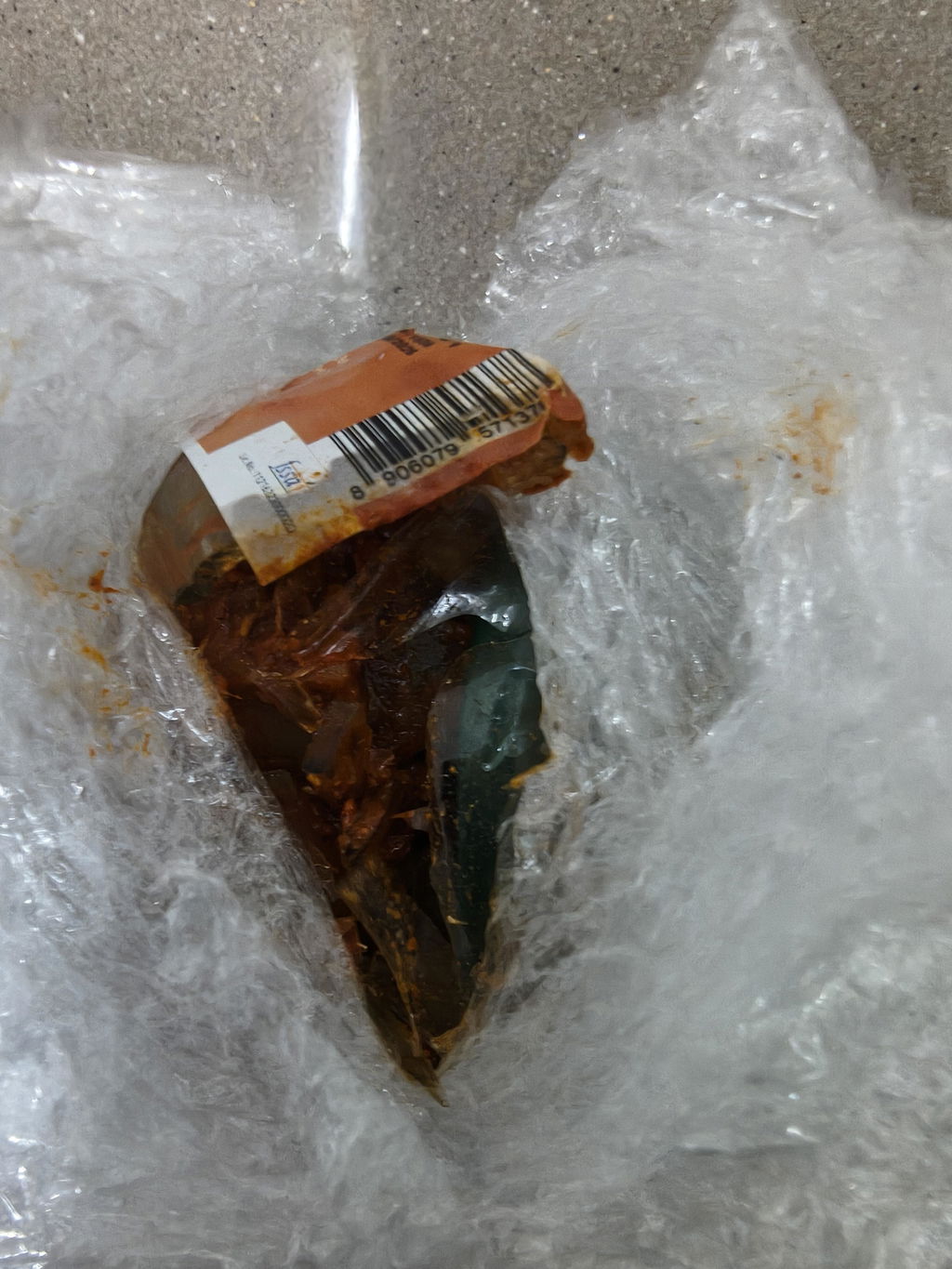
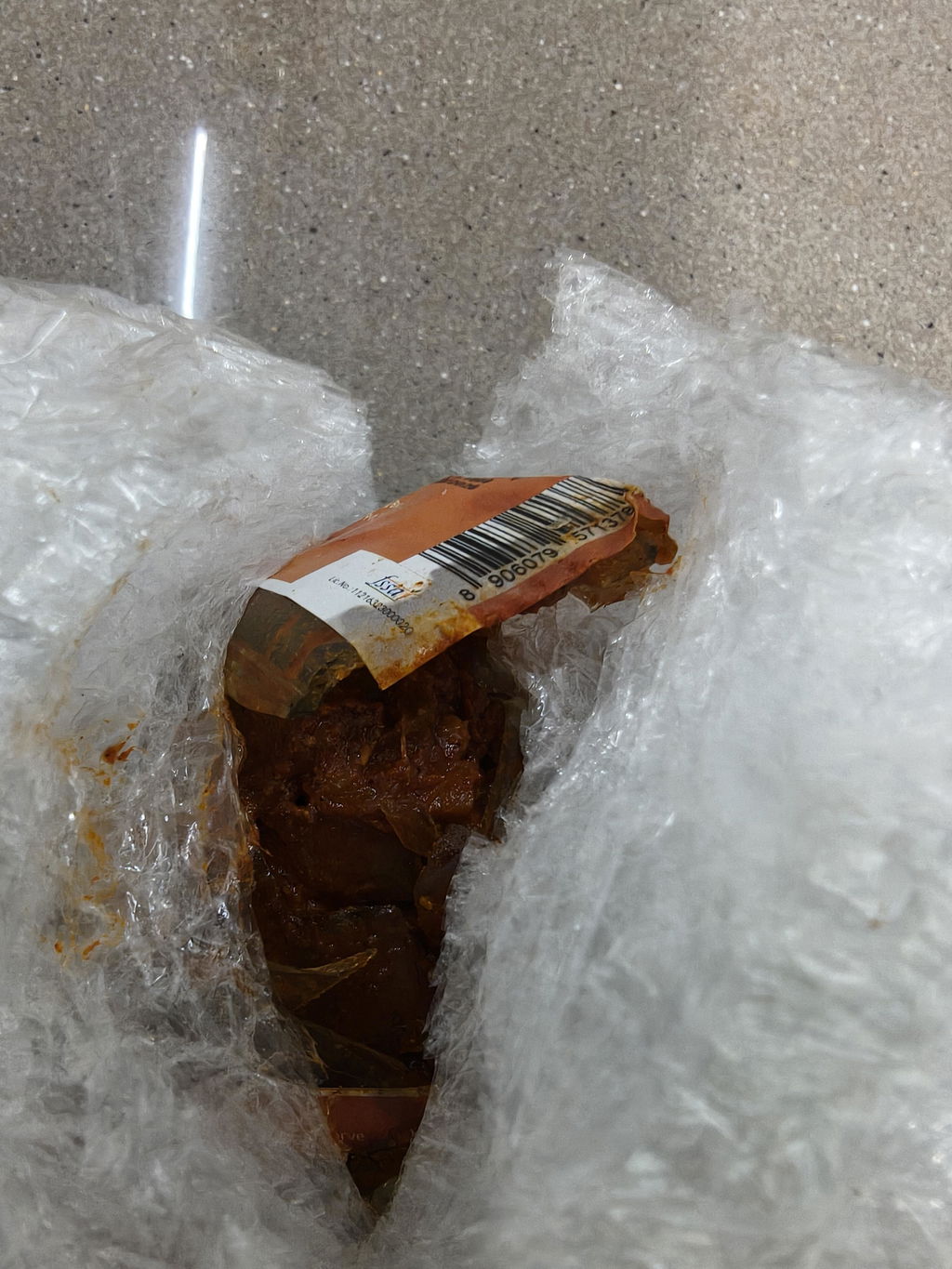
- For damaged or incorrect items, contact info@dhatuorganics.com within 48 hours of delivery.
Dhatu Organics Lacto-Fermented Mixed Vegetable Pickle is a colourful, crunchy medley of seasonal vegetables — carrot, cauliflower, and green beans — preserved through traditional salt-brine fermentation. With no oil, no vinegar, and no added preservatives, this is a modern expression of a technique practised across South Asian and Central Asian kitchens for over two thousand years. Each jar delivers a diverse matrix of vegetable fibres and live probiotic cultures — a functional condiment as much as a flavour-enhancing one.
🌿 Ingredients
- Carrot (Daucus carota)
- Cauliflower (Brassica oleracea var. botrytis)
- Green Beans (Phaseolus vulgaris)
- Lemon (Citrus limon) — for acidification
- Sea Salt (non-iodised)
- Organic Turmeric Powder (Curcuma longa)
- Red Chilli (Capsicum annuum)
- Mustard Seeds (Brassica nigra)
- Fenugreek Seeds (Trigonella foenum-graecum)
No oil · No vinegar · No preservatives · No artificial colour
📊 Nutrition Facts
Per 100g · Per 20g serving (1 heaped tbsp)
| Nutrient | Per 100g | Per 20g |
|---|---|---|
| Energy | 50 kcal | 10 kcal |
| Protein | 1.8 g | 0.36 g |
| Carbohydrates | 10.0 g | 2.0 g |
| — of which Sugars | 3.5 g | 0.7 g |
| Total Fat | 0.4 g | 0.08 g |
| Dietary Fibre | 4.0 g | 0.8 g |
| Sodium | 2,250 mg | 450 mg |
| Vitamin C | 25 mg | 5 mg |
| Beta-Carotene | 3,500 µg | 700 µg |
| Live Cultures | 10⁷–10⁹ CFU/g (L. plantarum, L. brevis) | |
Values approximate. Beta-carotene from carrot. Probiotic counts at time of packing.
The Vegetable Matrix
Key Benefits
- Microbiome Diversity Through Plant Variety: The American Gut Project and subsequent research have shown that eating 30 or more different plant species per week is the strongest predictor of gut microbiome diversity. This pickle contributes at minimum 9 distinct plant foods. Combined with live Lactobacillus cultures from fermentation, it is both a prebiotic and a probiotic simultaneously.
- Sulforaphane from Cauliflower: Fermentation of cruciferous vegetables (like cauliflower) can increase bioavailability of glucosinolate-derived sulforaphane — one of the most studied phytochemicals for cellular detoxification, Nrf2 pathway activation, and potential protective effects against oxidative damage.
- Beta-Carotene from Carrot: 700 µg beta-carotene per serving provides a meaningful contribution to Vitamin A synthesis. Beta-carotene is also a potent antioxidant in its own right — carrot's falcarinol has independently demonstrated anti-inflammatory properties in cell studies.
- Probiotic-Rich, Oil-Free Format: At only 10 kcal per tablespoon with virtually no fat, this pickle contributes to the meal rather than the calorie count. It makes a particularly useful condiment for those managing weight, blood sugar, or cardiovascular risk.
- Quercetin from Green Beans: Green beans are a source of quercetin — a flavonoid with documented anti-inflammatory and antihistamine activity. Quercetin inhibits mast cell degranulation, making fermented green bean preparations potentially useful for allergy season gut support.
- Digestive Fibre Diversity: Carrot (insoluble), green beans (mixed), and fenugreek galactomannan (soluble, prebiotic) create a mixed-fibre profile that supports both regularity and bifidogenic fermentation in the colon.
Research Summary
| Compound | Source | Evidence Level | Observed Effect |
|---|---|---|---|
| L. plantarum / L. brevis (live cultures) | Lacto-fermentation | Multiple RCTs, meta-analysis | Microbiome diversity ↑, gut barrier ↑ |
| Sulforaphane precursors (glucosinolates) | Cauliflower | Clinical + in vitro | Nrf2 activation, phase II detox enzyme ↑ |
| Beta-carotene / Falcarinol | Carrot | Observational + in vitro | Antioxidant capacity ↑, inflammation markers ↓ |
| Quercetin | Green beans | In vitro + animal | TNF-α ↓, IL-6 ↓, antihistamine activity |
| Galactomannan | Fenugreek | Meta-analysis | Fasting glucose ↓, satiety ↑ |
Serving Suggestions
- With Paratha or Roti: The classic North Indian pairing — crunchy vegetables against soft flatbread.
- Alongside Rice Dishes: Adds crunch and probiotic benefit to simple dal-rice or khichdi meals.
- As a Snack: Eat straight from the jar — 1–2 tablespoons as a pre-meal digestive or mid-afternoon gut-health snack.
- On Grain Bowls: Pile on top of quinoa, farro, or millet bowls for fermented crunch and colour.
- In Sandwiches and Wraps: A spoonful inside a wrap with hummus and greens adds both flavour and live cultures.
- With Eggs: Pairs beautifully with scrambled or poached eggs — a Western-style fermented accompaniment.
Frequently Asked Questions
Are the vegetables still crunchy?
Yes. Unlike heat-processed or vinegar-brined pickles, lacto-fermented vegetables retain their cellular structure and remain pleasantly crunchy. The salt draws moisture from the vegetables through osmosis, which slightly softens the outer surface while the interior remains firm.
How is this different from Indian achar from the market?
Most commercial Indian achars are oil-based, use synthetic acetic acid (vinegar) for preservation, and contain chemical preservatives. They have no live cultures and are high in calories from oil. This pickle is made through true lacto-fermentation — no oil, no synthetic acids, no preservatives. It is a genuinely functional food, not just a flavour condiment.
How long does it last once opened?
Once opened, refrigerate and consume within 4–6 weeks. The acidic brine naturally inhibits pathogenic bacteria. You may notice the vegetables becoming more sour over time — this is the fermentation continuing in the jar and is completely safe. Always use clean, dry utensils to scoop.
Is it suitable for children?
Yes, in age-appropriate amounts. The vegetables are soft enough for children over 3 years. The sodium content means a small portion (½–1 tsp) is appropriate for young children. The mild probiotic dose from fermented foods is considered beneficial for children's developing microbiomes.
Can I use the brine as well?
Absolutely — the brine is arguably the most probiotic-rich part of the jar. It can be used as a salad dressing base, stirred into soups at the end of cooking (off the heat, to preserve cultures), or drunk directly as a gut-health shot.
Explore More from Dhatu Organics
- Ginger Lemon Pickle — fiery ginger and lemon, the classic digestive primer
- Lemon Pickle — whole fermented lemons, deeply sour and intensely flavourful
- Mango Pickle — raw green mango, tangy and fruity
- All Health Supplements
Scientific References
- Wastyk HC, et al. Gut-microbiota-targeted diets modulate human immune status. Cell. 2021;184(16):4137–4153. doi:10.1016/j.cell.2021.06.019
- Fahey JW, et al. Broccoli sprouts: an exceptionally rich source of inducers of enzymes that protect against chemical carcinogens. Proc Natl Acad Sci. 1997;94(19):10367–72. doi:10.1073/pnas.94.19.10367
- Nicolle C, et al. Effect of carrot intake on cholesterol metabolism and on antioxidant status. Eur J Nutr. 2003;42(5):254–61. doi:10.1007/s00394-003-0419-1
- Boots AW, et al. Health effects of quercetin: from antioxidant to nutraceutical. Eur J Pharmacol. 2008;585(2–3):325–37. doi:10.1016/j.ejphar.2008.03.008
- Tamang JP, et al. Functional properties of microorganisms in fermented foods. Front Microbiol. 2016;7:578. doi:10.3389/fmicb.2016.00578