

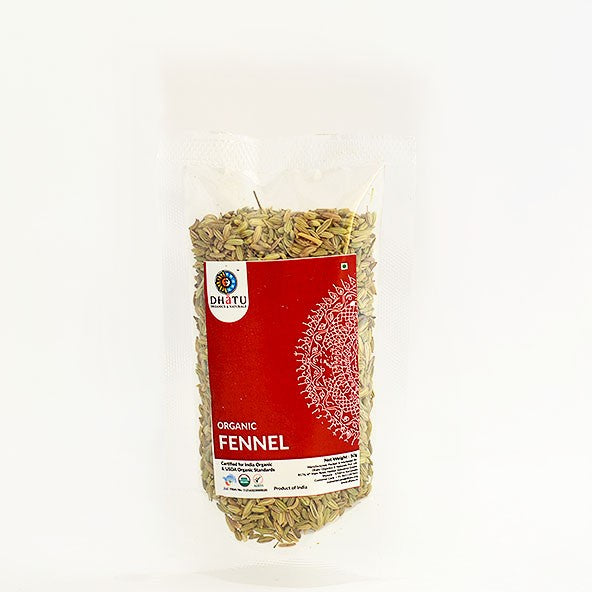
Organic Fennel 100g
₹ 99.00
Dhatu Organics Organic Fennel 100g brings you certified organic Foeniculum vulgare seeds from India’s prime fennel-growing regions. Sweet, aromatic, and cooling, these whole s... Read more ↓
100% Organic
No Additives
Free Delivery ₹749+
Organic Fennel Seeds (Foeniculum vulgare)
Nutrition Facts
| Nutrient | Per serving | Per 100g | % RDA* |
|---|---|---|---|
| Per 100g | Energy 345 kcal | Protein 15.8g | Carbohydrates 52.3g |
| Per 2g serving (1 tsp) | Energy 6.9 kcal | Calcium 23.9mg | Iron 0.37mg |
* % RDA based on a 2000 kcal reference diet (FSSAI). Values are approximate and may vary by batch.
We deliver across India within 3–5 business days via trusted logistics partners.
- Free delivery on orders above ₹749.
- Orders dispatched within 1 business day of payment confirmation.
- Perishable goods cannot be returned once dispatched. Non-perishable items may be returned within 7 days in original, unopened condition.
- For damaged or incorrect items, contact info@dhatuorganics.com within 48 hours of delivery.
Choose Your Pack
Dhatu Organics Organic Fennel 100g brings you certified organic Foeniculum vulgare seeds from India’s prime fennel-growing regions. Sweet, aromatic, and cooling, these whole saunf seeds are chewed as a natural breath freshener after meals, brewed as a soothing digestive tea, and used as a flavouring in Indian sweets, chutneys, and masalas across South Asian and Mediterranean cuisines.
Rich in Calcium: Fennel seeds contain about 1,196mg calcium per 100g, though they are eaten in small amounts. Even a teaspoon of fennel seeds (2g) delivers 24 mg of calcium. For dairy-free households, fennel and sesame seeds are among the most convenient plant-based calcium sources.
Ingredients
Organic Fennel Seeds (Foeniculum vulgare)
Single ingredient · No additives · No preservatives · Certified organic
Certified Organic Non-GMO Gluten-Free Vegan
Nutrition Facts
Per 100g · Per 2g serving (approx. 1 tsp whole)
| Nutrient | Per 100g | Per 2g |
|---|---|---|
| Energy | 345 kcal | 6.9 kcal |
| Protein | 15.8 g | 0.32 g |
| Carbohydrates | 52.3 g | 1.05 g |
| Total Fat | 14.9 g | 0.30 g |
| Dietary Fibre | 39.8 g | 0.80 g |
| Calcium | 1196 mg | 23.9 mg |
| Iron | 18.5 mg | 0.37 mg |
| Potassium | 1694 mg | 33.9 mg |
Values approximate. Source: USDA FoodData Central.
Key Benefits
- Highest Calcium of Common Spices: 1,196 mg calcium per 100g — extraordinary even among calcium-rich plant foods. Valuable for dairy-free, vegan, and lactose-intolerant individuals.[1]
- Digestive Carminative: Trans-anethole, the principal volatile compound in fennel, relaxes smooth muscle in the gastrointestinal tract, relieving gas, bloating, and colic — one of the oldest and best-studied natural digestive remedies.[2]
- Antioxidant-Rich: Flavonoids (quercetin, kaempferol, rutin) and phenolic acids in fennel demonstrate significant free radical scavenging activity.[3]
- Potassium: 1,694mg per 100g.
How to Use
- Mouth Freshener: Chew a small pinch of fennel seeds after meals — the anethole masks odours and stimulates saliva production for digestive benefit.
- Fennel Tea (Saunf Chai): Simmer 1 tsp in 300 ml water for 10 minutes; strain and drink warm or cold. Excellent after heavy or spicy meals.
- Tadka: Add whole fennel seeds to hot oil at the start of cooking — they pop and release a sweet anise aroma that elevates dals and sabzis.
- Panch Phoron: One of the five seeds in the Bengali spice blend, along with cumin, nigella, fenugreek, and mustard.
- Baked Goods: Add to seed crackers, breads, or sev for a distinctly South Asian flavour note.
Frequently Asked Questions
Are fennel seeds the same as anise or star anise?
No — they share the anethole flavour compound but are different plants. Fennel (Foeniculum vulgare) is a flowering herb; its seeds are oblong and pale green-yellow. Anise (Pimpinella anisum) produces smaller, darker seeds. Star anise (Illicium verum) is an entirely unrelated plant with a much more intense anise flavour. Fennel is the mildest and most versatile of the three.
Can I use fennel seeds to make fennel powder?
Yes. Dry-roast lightly then grind to a fine powder for use in curries, spice blends, and marinades. Homemade fennel powder is significantly more aromatic than commercial versions. Use within 2–3 months of grinding for best results.
Is fennel tea safe for everyone?
Fennel tea at culinary doses (1–2 tsp per cup) is safe for most adults. However, anethole has mild oestrogenic properties, so those on hormone-sensitive medications or with hormone-related conditions should consult their doctor before regular supplemental use. Culinary use in cooking is generally considered safe.
How do I store fennel seeds?
Store in an airtight container in a cool, dark cupboard. Whole fennel seeds maintain aroma and flavour for 2–3 years; ground fennel powder for 6–12 months. The volatile anethole evaporates gradually on exposure to air and heat, so keep the jar tightly sealed.
Can I give fennel seeds to children for digestion?
Fennel seeds are traditionally chewed after meals in India, including by older children in small amounts. Please don't give fennel tea or any herbal preparation to a baby without your paediatrician's advice.
Explore More from Dhatu Organics
- Organic Cumin Whole 100g — earthy companion to fennel’s sweet notes in masala blends
- Organic Black Mustard 100g — another essential whole seed for South Indian tadka
- Masala Chai — includes fennel as part of our house spice blend
- All Organic Spices — browse our complete certified organic spice collection