

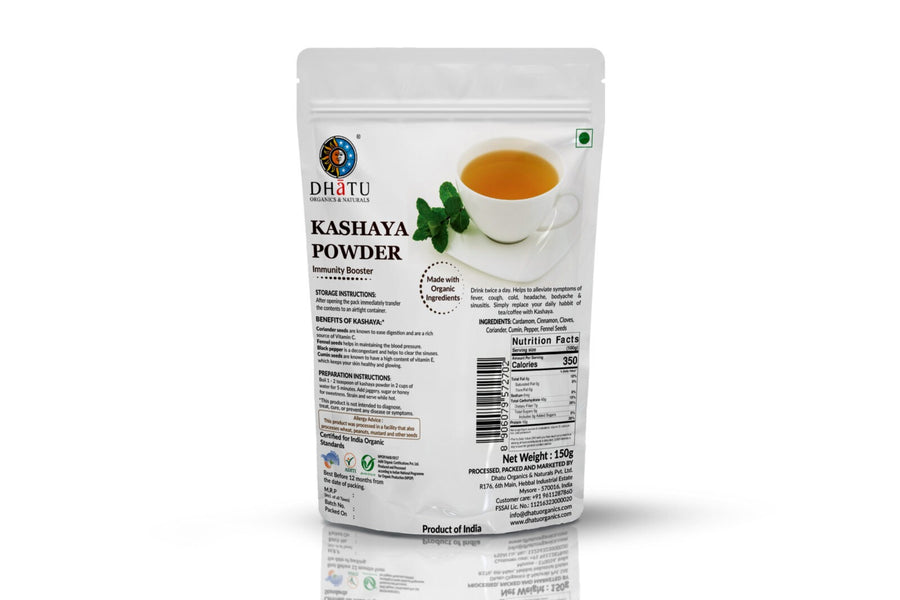
Kashaya Powder 150g
₹ 220.00
Dhatu Kashaya Powder is an eight-spice Ayurvedic herbal decoction blend rooted in classical South Indian and Ayurvedic culinary tradition. Kashaya (also written Kashaaya or ... Read more ↓
100% Organic
No Additives
Free Delivery ₹499+
Coriander seeds (Coriandrum sativum), Cumin seeds (Cuminum cyminum), Black Pepper (Piper nigrum), Cloves (Syzygium aromaticum), Cinnamon (Cinnamomum sp.), Cardamom (Elettaria cardamomum), Fennel seeds (Foeniculum vulgare), Dry Ginger (Zingiber officinale)
Nutrition FactsServing: 5g (1 tsp) brewed in 400ml water, strained
| Nutrient | Per serving | Per 100g | % RDA* |
|---|---|---|---|
| Energy | ~10 kcal | ~200 kcal | 0.5% |
| Protein | 0.4 g | 8.0 g | 0.8% |
| Total Fat | 0.3 g | 5.0 g | <1% |
| of which Saturated Fat | <0.1 g | 1.0 g | <1% |
| of which Trans Fat | 0 g | 0 g | — |
| Total Carbohydrates | 1.5 g | 30.0 g | — |
| of which Dietary Fibre | 0.7 g | 14.0 g | — |
| of which Sugars | <0.1 g | 2.0 g | <1% |
| Sodium | <1 mg | <5 mg | <1% |
* % RDA based on a 2000 kcal reference diet (FSSAI). Values are approximate and may vary by batch.
We deliver across India within 3–5 business days via trusted logistics partners.
- Free delivery on orders above ₹499.
- Orders dispatched within 1 business day of payment confirmation.
- Perishable goods cannot be returned once dispatched. Non-perishable items may be returned within 7 days in original, unopened condition.
- For damaged or incorrect items, contact info@dhatuorganics.com within 48 hours of delivery.
Choose Your Pack
Dhatu Kashaya Powder is an eight-spice Ayurvedic herbal decoction blend rooted in classical South Indian and Ayurvedic culinary tradition. Kashaya (also written Kashaaya or Kashayam) is one of the oldest documented wellness preparations of the Kannada-speaking region of India — a warming, aromatic drink brewed by boiling whole or powdered spices in water, then straining and serving hot. Dhatu Kashaya blends eight organically grown spices — coriander, cumin, black pepper, cloves, cinnamon, cardamom, fennel, and dry ginger — with no added sugar, no tea leaves, no caffeine, and no preservatives. A complete, ready-to-brew, caffeine-free morning drink and coffee/tea alternative with approximately 25–30 servings per 150g pack.
Kashaya at a Glance: 8 organic spices · Caffeine-free · No added sugar · ~25–30 servings / 150g · ~₹7–9 per cup · ₹220 / 150g
Ingredients & Serving Information
Ingredients
- Coriander seeds (Coriandrum sativum)
- Cumin seeds (Cuminum cyminum)
- Black Pepper (Piper nigrum)
- Cloves (Syzygium aromaticum)
- Cinnamon (Cinnamomum sp.)
- Cardamom (Elettaria cardamomum)
- Fennel seeds (Foeniculum vulgare)
- Dry Ginger (Zingiber officinale)
No added sugar · No caffeine · No tea dust · No preservatives · Certified organic
8 SpicesCaffeine-FreeVeganGluten-FreeNo Additives
Serving Information
| Detail | Value |
|---|---|
| Serving size | 1–2 tsp (4–8 g) + 400 ml water |
| Servings per 150g pack | ~25–30 |
| Energy per cup (unsweetened) | ~10–15 kcal |
| Caffeine | None |
| Added sugar | None |
| Best consumed | Hot, freshly brewed |
| Brew time | 4–5 min boiling |
| Cost per cup | ~₹7–9 |
| Shelf life | 12 months from manufacture |
Nutritional value per cup is low in macronutrients — the benefit of Kashaya comes from its concentrated phytochemical content (volatile oils, phenolics, flavonoids) rather than caloric density.
The Eight Spices — Phytochemical Profiles
CorianderCoriandrum sativumKey compound: linalool. Rich in flavonoids and Vitamin C. Classical digestive and carminative spice in both Ayurvedic and Unani traditions.
CuminCuminum cyminumKey compound: cuminaldehyde. Good source of dietary iron. Traditional carminative used to support digestion and reduce post-meal bloating.
Black PepperPiper nigrumKey compound: piperine. Shown to significantly enhance the bioavailability of co-consumed nutrients and phytochemicals.[1] Warming and expectorant.
ClovesSyzygium aromaticumKey compound: eugenol. Among the highest ORAC-value foods — one of the most antioxidant-rich culinary spices measured.[2]
CinnamonCinnamomum sp.Key compound: cinnamaldehyde + type-A polyphenols. Associated with supporting healthy blood sugar balance in clinical research.[3]
CardamomElettaria cardamomumKey compound: 1,8-cineole and terpinene. Classical digestive carminative in Ayurveda and Unani medicine. Natural breath freshener.
FennelFoeniculum vulgareKey compound: trans-anethole and fenchone. Traditionally used to support digestive comfort, reduce flatulence, and ease post-meal heaviness.
Dry Ginger (Shunti)Zingiber officinaleKey compound: 6-gingerol, 6-shogaol, zingerone. Ayurvedic shunti — dry ginger is considered more therapeutically potent than fresh. Supports gut motility, anti-nausea properties, and digestive fire (agni). Anti-inflammatory via prostaglandin pathway inhibition.
What Is Kashaya? — Tradition & Context
Kashaya is one of five fundamental preparation methods described in classical Ayurvedic texts including the Charaka Samhita and Ashtanga Hridayam — the others being swarasa (fresh juice), kalka (paste), hima (cold infusion), and phanta (hot infusion). A kashaya or kwatha involves boiling plant material in water to extract water-soluble phytocompounds — particularly the volatile oils locked within seeds, bark, and dried berries that are far more effectively extracted through boiling than through brief steeping.
In Karnataka and across South India, Kashaya is a morning staple across millions of households — served warm, sometimes sweetened with a small piece of jaggery, as a grounding and centering start to the day. It is naturally caffeine-free, making it a well-established alternative to chai or filter coffee for those reducing caffeine intake, those who are sensitive to stimulants, or anyone seeking a warming ritual beverage without dependence.
Key Benefits
- Complete Caffeine-Free Morning Drink: Provides warmth, aroma, and a sensory morning ritual — without caffeine. No stimulant dependency, no sleep disruption from evening use.
- Concentrated Antioxidant Spices: Cloves, black pepper, and cinnamon are among the most antioxidant-dense culinary ingredients by ORAC value. A single cup of Kashaya provides a concentrated dose of spice-derived polyphenols and volatile oils.
- Digestive Wellness Support: Cumin, coriander, fennel, cardamom, and dry ginger are classical carminative and digestive-stimulant spices — traditionally used across Ayurvedic and Unani practice to support digestive comfort, ease bloating, and support post-meal digestion.[4]
- Very Low Calorie: At 10–15 kcal per cup (unsweetened), Kashaya is an extremely low-calorie warm beverage — suitable for those replacing sugary morning beverages.
- Piperine Bioavailability Synergy: Black pepper’s piperine enhances the absorption of co-consumed nutrients and phytochemicals.[1]
- Economical: At ₹220 per 150g pack, each cup costs approximately ₹7–9 — significantly more affordable than ready-made herbal sachets or functional wellness drinks.
How to Prepare Kashaya
| Preparation | Steps | Tips |
|---|---|---|
| Classic Kashaya | Add 1–2 tsp powder (4–8g) to 2 cups (400ml) water. Bring to a boil. Simmer 4–5 min. Strain through a fine mesh or muslin. Serve hot. | Add a thin slice of fresh ginger for extra warmth in winter |
| Jaggery Kashaya | Prepare as above. Add 1 tsp jaggery powder after straining and stir until dissolved. | Jaggery adds iron and a mild molasses depth that complements the spices |
| Kashaya Latte | Brew double-strength (2 tsp in 150ml water, boil 5 min, strain). Top with 100ml warm frothed oat or almond milk. | The spice blend pairs beautifully with oat milk |
| Iced Kashaya | Brew double-strength. Cool to room temperature. Pour over ice. Add a squeeze of fresh lime and a pinch of rock salt. | An excellent summer afternoon alternative to iced tea |
| Post-Meal Digestive Cup | Brew 1 tsp in 1 cup (200ml) water, boil 3 min, strain. Drink warm 15–20 min after a heavy meal. | A smaller, stronger brew for post-meal use |
Kashaya vs Common Morning Beverages
| Dhatu Kashaya | Masala Chai (with milk + sugar) | Filter Coffee (with milk + sugar) | Green Tea (plain) | |
|---|---|---|---|---|
| Caffeine | None | ~50–60 mg/cup | ~80–100 mg/cup | ~20–40 mg/cup |
| Added Sugar (typical) | None | 2–3 tsp (~8–12g) | 1–2 tsp (~4–8g) | None |
| Calories per cup (typical) | ~10 kcal | ~70–90 kcal | ~55–75 kcal | ~2 kcal |
| Key Phytochemicals | Eugenol, piperine, cinnamaldehyde, cineole, anethole, linalool, cuminaldehyde, gingerols, shogaols | Theaflavins, caffeine | Chlorogenic acids, caffeine | EGCG, catechins, caffeine |
| Digestive Carminative Spices | Yes — cumin, coriander, fennel, cardamom, dry ginger | Limited | None | None |
| Suitable for evening use | Yes (caffeine-free) | Not ideal | No | With caution |
| Cost per cup | ~₹7–9 | ~₹20–30 (incl. milk) | ~₹20–35 (incl. milk) | ~₹8–15 |
*Chai and coffee data based on typical household preparation with full-fat milk and 2 tsp sugar. Individual preparation varies.
Explore More from Dhatu Organics
- All Wellness Drink Blends — view the full Dhatu wellness drink collection
- Turmeric Latte — The Golden Chai — five-spice curcumin-rich evening golden milk blend
- Organic Ragi Malt 300g — sprouted ragi with almonds and cardamom, rich in calcium
- Sprouted Multi Millet Malt 200g — four-millet high-fibre breakfast blend
- Health Supplements — fermented turmeric powder and Ayurvedic wellness products
Frequently Asked Questions
What does Kashaya taste like?
Dhatu Kashaya has a warming, layered spice flavour — earthy and lightly peppery from cumin and black pepper, with a sweet aromatic finish from cardamom and cinnamon, a subtle anise note from fennel, warming depth from cloves, and a gentle heat from dry ginger. It is pleasantly complex and very different from plain herbal teas. Most people enjoy it with a small piece of jaggery which adds a mild molasses sweetness that complements the spice profile beautifully.
How is Kashaya different from chai or masala tea?
Masala chai is made with black tea leaves plus spices — it contains caffeine from the tea leaves and is typically prepared with milk and sugar. Kashaya contains no tea leaves whatsoever. It is a pure spice decoction brewed in water only, making it completely caffeine-free. Kashaya also emphasises digestive carminative spices (cumin, coriander, fennel, cardamom, dry ginger) that are not typical in standard chai. At 10–15 kcal per cup (unsweetened), it is significantly lower in calories than a sweetened chai with milk.
Can I have Kashaya every day?
Yes. Kashaya is traditionally consumed once or twice daily — in the morning as a breakfast drink or after meals. Being caffeine-free, it does not cause the dependency or sleep disruption associated with regular tea and coffee. One to two cups daily is a well-established traditional use pattern across South Indian households. As with all herbal preparations, moderation is wise — avoid having more than 2–3 cups per day.
Is Kashaya safe during pregnancy?
The spices in Kashaya — coriander, cumin, fennel, cardamom, cinnamon, black pepper, cloves, and dry ginger — are culinary spices consumed safely in food quantities by most people. However, cloves and black pepper in concentrated or large amounts are advised with caution in some traditional practices during the first trimester of pregnancy. We recommend consulting your obstetrician or midwife before making Kashaya a daily drink during pregnancy.
Can children have Kashaya?
Kashaya contains black pepper and cloves — warming spices that may be too intense for young children. For children above 5 years, you can prepare a half-strength brew (half the powder quantity in the same amount of water) and serve warm with jaggery. Not recommended for children under 3 years. If in doubt, consult your paediatrician.
Does this contain any allergens or additives?
No. Dhatu Kashaya contains only eight organic spices — no nuts, no dairy, no gluten, no soy, no added sugar, no preservatives, no artificial flavours. It is 100% plant-based. The product is processed in a facility that also handles nuts and grains — if you have a severe allergy, contact us at info@dhatuorganics.com for details.
How many cups does a 150g pack make?
At 1 tsp (~5g) per serving, a 150g pack provides approximately 30 cups. At 2 tsp per serving (for a stronger brew), approximately 15–18 cups. This makes Kashaya one of the most cost-effective certified organic wellness drinks available — at approximately ₹7–9 per cup.
Can I add milk to Kashaya?
Traditionally, Kashaya is brewed in water and served without milk — the spice flavours are cleaner and more distinct without milk. However, a Kashaya Latte can be made by brewing double-strength in water, straining, and then topping with frothed oat or almond milk. The spice blend pairs particularly well with oat milk. Full-fat dairy milk can mask some of the finer spice notes.
How should I store Kashaya Powder and what is the shelf life?
Store in a cool, dry place away from sunlight and moisture. Transfer to an airtight glass jar after opening for best results. Shelf life: 12 months from date of manufacture when stored correctly. The high volatile oil content of the spices means exposure to heat, light, and air will gradually degrade aroma and flavour — airtight, dark storage in a cupboard is ideal.
Scientific References
- Shoba G, et al. Influence of piperine on the pharmacokinetics of curcumin. Planta Med. 1998;64(4):353–6. PubMed:9619120
- Jiménez-Zamora A, et al. Antioxidant capacity, total phenols and colour of brewed spice-based teas. LWT — Food Sci Technol. 2015;62(1):399–406.
- Davis PA, Yokoyama W. Cinnamon intake lowers fasting blood glucose: meta-analysis. J Med Food. 2011;14(9):884–9.
- Srinivasan K. Role of spices beyond food flavouring: nutraceuticals with multiple health effects. Food Rev Int. 2005;21(2):167–88.
- Charaka Samhita — classical Ayurvedic text on herbal preparations and kashaya formulations.
- FSSAI Food Safety and Standards Authority of India. fssai.gov.in