

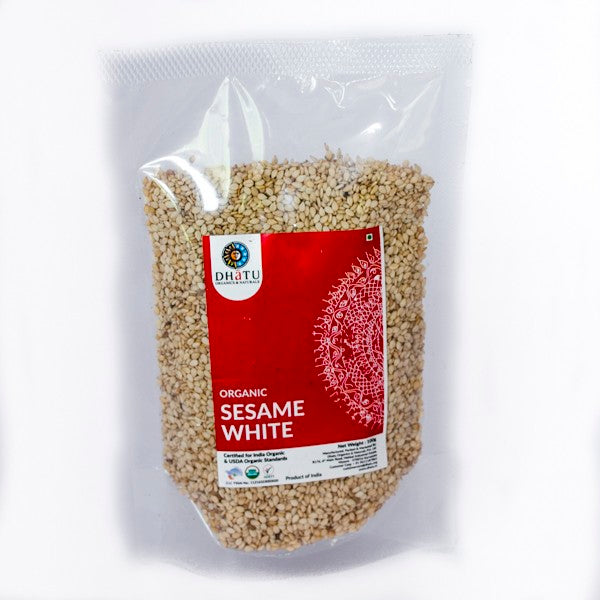
Organic White Sesame 100g
₹ 80.00
Dhatu Organics Organic White Sesame 100g delivers certified organic Sesamum indicum seeds — one of humanity’s oldest cultivated oilseeds, prized for millennia from the Indian ... Read more ↓
100% Organic
No Additives
Free Delivery ₹749+
Organic White Sesame Seeds (Sesamum indicum)
Nutrition Facts
| Nutrient | Per serving | Per 100g | % RDA* |
|---|---|---|---|
| Per 100g | Energy 573 kcal | Protein 17.7g | Carbohydrates 23.5g |
| Per 9g serving (1 tbsp) | Energy 51.6 kcal | Protein 1.59g | Calcium 87.8mg |
* % RDA based on a 2000 kcal reference diet (FSSAI). Values are approximate and may vary by batch.
We deliver across India within 3–5 business days via trusted logistics partners.
- Free delivery on orders above ₹749.
- Orders dispatched within 1 business day of payment confirmation.
- Perishable goods cannot be returned once dispatched. Non-perishable items may be returned within 7 days in original, unopened condition.
- For damaged or incorrect items, contact info@dhatuorganics.com within 48 hours of delivery.
Choose Your Pack
Dhatu Organics Organic White Sesame 100g delivers certified organic Sesamum indicum seeds — one of humanity’s oldest cultivated oilseeds, prized for millennia from the Indian subcontinent to the Middle East. These hulled white sesame seeds are versatile across cuisines: a garnish on bread, a base for tahini, a key ingredient in chikki and laddoo, and the signature flavour of til rice.
Exceptional Calcium for a Plant Food: White sesame seeds contain 975 mg calcium per 100g — nearly as much as hard cheese and far more than most plant sources. A tablespoon of sesame seeds (9g) provides approximately 88 mg of calcium. For dairy-free diets, sesame is one of the most calcium-dense foods available. Combine with vitamin D sources for optimal absorption.
Ingredients
Organic White Sesame Seeds (Sesamum indicum)
Single ingredient · No additives · No preservatives · Certified organic
Certified Organic Non-GMO Gluten-Free Vegan
Nutrition Facts
Per 100g · Per 9g serving (approx. 1 tbsp)
| Nutrient | Per 100g | Per 9g |
|---|---|---|
| Energy | 573 kcal | 51.6 kcal |
| Protein | 17.7 g | 1.59 g |
| Carbohydrates | 23.5 g | 2.12 g |
| Total Fat | 49.7 g | 4.47 g |
| Dietary Fibre | 11.8 g | 1.06 g |
| Calcium | 975 mg | 87.8 mg |
| Iron | 14.6 mg | 1.31 mg |
| Magnesium | 351 mg | 31.6 mg |
Values approximate. Source: USDA FoodData Central.
Key Benefits
- Rich in Calcium: 975mg calcium per 100g, one of the richest plant sources of calcium.[1]
- Natural Oils: sesame is rich in oleic (monounsaturated) and linoleic (polyunsaturated) fatty acids.
- Sesamin and Sesamolin: natural compounds unique to sesame.
- High-Quality Plant Protein: 17.7g protein per 100g, with a favourable amino acid profile including methionine, making sesame a valuable protein complement for legume-based diets.
- Magnesium and Iron: Excellent sources of both minerals, supporting energy metabolism, haemoglobin production, and nervous system function.
How to Use
- Til Laddoo / Chikki: The classic Indian winter sweet — sesame seeds bound with jaggery, rich in calcium and iron.
- Garnish: Sprinkle on bread, rotis, salads, and stir-fries for nutty flavour and added nutrition.
- Tahini: Toast lightly, blend with a little oil for homemade tahini — the base for hummus and Middle Eastern dressings.
- Til Rice (Ellu Sadam): A South Indian preparation where toasted sesame seeds are mixed with rice, curry leaves, and spices.
- Coating: Press onto paneer, tofu, or vegetable cutlets before pan-frying for a crunchy, nutritious crust.
Frequently Asked Questions
What is the difference between white and black sesame?
White sesame seeds are hulled (outer husk removed), giving them a milder, nuttier flavour and slightly lower fibre content than unhulled black sesame. Black sesame seeds are unhulled and have a more intense, slightly bitter flavour with more antioxidant compounds in the husk. White sesame is more versatile for cooking and baking; black sesame is often used in Asian sweets and for its stronger flavour.
How do I toast sesame seeds at home?
Dry-toast in a flat pan over medium heat, stirring constantly. They go from pale to golden in 2–3 minutes and burn quickly — watch closely. Remove from heat immediately once golden and fragrant. Cool completely before storing. Toasted sesame has significantly more aroma and flavour than raw.
Are sesame seeds safe for people with nut allergies?
Sesame is a seed, not a tree nut — but it is a significant allergen in its own right. Sesame allergy (sesame hypersensitivity) is one of the top 9 food allergens in several countries. If you have nut allergies or any food allergy history, test cautiously and consult your allergist before consuming regularly.
How should I store sesame seeds?
Raw sesame seeds can go rancid relatively quickly due to their high unsaturated fat content. Store in an airtight container in the refrigerator for 6–12 months or the freezer for up to 1 year. At room temperature in a cool cupboard, use within 3–4 months. Toasted sesame goes rancid faster — use within 2 months.
Is organic sesame different from conventional?
Organic sesame is grown without synthetic pesticides. Since sesame oil is extracted cold-pressed and concentrates whatever is in the seed, pesticide residue in conventional sesame can be more of a concern than in some other spices. Organic certification also ensures no fumigation post-harvest, common for conventional imported sesame.
Explore More from Dhatu Organics
- Organic Black Mustard 100g — another essential seed spice for your pantry
- Organic Fennel 100g — digestive seeds with a sweet anise flavour
- All Organic Spices — browse our complete certified organic spice collection