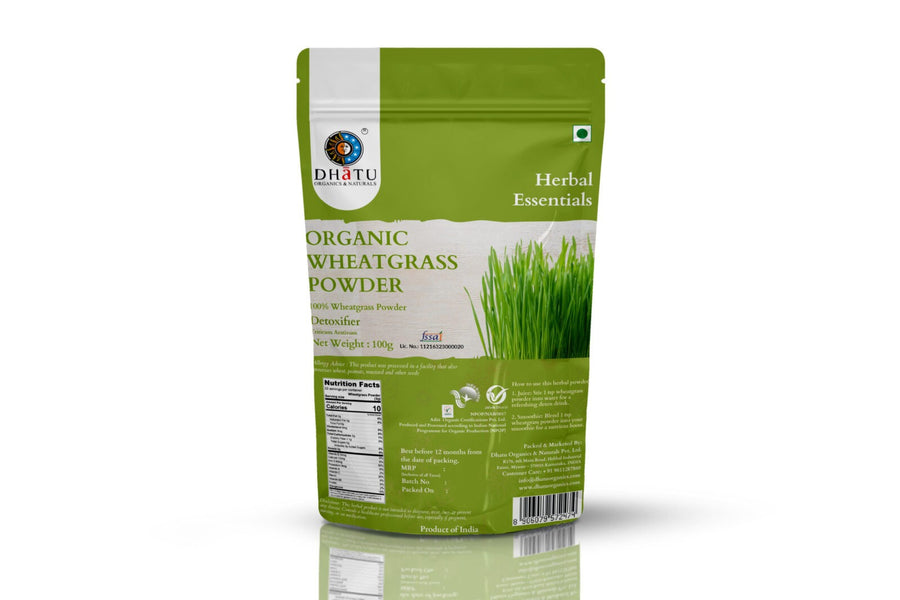
Organic Wheatgrass Powder 100g
Dhatu Organics Organic Wheatgrass Powder is harvested from the young shoots of Triticum aestivum at peak nutritional density — the 7–10 day window when chlorophyll, vitamins,... Read more ↓
Organic Wheatgrass Powder (Triticum aestivum — young grass shoots, harvested at 7–10 days)
| Nutrient | Per serving | Per 100g | % RDA* |
|---|---|---|---|
| Energy | 16.8 kcal | 335 kcal | <1% |
| Protein | 1.25 g | 25.0 g | 2.5% |
| Carbohydrates | 1.85 g | 37.0 g | <1% |
| Dietary Fibre | 1.85 g | 37.0 g | 6.2% |
| Total Fat | 0.15 g | 3.0 g | <1% |
| Iron | 1.65 mg | 33.0 mg | 9.7% |
| Calcium | 13.9 mg | 277 mg | 1.4% |
| Magnesium | 4.25 mg | 85 mg | 1.1% |
| Vitamin C | 8.35 mg | 167 mg | 20.9% |
| Chlorophyll | 300 mg | 6000 mg | |
| Vitamin K | 24 µg | 480 µg | 43.6% |
* % RDA based on a 2000 kcal reference diet (FSSAI). Values are approximate and may vary by batch.
We deliver across India within 3–5 business days via trusted logistics partners.
- Free delivery on orders above ₹499.
- Orders dispatched within 1 business day of payment confirmation.
- Perishable goods cannot be returned once dispatched. Non-perishable items may be returned within 7 days in original, unopened condition.
- For damaged or incorrect items, contact info@dhatuorganics.com within 48 hours of delivery.
Dhatu Organics Organic Wheatgrass Powder is harvested from the young shoots of Triticum aestivum at peak nutritional density — the 7–10 day window when chlorophyll, vitamins, and enzyme content are at their highest — then cold-dried and fine-milled to preserve all heat-sensitive nutrients. Unlike wheatgrass juice which is typically 95% water, this concentrated powder delivers the equivalent of 8–10 fresh wheatgrass shots in every 100g. And despite the name, it is naturally gluten-free: the gluten protein forms only in the grain, not in the early grass blade.
🌿 Ingredients
Organic Wheatgrass Powder (Triticum aestivum — young grass shoots)
Harvested at 7–10 days. Cold-dried below 42°C. 100% grass blade — no wheat grain, no additives. Naturally gluten-free.
📊 Nutrition Facts
Per 100g · Per 5g serving (1 tsp)
| Nutrient | Per 100g | Per 5g |
|---|---|---|
| Energy | ~335 kcal | 16.8 kcal |
| Protein | 25.0 g | 1.25 g |
| Carbohydrates | 37.0 g | 1.85 g |
| Total Fat | 3.0 g | 0.15 g |
| Dietary Fibre | 37.0 g | 1.85 g |
| Iron | 33.0 mg | 1.65 mg |
| Calcium | 277 mg | 13.9 mg |
| Magnesium | 85 mg | 4.25 mg |
| Vitamin C | ~167 mg | 8.35 mg |
| Chlorophyll | ~6000 mg | 300 mg |
| Vitamin K | ~480 µg | 24 µg |
Values approximate. Source: published literature on wheatgrass composition.
Key Benefits
- Alkalising the Body: Wheatgrass is one of the most alkaline foods available — its high chlorophyll, magnesium, and potassium content buffers dietary acid load, supporting pH balance and reducing metabolic acidosis associated with high-protein and processed food diets.[1]
- Detoxification Support: Chlorophyll binds to heavy metals, pesticide residues, and other environmental toxins in the gut and bloodstream, facilitating their clearance. Wheatgrass also upregulates Phase II liver detoxification enzymes including glutathione-S-transferase.[2]
- Supports Healthy Haemoglobin Levels: Wheatgrass contains 33 mg iron per 100g alongside chlorophyll and vitamin C — a combination that supports red blood cell production. Preliminary clinical evidence shows improvements in haemoglobin levels with regular wheatgrass supplementation.[3]
- Digestive Enzymes and Gut Health: Fresh wheatgrass is rich in amylase, lipase, and protease enzymes that support efficient digestion and reduce bloating. The prebiotic fibre content (37g/100g) feeds beneficial gut bacteria.[1]
- Boosts Metabolism and Energy: The combination of B vitamins, magnesium, iron, and chlorophyll supports cellular energy production (ATP synthesis) and reduces the fatigue associated with nutrient deficiencies.
- Immune Support: Wheatgrass contains at least 17 amino acids and over 90 minerals. Its high vitamin C content (167 mg/100g) supports innate immune function.
- Sleep Quality: The high magnesium content (85 mg/100g) supports GABA receptor function, promoting relaxation and deeper sleep.
Research at a Glance
| Benefit | Study Finding | Reference |
|---|---|---|
| Alkalising and digestive | Reduces gastric acidity; supports acid-base balance via mineral content | Bar-Sela et al., 2007[1] |
| Detoxification | Chlorophyll binds aflatoxins; upregulates glutathione-S-transferase | Egner et al., 2001[2] |
| Haemoglobin support | Improved haemoglobin and reduced transfusion needs in thalassaemia patients | Marwaha et al., 2004[3] |
How to Use
- Wheatgrass Shot: Mix ½–1 tsp in 50–100 ml cold water or coconut water. Drink immediately on an empty stomach for maximum absorption.
- Green Smoothie: Blend 1 tsp with cucumber, mint, lemon, ginger, and water for a refreshing detox smoothie.
- Morning Detox: Mix ½ tsp wheatgrass + ½ tsp amla powder + a squeeze of lemon in warm water. The classic Indian morning health shot.
- Face Mask: Mix 1 tsp with rose water and a few drops of aloe vera gel. Apply to skin for 10 minutes — chlorophyll provides gentle anti-inflammatory, brightening effects.
Suggested daily use: ½–1 tsp (2.5–5g) per day, ideally on an empty stomach in the morning. Start with ½ tsp and build up gradually.
Frequently Asked Questions
Is wheatgrass powder gluten-free?
Yes. Gluten is a protein found only in the mature wheat grain (the seed), not in the early grass blade harvested at 7–10 days. Wheatgrass powder made from young shoots before grain formation is naturally gluten-free and safe for people with gluten sensitivity. Those with diagnosed coeliac disease should check that the product is certified gluten-free and processed in a dedicated facility to eliminate cross-contamination risk.
Why is it recommended to take wheatgrass on an empty stomach?
Wheatgrass is most effectively absorbed on an empty stomach because food — particularly protein and fat — can slow or inhibit the absorption of chlorophyll and its associated nutrients. The enzymes in wheatgrass are also most active in an alkaline stomach environment before food-triggered acid secretion occurs. Most practitioners recommend taking it 30 minutes before breakfast.
Can I mix wheatgrass with fruit juice?
Yes, though vegetable juices (cucumber, celery, coconut water) are preferred over high-sugar fruit juices. If using fruit juice, apple or lemon juice in small amounts work well to mask the grassy flavour while keeping the nutritional profile clean.
Will wheatgrass powder cause nausea?
Some people experience mild nausea when starting wheatgrass, particularly at higher doses or on an empty stomach. This is typically due to the high chlorophyll and fibre content triggering detox responses. Starting with ¼ tsp and building up over 2 weeks resolves this for most people. Persistent nausea after 1–2 weeks suggests the dose is too high.
Explore More from Dhatu Organics
- Spirulina Powder — the complementary protein-rich green superfood
- Moringa Powder — for a broader multi-nutrient green supplement
- Amla Powder — combine with wheatgrass in your morning detox drink for a powerful vitamin C + chlorophyll shot
- All Health Supplements
Scientific References
- Bar-Sela G, et al. Wheat grass juice may improve hematological toxicity related to chemotherapy in breast cancer patients. Nutr Cancer. 2007;58(1):43–8. doi:10.1080/01635580701308083
- Egner PA, et al. Chlorophyllin intervention reduces aflatoxin-DNA adducts in individuals at high risk for liver cancer. Proc Natl Acad Sci. 2001;98(25):14601–6. doi:10.1073/pnas.251536898
- Marwaha RK, et al. Wheat grass juice reduces transfusion requirement in patients with thalassaemia major. Indian Pediatr. 2004;41(7):716–20. PubMed:15297687