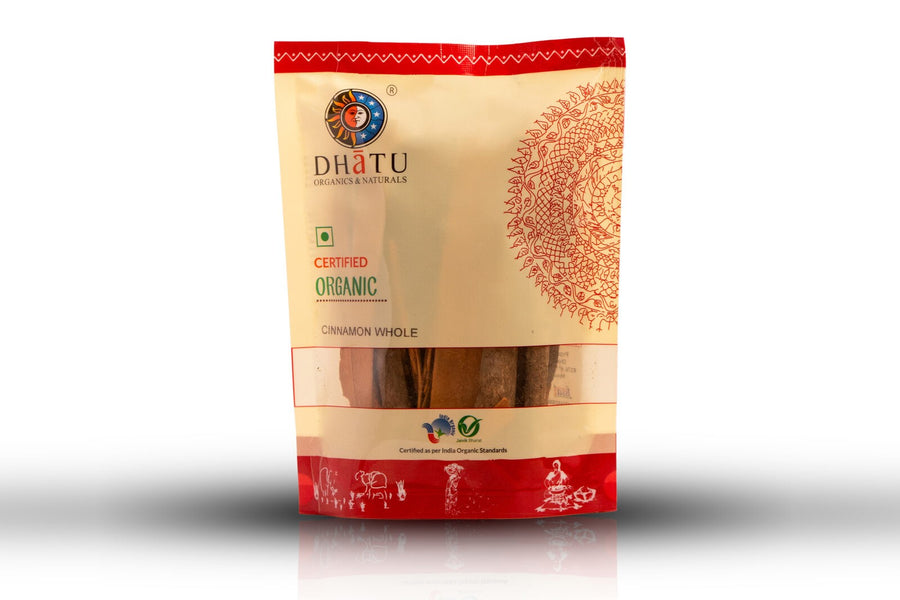
Dhatu Organics Organic Cinnamon Whole 100g is certified organic Cinnamomum cassia — the bold, intensely aromatic “dalchini” that has defined Indian cooking, Ayurvedic medicine, and spice trade for thousands of years. Cassia cinnamon bark is thick, hard, and single-layered, with a robust reddish-brown colour and a powerful cinnamaldehyde content that gives it the unmistakable deep, warm, pungent cinnamon character essential to biryani, masala chai, and garam masala.
India’s Authentic Dalchini: When Indians say “dalchini,” they mean Cassia cinnamon (Cinnamomum cassia). It is the variety used in Ayurvedic formulations (“Twak”), traditional Mughal and South Indian kitchens, and classical spice blends across the subcontinent. Cassia’s bold cinnamaldehyde intensity — typically 55–90% of its essential oil — is higher than many other cinnamon varieties, which gives it its bold aroma.
Ingredients
Organic Cassia Cinnamon Sticks (Cinnamomum cassia)
Single ingredient · No additives · No preservatives · Certified organic
Certified Organic Cassia Cinnamon Dalchini Non-GMO Gluten-Free Vegan
Nutrition Facts
Per 100g · Per 3g serving (1 medium stick / approx. 1 tsp powder equivalent)
| Nutrient |
Per 100g |
Per 3g |
| Energy |
247 kcal |
7.4 kcal |
| Carbohydrates |
80.6 g |
2.42 g |
| Dietary Fibre |
53.1 g |
1.59 g |
| Calcium |
1002 mg |
30.1 mg |
| Iron |
8.32 mg |
0.25 mg |
| Manganese |
17.5 mg |
0.53 mg |
| Vitamin K |
31.2 µg |
0.94 µg |
| Cinnamaldehyde (EO) |
55–90% of oil |
Primary volatile |
Values approximate. Source: USDA FoodData Central.
Key Benefits
- Bold Aroma: Cassia bark is rich in cinnamaldehyde, the compound behind cinnamon's warm, sweet-spicy fragrance.
-
Exceptional Calcium Density: 1,002 mg calcium per 100g — among the highest of any spice. Even small culinary amounts (1–3g per day) contribute meaningfully to daily calcium intake, supporting bone and dental health.[2]
-
Rich Polyphenol Profile: Cassia bark contains proanthocyanidins (type-A), catechins, and epicatechins — a class of polyphenols with among the highest antioxidant ORAC values measured for food spices.[3]
- Traditional Cinnamon Tea: simmering a stick in water or chai is a classic warming drink in Indian homes.
-
Ayurvedic Twak — Tridoshic Warming Spice: In Ayurveda, cassia cinnamon bark (“Twak”) is classified as having a warming virya (potency), katu (pungent) and madhura (sweet) rasa, making it beneficial across all three doshas when used in culinary quantities. It is one of the key ingredients in Dashamoola and other classical formulations.
-
Rich in Manganese: 17.5 mg manganese per 100g. Manganese is essential for bone formation, enzyme activation, and antioxidant defense through the manganese superoxide dismutase (MnSOD) pathway.
How to Use
-
Biryani and Pulao: Add 1–2 cinnamon sticks to hot ghee or oil at the start of cooking. The cinnamaldehyde releases into the cooking fat and perfumes the entire dish with classic dalchini warmth — this is the authentic step that defines a proper biryani base.
-
Masala Chai: Break a small piece and simmer directly in your chai. Cassia’s bold, pungent character cuts through milk and sugar in a way that no milder variety can match.
-
Cinnamon Decoction (Dalchini Kadha): Simmer 1 stick in 300 ml water for 10–15 minutes with a few cloves and dry ginger. Strain and drink warm. A time-tested Ayurvedic warming decoction for cold days.
-
Chole, Rajma, and Dal: One or two sticks slow-cooked with legumes add earthy, warming depth that pairs perfectly with the tartness of tamarind and the heat of chilli.
-
Garam Masala: Dry-toast and grind with cardamom, cloves, peppercorn, and bay leaf for the freshest possible homemade garam masala.
-
Rice Dishes: Add to the water when cooking plain basmati rice for a subtly fragrant, aromatic base rice that elevates any curry it accompanies.
Frequently Asked Questions
What is Cassia cinnamon? Is it the same as dalchini?
Yes — Cassia cinnamon (Cinnamomum cassia, also called Cinnamomum aromaticum) is exactly what is traditionally called “dalchini” in India. It is the dominant cinnamon variety used in Indian cooking, Ayurvedic medicine, and the global spice trade. It has a bold, robust, intensely warm cinnamon flavour with high cinnamaldehyde content. It is botanically distinct from Ceylon cinnamon (Cinnamomum verum), which is a different, milder species primarily from Sri Lanka.
How do I identify Cassia vs. Ceylon cinnamon sticks?
Cassia sticks are thick, hard, and single-layered — they form a single scrolled bark tube that is difficult to break with your fingers. The colour is darker reddish-brown and the aroma is powerfully pungent and warming. Ceylon cinnamon, by contrast, has multiple thin, paper-soft layers that crumble easily. If you have a stick that is sturdy, hard, and intensely aromatic, it is Cassia — the authentic Indian dalchini.
Should I remove whole cinnamon sticks from food before eating?
Yes — whole Cassia sticks are too fibrous and intensely concentrated to eat whole. Remove them before serving. In biryanis and curries they are easy to spot and set aside. If you want cinnamon flavour that is incorporated throughout the dish, use Dhatu’s Organic Cinnamon Powder instead.
Can I grind Cassia sticks into cinnamon powder at home?
Yes, though Cassia sticks are harder than Ceylon and will require a powerful spice grinder or high-speed blender. Dry-toast briefly in a pan until fragrant, cool completely, then grind in short pulses. Freshly ground cinnamon has significantly more aromatic cinnamaldehyde than commercial pre-ground powder that may have sat in packaging for months. Store ground cinnamon in an airtight jar away from light and use within 3 months for best potency.
Is Cassia cinnamon safe to use in everyday cooking?
Yes — Cassia cinnamon has been used as an everyday cooking spice across India for thousands of years and is completely safe in normal culinary amounts (1–5g per day as part of cooking). Cassia contains coumarin, a naturally occurring compound. At large supplemental doses (far beyond what is used in cooking), coumarin can be concerning for sensitive individuals. Using 1–2 sticks in a biryani or a small piece in chai is well within the culinary range that generations of Indian families have used safely. Consult a healthcare provider if you intend to use cinnamon in medicinal or supplemental quantities.
Explore More from Dhatu Organics