

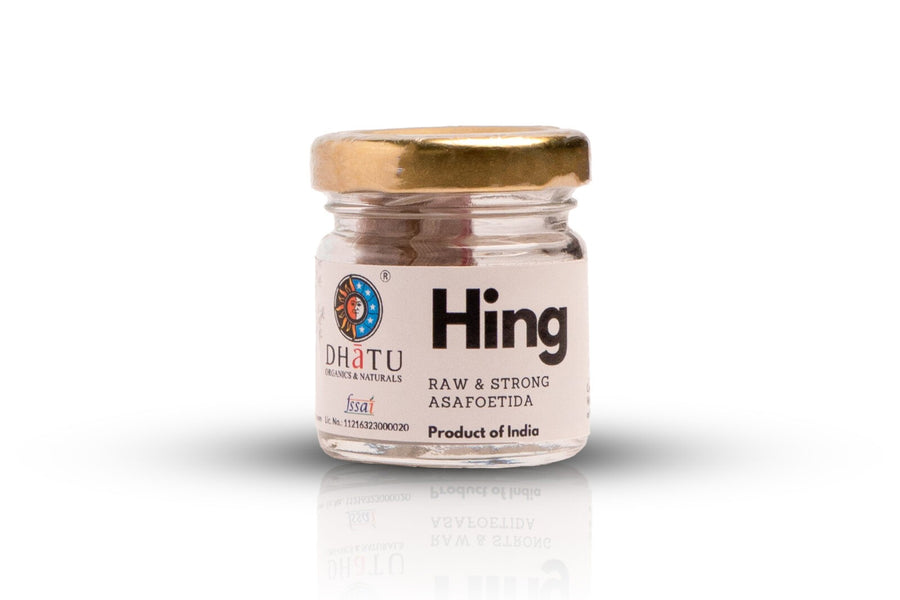
Hing (Asafoetida) 5g
₹ 350.00
Dhatu Organics Hing (Asafoetida) 5g is certified organic Ferula asafoetida resin — one of the most intensely flavoured and pungent spices in the world, yet one that transforms... Read more ↓
100% Organic
No Additives
Free Delivery ₹749+
Organic Asafoetida (Hing) (Ferula asafoetida), Organic Carrier Flour
Nutrition Facts
| Nutrient | Per serving | Per 100g | % RDA* |
|---|---|---|---|
| Key Bioactive Compounds (per 100g resin) | Ferulic acid - antioxidant | Umbelliferone - antispasmodic | Di-sec-butyl disulfide - flavour/antimicrobial |
* % RDA based on a 2000 kcal reference diet (FSSAI). Values are approximate and may vary by batch.
We deliver across India within 3–5 business days via trusted logistics partners.
- Free delivery on orders above ₹749.
- Orders dispatched within 1 business day of payment confirmation.
- Perishable goods cannot be returned once dispatched. Non-perishable items may be returned within 7 days in original, unopened condition.
- For damaged or incorrect items, contact info@dhatuorganics.com within 48 hours of delivery.
Choose Your Pack
Dhatu Organics Hing (Asafoetida) 5g is certified organic Ferula asafoetida resin — one of the most intensely flavoured and pungent spices in the world, yet one that transforms entirely in cooking: raw hing smells intensely sulphurous and onion-like, but once fried in oil for just a few seconds, it releases a warm, onion-garlic flavour that has no equivalent in any other spice. Traditionally used in Jain and Brahmin cooking as a substitute for onion and garlic, and across all South Indian dals and chutneys.
The Cooking Transformation of Hing: Hing’s raw smell is dominated by sulphur compounds — di-sec-butyl disulfide and related thiosulfinates that smell unpleasantly sulphurous when raw. When these compounds hit hot fat (ghee or oil), they undergo rapid chemical transformation into compounds structurally similar to those in cooked garlic and onion — a mild, savoury, umami-like depth that permeates the entire dish. This transformation takes only 15–30 seconds in hot fat. A tiny pinch (0.1g) flavours an entire pot of dal.
Ingredients
Organic Asafoetida (Hing) Powder (Ferula asafoetida), Organic Wheat Flour or Rice Flour (carrier)
Small 5g pack · Extremely concentrated · Certified organic
Certified Organic Non-GMO Vegan Jain-Friendly
Key Bioactive Compounds
| Compound | Property |
|---|---|
| Ferulic acid | Natural plant compound |
| Umbelliferone (7-hydroxycoumarin) | Antispasmodic, antifungal |
| Di-sec-butyl disulfide | Sulphur compound behind hing's strong aroma |
| Farnesiferols A, B, C | Natural resin compounds |
Hing is used in tiny quantities (0.1-0.25g per dish); nutritional values per serving are negligible.
Key Benefits
- Powerful Carminative: Hing is one of the most effective carminatives known — the sulphur compounds, ferulic acid, and umbelliferone collectively relax intestinal smooth muscle, expel gas, and reduce abdominal cramping. It is the classic remedy for flatulence from legumes across all Indian cooking.[1]
- Ferulic Acid Antioxidant: The ferulic acid content gives hing significant antioxidant activity — ferulic acid is also found in rice bran and is one of the most abundant phenolic acids in food science research.[2]
- Traditional digestive spice: a pinch of hing is traditionally added to dals and beans, which is why it is so common in Indian lentil dishes.
- Onion-Garlic Substitute: For Jain practitioners, strict vegetarians, and those with garlic or onion intolerance, hing provides the savoury depth of alliums without the actual plants.
How to Use
- Dal Tadka: The most important use of hing in Indian cooking — add a tiny pinch (literally 0.1g, less than ¼ tsp) to hot ghee for 15–30 seconds before adding other spices. This single step transforms any dal from bland to complex.
- Rasam: Add hing to the hot oil at the start of rasam preparation — it permeates the entire thin soup with a savoury warmth.
- Chutneys: A pinch of hing in coconut chutney, tomato chutney, or raw chutneys adds an onion-like depth without using onion.
- Jain Cooking: The essential substitute for onion and garlic in Jain vegetarian cooking, providing the savoury backbone that would otherwise require alliums.
- Papad and Snacks: Hing is a key flavouring in South Indian papad, chakli, and savoury snacks.
Frequently Asked Questions
How much hing should I use?
Very little — hing is one of the most concentrated flavour substances in cooking. A standard recipe for a pot of dal (4 servings) requires just a pinch, approximately 0.1–0.2g. This sounds tiny but provides significant flavour. Start with less than you think you need; you can always add more. Using too much hing makes food intensely sulphurous and unpleasant.
Does hing contain gluten?
Many commercial hing powders use wheat flour as a carrier (to dilute the intensely concentrated resin). Dhatu’s product should be checked for the carrier ingredient. For gluten-free requirements, look for hing with rice flour as the carrier. Pure hing resin (without carrier) is naturally gluten-free, but is extremely concentrated and difficult to measure accurately in a home kitchen.
Why does raw hing smell so strong?
Hing resin contains volatile sulphur compounds, primarily di-sec-butyl disulfide, that have an intensely sulphurous smell similar to strong garlic or decayed onion. These compounds are also responsible for hing’s digestive properties — they are structurally similar to the beneficial compounds in allium vegetables. The smell transformation in hot oil is dramatic: the volatile sulphur compounds convert and the characteristic savoury warmth emerges.
Is hing safe for children and pregnant women?
Hing has been used in small amounts in Indian cooking for generations. If you are pregnant, please avoid large amounts and check with your doctor. Please don't give hing water or any home remedy to a baby without your paediatrician's advice.
Explore More from Dhatu Organics
- Organic Cumin Whole 100g — the classic tadka companion to hing
- Organic Black Mustard 100g — essential alongside hing in South Indian dal tadka
- All Organic Spices — browse our complete certified organic spice collection