

CERTIFIED ORGANIC · PROTEIN-RICH · FARM-SOURCED
Buy Organic Dals & Pulses Online India
Single-origin organic dals — Green Gram, Chana, Toor, Urd and Fried Gram — grown without synthetic pesticides and sourced directly from certified farms across India.
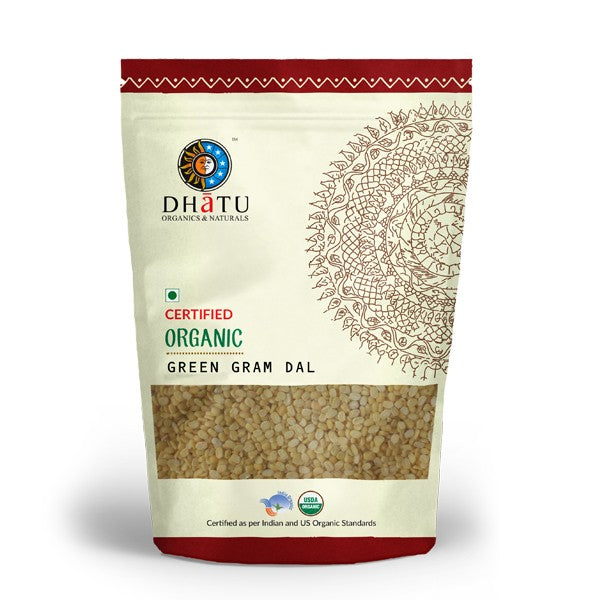
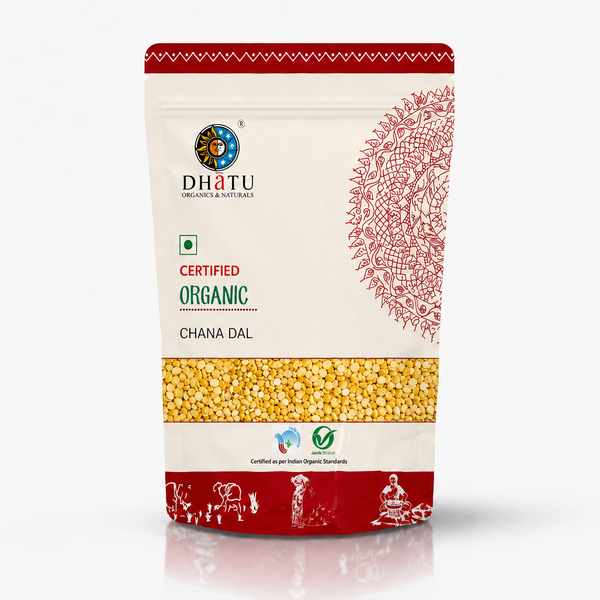
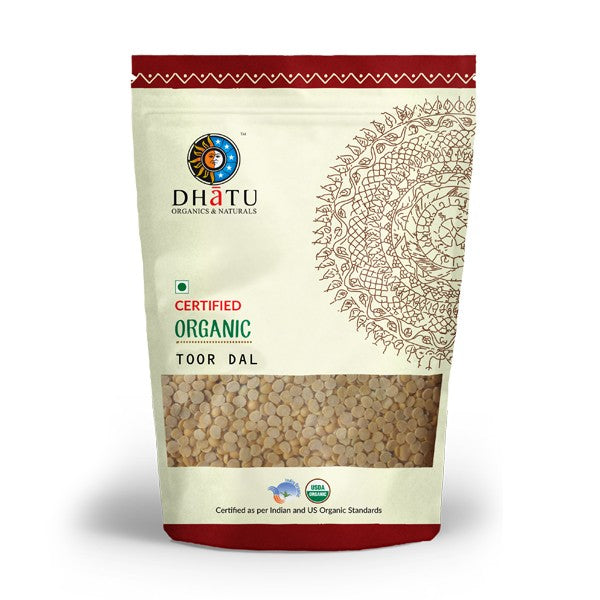
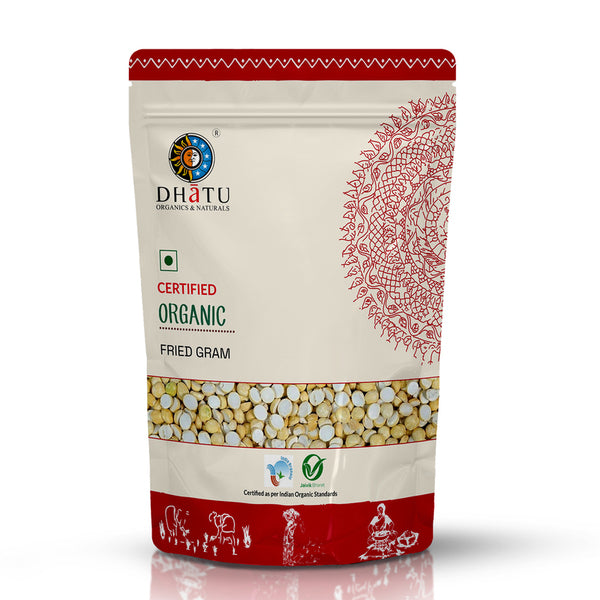
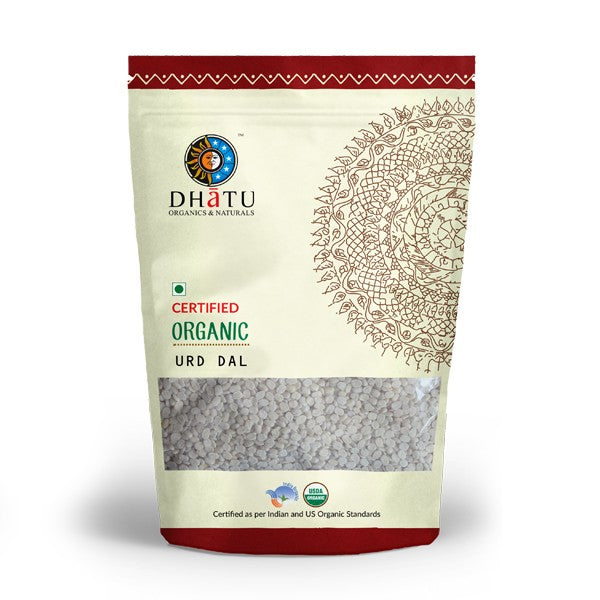
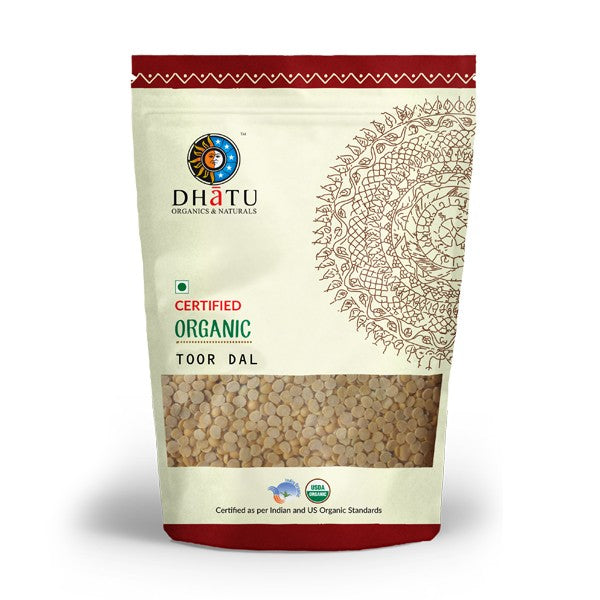
Dhatu Organics sources six certified organic dals from traditional farming communities across India — Moong, Chana, Toor, Urd, Fried Gram — each unpolished, additive-free and NPOP certified. These are everyday pulses as they should be: no chemical polishing to extend shelf appearance, no preservatives, no split-processing agents. Just the whole seed, cleaned and packed.
Shop Dhatu Organic Dals & Pulses
Green Gram Dal (Moong Dal) 500g
24.5g protein · 8.5mg iron · GI ~25
The most digestible of all dals. Quick to cook, no soaking needed. Used in khichdi, dal tadka, cheela and sprouts.
From ₹150
Buy Moong Dal → 🟡Organic Chana Dal 500g
20.4g protein · GI ~8 · 11.8g fibre
Split Bengal gram with one of the lowest GI scores of any legume. Used in dal tadka, halwa, chilla and traditional Karnataka preparations.
From ₹130
Buy Chana Dal → 🤎Organic Fried Gram (Roasted Chana Dal) 500g
22.5g protein · Ready to eat · 11.2g fibre
Traditionally roasted split Bengal gram — Hurigadale in Kannada. A crunchy snack, chutney base and besan source, all in one.
From ₹160
Buy Fried Gram → 🟠Organic Toor Dal 500g
22.3g protein · 15g fibre · Iron 2.7mg
India's most-used dal — the backbone of sambar, dal tadka and rasam. NPOP certified, unpolished, no chemical treatment.
From ₹160
Buy Toor Dal 500g → 🟠Organic Toor Dal 1kg
22.3g protein · 15g fibre · Better value
The same certified organic toor dal in a 1kg value pack — ideal for households that cook sambar and dal several times a week.
From ₹310
Buy Toor Dal 1kg → ⚫Organic Urd Dal (Urad Dal) 500g
26.1g protein · 154mg calcium · 7.3mg iron
Highest protein of all common dals. The foundation of idli and dosa batter, dal makhani, medu vada and papad.
From ₹150
Buy Urd Dal →Nutritional Comparison — All Organic Dals (per 100g, dry weight)
| Dal | Protein | Dietary Fibre | Iron | Calcium | Energy | GI (approx.) | Best Used In |
|---|---|---|---|---|---|---|---|
| Moong Dal (Green Gram) | 24.5g | 16.3g | 8.5mg | 75mg | 340 kcal | ~25 ✦ Lowest | Khichdi, tadka, sprouts, cheela |
| Chana Dal (Bengal Gram) | 20.4g | 11.8g | 3.3mg | 56mg | 369 kcal | ~8 ✦ Very Low | Dal fry, halwa, chilla, curries |
| Fried Gram (Roasted Chana) | 22.5g | 11.2g | 3.0mg | — | 369 kcal | ~35 | Snack, chutney, besan base |
| Toor Dal (Pigeon Pea) | 22.3g | 15.0g | 2.7mg | 73mg | 335 kcal | ~29 | Sambar, dal tadka, rasam, khichdi |
| Urd Dal (Black Gram) | 26.1g ✦ | 18.3g ✦ | 7.3mg | 154mg ✦ | 347 kcal | ~43 | Idli, dosa, dal makhani, medu vada |
✦ = Highest in category across these five dals. Sources: ICMR — Nutritive Value of Indian Foods (Gopalan, Rama Sastri & Balasubramanian, NIN Hyderabad); GI values: Foster-Powell et al., International table of glycemic index and glycemic load values, American Journal of Clinical Nutrition, 2002. All values are for raw dry dal before cooking.
Why Dhatu Organic Dals?
Frequently Asked Questions
Which of these dals has the highest protein content?
Urd Dal (Black Gram) has the highest protein at 26.1g per 100g (dry weight) — the most of any commonly consumed dal in India. Moong Dal (Green Gram) comes second at 24.5g, followed by Fried Gram at 22.5g, Toor Dal at 22.3g and Chana Dal at 20.4g. All values are per 100g dry weight, per ICMR data.
Which dal has the lowest glycaemic index (GI)?
Chana Dal has one of the lowest GI scores of any commonly eaten legume — approximately GI 8, which is considered very low by international nutritional standards (low GI = below 55). Moong Dal is next at approximately GI 25. Both are substantially lower GI than white rice (GI ~72) or white bread (GI ~75). As a category, all dals and pulses tend to have low-to-moderate GI, making them a natural fit for traditional Indian low-GI meals like dal-rice or dal-roti.
Source: Foster-Powell et al., American Journal of Clinical Nutrition, 2002.
Do organic dals need to be soaked before cooking?
It depends on the dal:
- Moong Dal — No soaking needed. Cooks in 15–20 minutes directly. The fastest-cooking of the five.
- Chana Dal — Soak 30–60 minutes for stovetop cooking; no soak needed in a pressure cooker (3–4 whistles).
- Toor Dal — Soak 15–30 minutes for faster, more even cooking. Pressure cooker: 2–3 whistles.
- Urd Dal — For dal makhani, soak 6–8 hours or overnight for the best texture. For idli/dosa batter, soak 4–6 hours and grind wet.
- Fried Gram — Ready to eat; no cooking or soaking required.
What does "unpolished" mean for dals — and why does it matter?
Most commercially available dals are "polished" during processing — a step where the split seeds are tumbled with water, oil or leather to give them a uniform, shiny appearance that appeals to consumers and helps mask any colour variations. Polishing removes a portion of the natural bran layer from the seed surface, along with the fibre, iron and B vitamins concentrated there.
Unpolished dals look slightly less uniform — they may have a matte surface and colour variation between seeds — but they retain more of their natural nutritional profile. Dhatu's dals are unpolished: cleaned and graded for purity, but not cosmetically treated.
How should I store organic dals? What is the shelf life?
Store in an airtight container in a cool, dry place away from direct sunlight. A glass jar or BPA-free container works well. Organic dals without preservatives have a shelf life of 6–12 months when stored correctly. Signs of spoilage include musty smell, presence of moisture or visible pests — if you see any of these, discard and replace. Dhatu recommends buying in quantities you'll use within 3–4 months for best flavour and freshness.
Are all six dals certified organic — or just some?
All six dals in this collection — Moong, Chana, Fried Gram, Toor Dal 500g, Toor Dal 1kg and Urd Dal — are NPOP (National Programme for Organic Production) certified. This is India's national standard for organic certification, equivalent in rigour to EU Organic and USDA Organic for domestic production. Certification requires annual farm inspections and verified input records.
Can I use these dals to make idli and dosa batter?
Yes — Organic Urd Dal is the traditional and correct choice for idli and dosa batter. The classic South Indian ratio is 1 part urad dal to 3–4 parts idli rice. Soak both separately for 4–6 hours, grind the urd dal with cold water to a smooth, airy batter, then combine with the ground rice and ferment overnight (8–12 hours at room temperature). The fermented batter produces idlis that are soft, spongy and well-risen. Dhatu's unpolished urd dal ferments well — the natural bran layer supports active fermentation.