

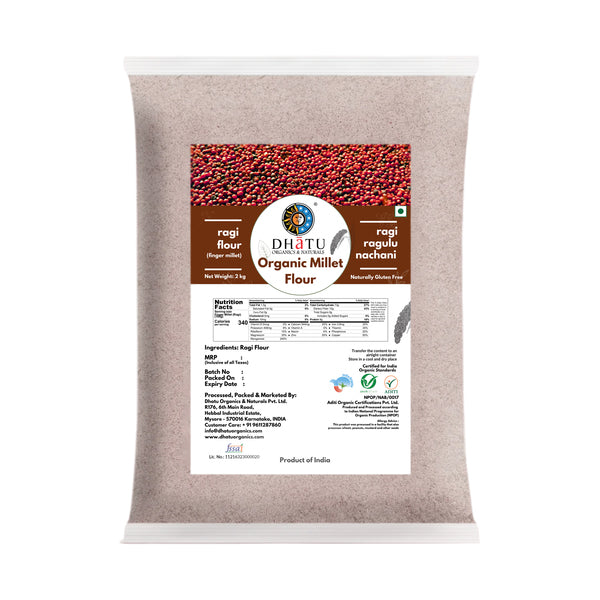
Organic Ragi Flour 2kg
₹ 300.00
Same certified organic stone-cold-milled ragi flour — in a family-sized bulk pack designed for daily millet cooking. At 364mg calcium per 100g, ragi flour beats milk by 3:1, ma... Read more ↓
100% Organic
No Additives
Free Delivery ₹749+
Ingredients information coming soon. Contact us at info@dhatuorganics.com for details.
Detailed nutrition facts coming soon. Contact us at info@dhatuorganics.com for specifics.
We deliver across India within 3–5 business days via trusted logistics partners.
- Free delivery on orders above ₹749.
- Orders dispatched within 1 business day of payment confirmation.
- Perishable goods cannot be returned once dispatched. Non-perishable items may be returned within 7 days in original, unopened condition.
- For damaged or incorrect items, contact info@dhatuorganics.com within 48 hours of delivery.
Choose Your Pack
Same certified organic stone-cold-milled ragi flour — in a family-sized bulk pack designed for daily millet cooking. At 364mg calcium per 100g, ragi flour beats milk by 3:1, making daily ragi rotis or porridge a powerful nutritional practice rather than just a dietary swap.
Why Bulk Ragi Flour?
Families that have made ragi a daily staple — for rotis, dosas, porridge or ladoos — go through 500g within 10–12 days. This bulk pack (available in 2kg and 5kg) ensures you never run out and lowers the per-gram cost significantly over repeat 500g purchases. The flour is identical in quality: certified organic, stone cold-milled, zero additives.
Key Nutritional Benefits
- Exceptional calcium — 364mg per 100g, naturally occurring in the grain's outer coat
- High dietary fibre — 11.5g per 100g for digestive health and satiety
- Iron and magnesium — 3.9mg and 137mg per 100g respectively
- Naturally gluten-free
Storage for Bulk Ragi Flour
| Storage Method | Expected Freshness | Tip |
|---|---|---|
| Airtight container, room temp | 3–4 months | Avoid direct sunlight and humidity |
| Airtight container, refrigerated | 5–6 months | Best for coastal/humid climates |
| Freezer (sealed bag) | Up to 12 months | Bring to room temp before use |
Stone-milled whole grain flour retains live wheat germ oils — proper storage prevents oxidation and maintains nutritional quality.
How to Use Ragi Flour
- Daily ragi roti — Knead with hot water; add 20% whole wheat for softer texture
- Ragi dosa — Blend with urad dal, ferment overnight for lacy, crisp dosas
- Ragi ambali / porridge — Traditional Karnataka breakfast; mix with jaggery and warm milk
- Ragi ladoo — Roasted ragi, jaggery and ghee; nutritious festive sweet
- Ragi mudde — Traditional steamed balls served with saaru (rasam) or curries
Millets and blood sugar: frequently asked questions
Is ragi good for diabetes?
Ragi (finger millet) can be considered as part of an individual meal plan, but it is still a carbohydrate food and can raise blood sugar. It is not a treatment for diabetes. How much you eat, how it is prepared and what you eat with it matter. If you have diabetes, ask your doctor or dietitian whether ragi fits your needs and what portion is appropriate.
Is jowar good for diabetes?
Jowar (sorghum) is also a carbohydrate-containing grain, not a diabetes treatment. It may fit into your meal plan, but it should not be assumed to prevent blood-sugar rises. Ask your doctor or dietitian how jowar can fit into your meals and which portion suits you.
Are ragi and jowar always low GI?
No. A systematic review of millet research reported intermediate average glycaemic index values for finger millet and sorghum, with results varying across foods and preparation methods. These findings do not establish a GI value or a blood-sugar benefit for this product.
What should I consider when preparing millet meals?
Consider the total carbohydrate portion and any added sugar, including jaggery or honey. The American Diabetes Association's carbohydrate guidance favours whole, minimally processed carbohydrate foods and limiting added sugars. Your doctor or dietitian can help you choose portions and balanced meals for your needs. Do not change prescribed treatment because you add millets to your diet.
Explore our Organic Ragi Whole Grain and Organic Jowar Flour. These are food choices, not medical recommendations.