

 74% OFF
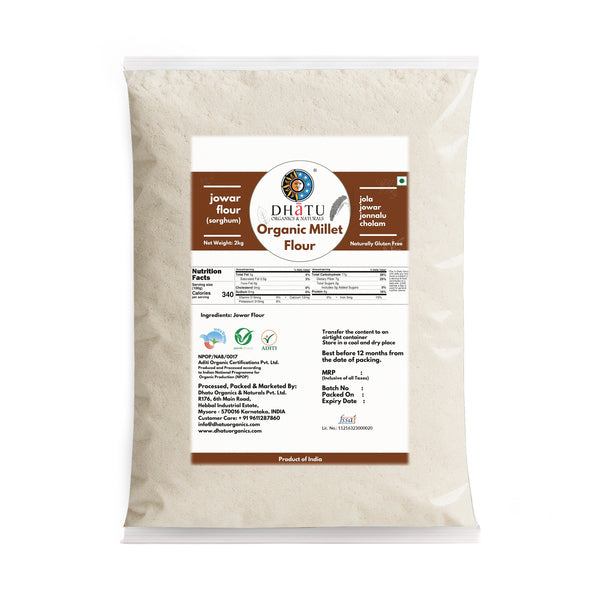
Organic Jowar Flour 500g | Sorghum | Jonna | Jola
₹ 99.00
Sorghum (jowar) is the world's fifth most important cereal crop and India's primary dryland grain. With 165mg magnesium per 100g — the highest of any common Indian cereal — and... Read more ↓
100% Organic
No Additives
Free Delivery ₹499+
100% Organic Sorghum (Jowar / Jonna / Jola / Cholam). Vegan. Naturally gluten-free. No preservatives, no additives, no artificial flavours or colours.
Nutrition FactsServing: 30g (3 tbsp)
| Nutrient | Per serving | Per 100g | % RDA* |
|---|---|---|---|
| Energy | 102 kcal | 339 kcal | 5.1% |
| Protein | 3.1g | 10.4g | 6.2% |
| Carbohydrates | 21.8g | 72.6g | 6.7% |
| Of which Sugars | 0.3g | 1g | <1% |
| Total Fat | 0.6g | 1.9g | <1% |
| Of which Saturated Fat | <0.1g | 0.3g | <1% |
| Dietary Fibre | 2.2g | 7.2g | 8.6% |
| Sodium | 3mg | 10mg | <1% |
| Iron | 1.3mg | 4.4mg | 7.6% |
| Magnesium | 50mg | 165mg | 14.6% |
| Niacin (B3) | 1.1mg | 3.7mg | 6.9% |
* % RDA based on a 2000 kcal reference diet (FSSAI). Values are approximate and may vary by batch.
We deliver across India within 3–5 business days via trusted logistics partners.
- Free delivery on orders above ₹499.
- Orders dispatched within 1 business day of payment confirmation.
- Perishable goods cannot be returned once dispatched. Non-perishable items may be returned within 7 days in original, unopened condition.
- For damaged or incorrect items, contact info@dhatuorganics.com within 48 hours of delivery.
Choose Your Pack
Sorghum (jowar) is the world's fifth most important cereal crop and India's primary dryland grain. With 165mg magnesium per 100g — the highest of any common Indian cereal — and a neutral, versatile flavour that makes it the easiest millet to adopt for everyday cooking, jowar flour is an ideal daily staple for the health-conscious Indian kitchen.
What is Jowar Flour?
Jowar (Sorghum bicolor), also called jonna (Telugu), jola (Kannada), cholam (Tamil) and jwari (Marathi), is a staple cereal across the Deccan plateau. It is drought-tolerant, naturally gluten-free and has one of the mildest flavours among millets — making it the most accessible millet flour for those new to whole grain cooking. Our jowar flour is stone cold-milled from certified organic sorghum to preserve its magnesium-rich bran.
Key Nutritional Benefits
- Highest magnesium among cereals — 165mg per 100g (14.6% RDA per 30g), supporting 300+ enzymatic reactions
- Good protein — 10.4g per 100g for a gluten-free grain
- Dietary fibre — 7.2g per 100g for digestive health
- Niacin (B3) — 3.7mg per 100g, essential for energy metabolism and skin health
- Iron — 4.4mg per 100g (7.6% RDA per 30g serving)
- Low phytic acid — lower than bajra or ragi, improving mineral bioavailability
- Naturally gluten-free — safe for coeliac disease and gluten sensitivity
Jowar vs Other Millets: Magnesium Content (per 100g)
| Flour | Magnesium (mg) | % RDA per 100g |
|---|---|---|
| Dhatu Organic Jowar Flour | 165 | 48.5% |
| Organic Buckwheat Flour | 251 | 73.8% |
| Ragi Flour | 137 | 40.3% |
| Bajra Flour | 137 | 40.3% |
| Whole Wheat Atta | 138 | 40.6% |
| White Rice Flour | 23 | 6.8% |
Source: ICMR-NIN Nutritive Value of Indian Foods, 2017. Magnesium RDA (adult): 340mg/day (FSSAI).
How to Use Jowar Flour
- Jolada rotti — Karnataka-style thin roti; use boiling water for dough
- Jowar bhakri — Maharashtrian thick flatbread; pat by hand, cook on tawa
- Jowar dosa — Blend with urad dal and rice; ferment for lacy, crisp dosas
- Jowar porridge (ambali) — Thin porridge with buttermilk; traditional Deccan cooling drink
- Multigrain blend — Mix 40% jowar + 40% whole wheat + 20% ragi for an everyday nutritious atta
- Gluten-free baking — Blend with besan and starch for cookies, muffins and pancakes
Frequently Asked Questions
Jowar (sorghum) has a neutral, slightly earthy flavour that makes it one of the most versatile gluten-free flours. It has a lower phytic acid content than many other millets, making its minerals more bioavailable. Its high magnesium content (165mg/100g) supports over 300 enzymatic reactions in the body, including blood pressure regulation.
Yes. Jowar has a moderate GI of approximately 62–77, and its high fibre content (7.2g/100g) slows glucose absorption. Research from ICRISAT has shown that sorghum consumption is associated with lower post-meal blood glucose responses compared to refined wheat. It is a common recommendation by dietitians for Type 2 diabetic meal plans.
Heat water to near boiling. Gradually add jowar flour and knead quickly into a smooth, pliable dough (the heat gelatinises some starch, aiding binding). Pat into thin rotis on a damp surface. Cook on a dry tawa over high heat for 30–45 seconds per side, then hold with tongs over direct flame for 10 seconds for authentic char marks. Serve hot with ghee.
Jowar (sorghum) has a milder, more neutral taste while bajra (pearl millet) is earthier and stronger. Jowar has slightly less iron (4.4 vs 8mg/100g) but more magnesium (165 vs 137mg/100g). Bajra is considered more warming in Ayurveda and is traditionally a winter grain; jowar is eaten year-round across South India and the Deccan.