

 47% OFF
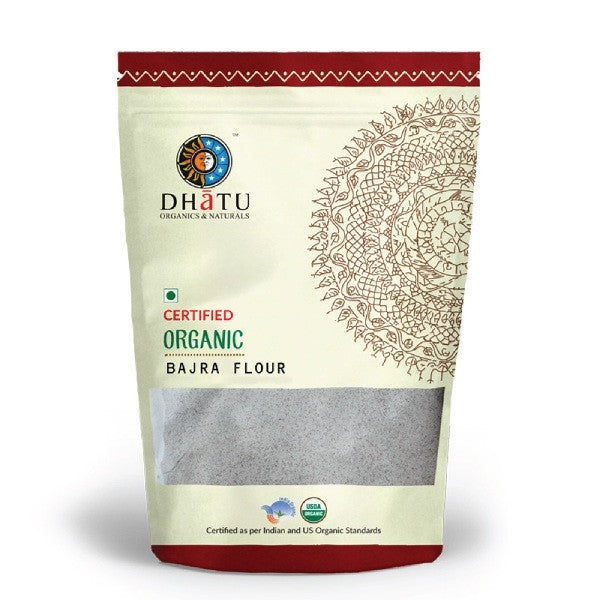
Organic Bajra Flour 500g
₹ 99.00
Pearl millet (bajra) has the highest iron content of any Indian cereal — 8mg per 100g, almost double that of whole wheat (4mg) and more than twice ragi (3.9mg). Combined with 1... Read more ↓
100% Organic
No Additives
Free Delivery ₹499+
100% Organic Pearl Millet (Bajra / Sajja / Kambu). Vegan. Naturally gluten-free. No preservatives, no additives, no artificial flavours or colours.
Nutrition FactsServing: 30g (3 tbsp)
| Nutrient | Per serving | Per 100g | % RDA* |
|---|---|---|---|
| Energy | 105 kcal | 349 kcal | 5.2% |
| Protein | 3.5g | 11.6g | 7% |
| Carbohydrates | 20.3g | 67.5g | 6.2% |
| Of which Sugars | 0.2g | 0.8g | <1% |
| Total Fat | 1.5g | 5g | 2.2% |
| Of which Saturated Fat | 0.3g | 1g | 1.4% |
| Dietary Fibre | 2.6g | 8.5g | 10.2% |
| Sodium | 3mg | 10mg | <1% |
| Iron | 2.4mg | 8mg | 14.1% |
| Magnesium | 41mg | 137mg | 12.1% |
| Zinc | 0.9mg | 3.1mg | 8.2% |
* % RDA based on a 2000 kcal reference diet (FSSAI). Values are approximate and may vary by batch.
We deliver across India within 3–5 business days via trusted logistics partners.
- Free delivery on orders above ₹499.
- Orders dispatched within 1 business day of payment confirmation.
- Perishable goods cannot be returned once dispatched. Non-perishable items may be returned within 7 days in original, unopened condition.
- For damaged or incorrect items, contact info@dhatuorganics.com within 48 hours of delivery.
Choose Your Pack
Pearl millet (bajra) has the highest iron content of any Indian cereal — 8mg per 100g, almost double that of whole wheat (4mg) and more than twice ragi (3.9mg). Combined with 11.6g protein and warming properties acknowledged in Ayurveda, bajra flour is one of the most nutritionally compelling everyday flours for Indian kitchens.
What is Bajra Flour?
Bajra (Pennisetum glaucum), also called pearl millet, sajja (Telugu), kambu (Tamil) and bajri (Gujarati), is a drought-resistant crop grown predominantly in Rajasthan, Gujarat, Maharashtra and Andhra Pradesh. It has been cultivated in India for at least 2,000 years and remains a dietary staple in western India. Our bajra flour is stone cold-milled from certified organic pearl millet, preserving the iron-rich outer layers of the grain.
Key Nutritional Benefits
- Highest iron among cereals — 8mg per 100g (14.1% RDA per 30g serving); vital for haemoglobin and energy
- High protein — 11.6g per 100g, among the highest of any millet
- Good dietary fibre — 8.5g per 100g for digestive health
- Magnesium and zinc — 137mg Mg and 3.1mg Zn per 100g support bone and immune health
- Naturally gluten-free — safe for coeliac disease and gluten sensitivity
- Low to medium GI — approximately 55–70; suitable for diabetics
Bajra vs Other Flours: Iron Content (per 100g)
| Flour | Iron (mg) | % of Adult Daily Requirement |
|---|---|---|
| Dhatu Organic Bajra Flour | 8.0 | 47% |
| Sattu (Roasted Bengal Gram) | 9.1 | 54% |
| Organic Ragi Flour | 3.9 | 23% |
| Whole Wheat Atta | 4.0 | 24% |
| Jowar Flour | 4.4 | 26% |
| White Rice Flour | 0.7 | 4% |
Source: ICMR-NIN Nutritive Value of Indian Foods, 2017. RDA for iron (adult male): 17mg/day (FSSAI).
How to Use Bajra Flour
- Bajra bhakri — Thick traditional roti; pat by hand, cook on heavy tawa with ghee
- Bajra roti — Use hot water; add 20% jowar for easier handling
- Bajra khichdi — Slow-cooked with toor dal and vegetables; winter comfort food
- Bajra papad — Traditional sun-dried wafers; deep-fry or roast
- Bajra porridge — Thin bajra flour with hot water and jaggery; traditional morning drink in Rajasthan
- Multigrain rotis — Blend 50% bajra with ragi and jowar for a balanced multi-millet roti
Frequently Asked Questions
Pearl millet contains 8mg of iron per 100g — one of the highest among cereals (ICMR-NIN 2017). A 30g serving contributes 2.4mg of iron, or about 14% of the daily adult requirement. This non-haem iron is best absorbed when consumed alongside vitamin C-rich foods such as lime juice or tomato-based chutneys.
Yes. Pearl millet is naturally gluten-free. Bajra flour is suitable for people with coeliac disease or gluten intolerance and is commonly used as a wheat substitute in traditional recipes across Rajasthan, Gujarat and Maharashtra.
Bajra bhakri is a thick, unleavened flatbread traditional to Maharashtra and Gujarat. Knead bajra flour with hot water into a stiff dough. Pat into thick circles (bajra lacks gluten, so it cannot be rolled thin) and cook on a heavy tawa over medium heat until the surface dries and spots char slightly. Serve with ghee, jaggery or dry garlic chutney.
Bajra has a warming nature in Ayurvedic tradition and is particularly recommended in winter. Its high magnesium content (137mg/100g) supports muscle function and bone density alongside calcium. Its iron content addresses common deficiency, especially in women. Regular consumption supports energy metabolism and haemoglobin production.