

Dhatu Organics — Certified Organic Sprouted Flours
Sprouted atta & flour for rotis, phulkas, and everyday cooking — Wheat, Jowar, Bajra & Ragi
Each grain is sprouted before milling. Sprouting breaks down phytic acid, activates digestive enzymes, and makes minerals like iron, calcium, and zinc significantly more available — then cold-milled to protect what the sprouting created. No heat treatment. No additives.

Sprouted Wheat Flour
Phulkas that puff better — phytic acid reduced by up to 75%
Sprouting activates enzymes inside the wheat kernel that break down phytic acid — the compound that blocks mineral absorption in regular atta. Cold-milled after sprouting to preserve the enzymes and B vitamins the germination process created.
- Phytic acid reduced by up to 75% vs whole wheat atta — iron, zinc, and calcium become significantly more bioavailable
- Gluten structure changes during sprouting — dough is softer, requires less water, and phulkas puff more consistently
- Cold-milled to protect heat-sensitive B vitamins and enzymes — no high-heat processing at any stage
Choose pack size
Ships within 24 hrs · Free delivery above ₹499 · NPOP certified organic · Direct checkout — no account needed
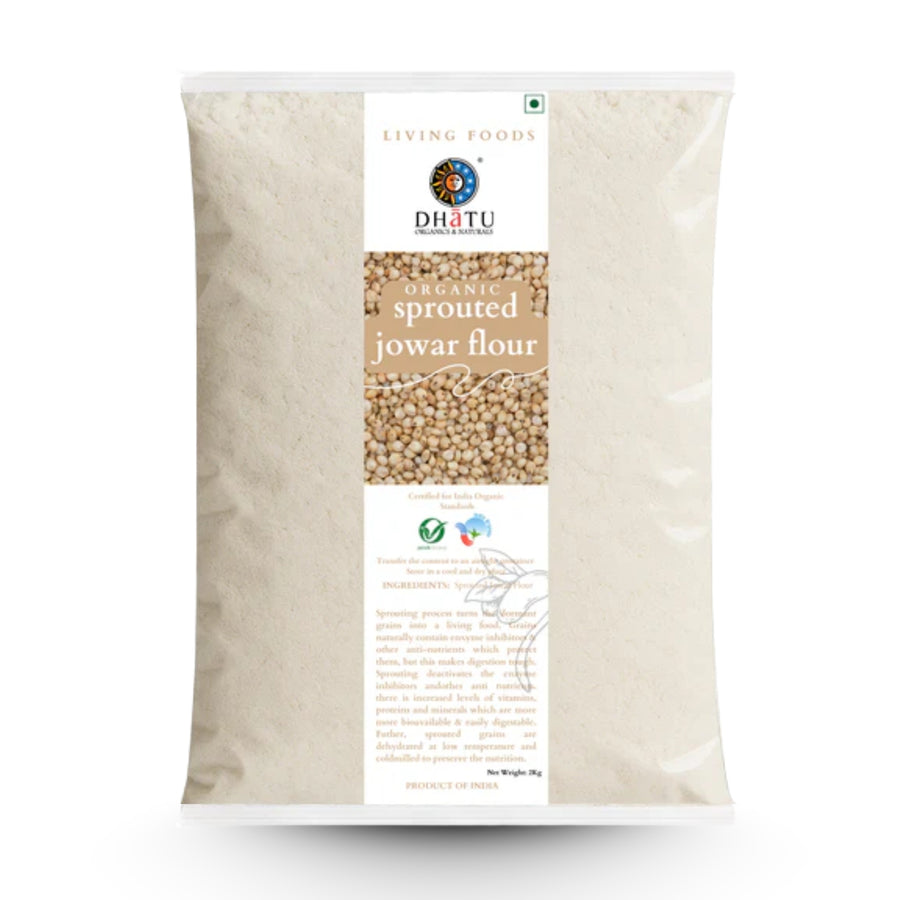
Sprouted Jowar Flour
Gluten-free bhakri flour that holds together and isn't bitter
Jowar (sorghum) is naturally gluten-free, which makes bhakris traditionally more brittle than wheat rotis. Sprouting partially breaks down jowar's cell walls, improving water absorption so the dough is more pliable — and the sprouting process reduces the tannins responsible for the raw bitterness of unsprouted jowar flour.
- Gluten-free — naturally suited to wheat-free diets, no artificial binding agents needed
- 11–12g protein per 100g — higher than whole wheat atta and more than double white flour
- Sprouting removes anti-nutritional tannins and reduces the bitterness raw jowar flour is known for
Choose pack size
Ships within 24 hrs · Free delivery above ₹499 · Cold-milled, no heat treatment
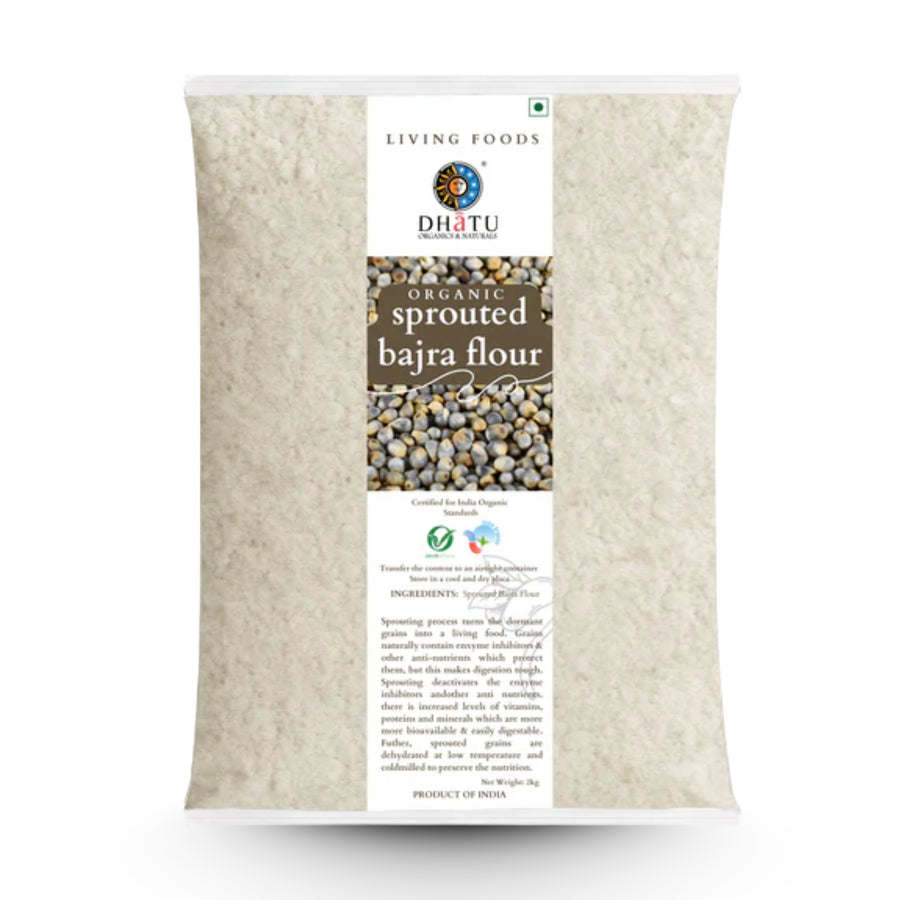
Sprouted Bajra Flour
~8mg iron per 100g — sprouted so it's actually absorbed
Bajra (pearl millet) has one of the highest iron contents of any grain — approximately 8mg per 100g. The problem with raw bajra flour: most of that iron is bound to phytic acid and cannot be meaningfully absorbed. Sprouting breaks down the phytic acid, converting bajra's iron from present to bioavailable.
- ~8mg iron per 100g — significantly higher than wheat (3mg) or white rice (0.3mg)
- Sprouting reduces phytic acid by approximately 50%, unlocking the iron and zinc for absorption
- Rich in magnesium (137mg per 100g) and phosphorus — supports bone density and energy metabolism
Choose pack size
Ships within 24 hrs · Free delivery above ₹499 · NPOP certified organic
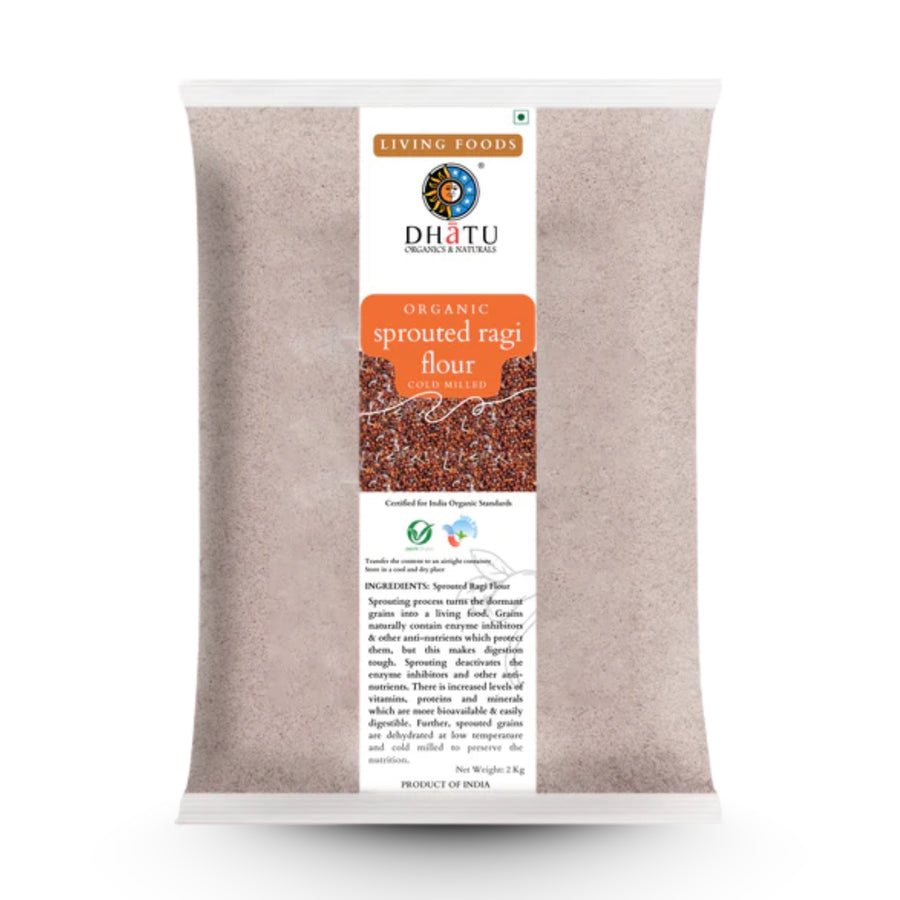
Sprouted Ragi Flour
364mg calcium per 100g — sprouted, cold-milled, milder taste
Ragi (finger millet) has 364mg calcium per 100g — more than any other cereal grain, and more than cow's milk. But calcium absorption depends on what else is in the grain. Sprouting reduces the phytic acid and tannin content that would otherwise limit how much of that calcium your body actually uses. Cold-milled to preserve the enzymes the sprouting activated.
- 364mg calcium per 100g — higher than milk (125mg per 100ml), without dairy
- Sprouting reduces phytic acid significantly, improving calcium and iron bioavailability
- Milder flavour than raw-milled ragi flour — the sprouting process reduces astringency, making rotis more palatable
Choose pack size
Ships within 24 hrs · Free delivery above ₹499 · 5kg pack available for daily households
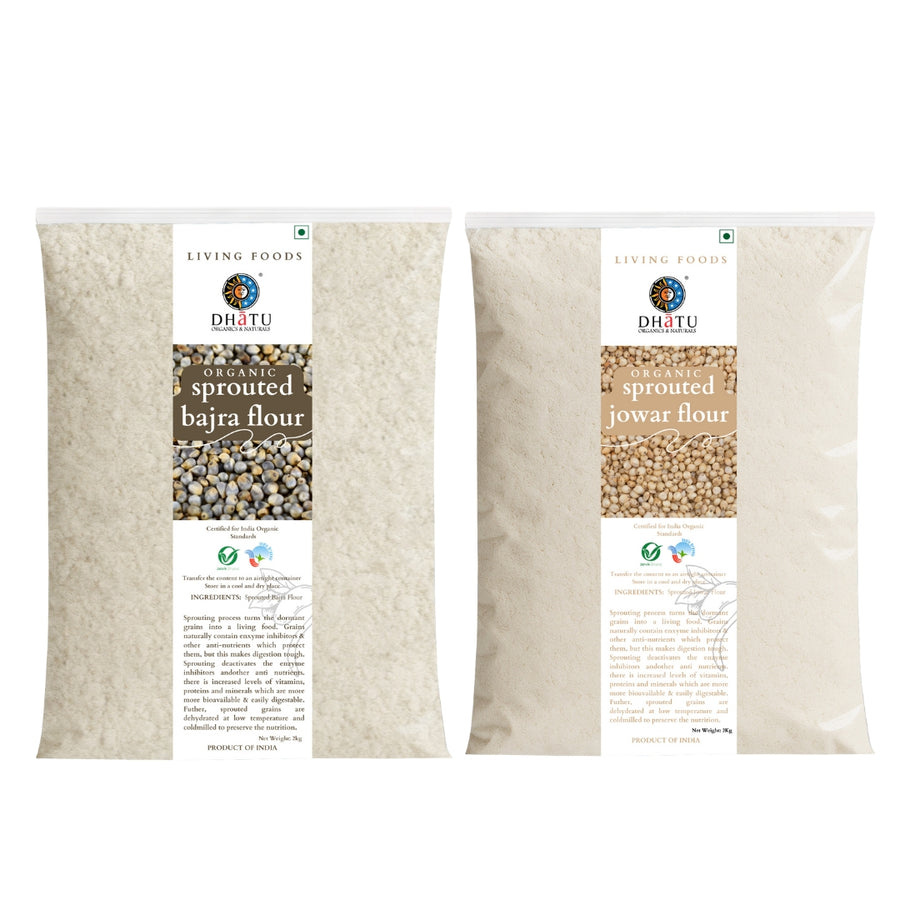
Sprouted Flour Combo Packs · 4kg
Two grains, one order — rotate your rotis across the week
Nutritionists widely recommend rotating grain varieties rather than relying on a single flour. Each grain brings a different amino acid profile, mineral balance, and flavour. These combo packs make it practical — 2kg of each flour, at a lower cost per kg than buying individually.
- Jowar + Bajra combo: both gluten-free grains, ideal for a wheat-free household rotation
- Ragi + Wheat combo: the classic South Indian pairing — calcium-rich ragi with everyday wheat atta
- 4 kg total in both combos — enough for 6–8 weeks of daily rotis for a family of 3–4
Choose combo
4 kg total — 2 kg of each flour · Ships within 24 hrs · Free delivery above ₹499
The sprouting process explained
What happens inside a grain when it is sprouted — and why it matters in your roti flour
Every grain contains phytic acid — a compound that binds to minerals like iron, zinc, and calcium and prevents their absorption during digestion. Regular atta and flour contain all the iron and calcium listed on the label, but your body absorbs only a fraction of it. Sprouting changes this at the source, before the grain is ever milled.
Phytic acid breakdown — unlocking the minerals
When a grain sprouts, the enzyme phytase activates and begins breaking down phytic acid. This process reduces phytic acid content by 50–75% depending on the grain and sprouting duration. The direct result: the iron, zinc, and calcium bound to phytic acid are freed and become available for absorption. The same mineral content, but significantly more of it reaches your body.
Better dough, softer rotis, more consistent phulkas
Sprouting partially breaks down the endosperm structure of the grain — the starchy interior. This changes how the flour absorbs water: sprouted doughs typically require less water, become more pliable and elastic, and hold together better when rolled thin. Phulkas from sprouted wheat flour puff more consistently. Jowar bhakris made from sprouted flour crack less at the edges. The texture improvement is practical and noticeable from the first batch.
Cold-milled to preserve what sprouting created
High-heat milling destroys heat-sensitive vitamins (particularly B1, B2, and B6) and the enzymes activated during sprouting. Cold-milling keeps the flour temperature low throughout the grinding process — the same principle behind cold-pressed oil. The sprouting process creates value inside the grain; cold-milling preserves it. Without cold-milling, much of the benefit of sprouting is lost before the flour reaches your kitchen.
How the four sprouted flours compare for everyday roti making
All values per 100g raw flour, approximate from published nutritional references. Protein and mineral values are for unprocessed grain — milled sprouted flour retains these to a high degree.
| Flour | Protein | Iron | Gluten | Best used for |
|---|---|---|---|---|
| 🌾 Sprouted Wheat | ~13g | ~3mg | Yes | Rotis, phulkas, parathas — direct 1:1 replacement for regular atta |
| 🌿 Sprouted Jowar | ~11–12g | ~4mg | Gluten-free | Bhakris, jowar rotis — blend with wheat for thinner rotis |
| 🟤 Sprouted Bajra | ~11g | ~8mg | Gluten-free | Bajra rotis, thicker flatbreads — good winter flour |
| 🔴 Sprouted Ragi | ~7g | ~3.9mg | Gluten-free | Ragi rotis, dosas, laddoos, porridge, baby food |
Jowar, bajra, and ragi are all naturally gluten-free. For soft rolled rotis from these flours, blending with 20–30% sprouted wheat flour improves pliability. All four flours work independently for traditional regional preparations.
Questions people ask before switching to sprouted flour
What is the difference between sprouted flour and regular whole wheat atta?
The key difference is what happens before milling. Regular atta is ground directly from dried wheat grain. Sprouted wheat flour starts with grain that has been germinated first — allowed to begin the growth process — which activates the enzyme phytase inside the kernel. Phytase breaks down phytic acid, the compound that binds to minerals in the grain and prevents their absorption. The result is a flour with similar protein and fibre content to whole wheat atta, but where the iron, zinc, and calcium are significantly more available to the body. The dough is also more pliable and the phulkas puff more consistently — differences you can notice from the first time you use it.
Can I use sprouted jowar or bajra flour to make rotis without adding wheat?
Yes, though the technique differs from wheat rotis. Jowar and bajra are naturally gluten-free, which means their doughs do not stretch or roll like wheat dough. Traditional bajra rotis (thick flatbreads from Rajasthan and Gujarat) are shaped by hand — pressed flat rather than rolled. Jowar bhakris are typically patted out on a wet surface. Sprouting improves the water absorption of both flours, making the dough more pliable than unsprouted versions, which reduces cracking at the edges. If you are transitioning, starting with a 70% jowar/bajra to 30% sprouted wheat blend and reducing the wheat proportion over time is a practical approach that maintains familiar texture while you adapt.
Does sprouted ragi flour taste better than regular ragi flour in rotis?
Yes — meaningfully so for most people. Raw-milled ragi flour has an astringent, slightly bitter quality that many find noticeable in rotis and dosas. This bitterness comes largely from tannins in the grain's bran layer. Sprouting significantly reduces tannin content, which is why sprouted ragi flour has a noticeably milder, slightly sweeter flavour compared to regular ragi flour. The colour also lightens slightly. Most households that have switched to sprouted ragi flour for rotis and laddoos find that family members who previously refused ragi products accept them more readily — the flavour barrier is reduced considerably.
How long does sprouted flour stay fresh, and how should I store it?
Sprouted flour has a slightly shorter shelf life than regular flour because the sprouting process activates enzymes and partially breaks down the grain's natural preservative structures. Stored correctly, it stays fresh for 3–4 months: keep it in an airtight container, away from direct sunlight, in a cool and dry environment. In warm climates (above 30°C), refrigeration extends freshness significantly. If you use flour daily, the 2kg or 5kg packs will be consumed well within this window. The 500g packs are ideal for first-time users who want to try before committing to a larger quantity.
Can I blend different sprouted flours together for rotis?
Absolutely — blending is a widely practised and recommended approach. A multigrain roti blend rotates the amino acid and mineral profile of your daily bread, since no single grain contains every essential nutrient in optimal proportions. A common practical blend is 60% sprouted wheat + 20% sprouted ragi + 20% sprouted bajra: the wheat provides gluten structure and pliability, the ragi adds calcium, and the bajra adds iron and magnesium. This blend rolls, puffs, and tastes very close to regular wheat rotis — the non-wheat flours add nutrition and flavour depth without making the dough difficult to work with.