

Buy Ragi Flour Online – Sprouted Ragi Flour, Malt, Porridge & Huri Hittu
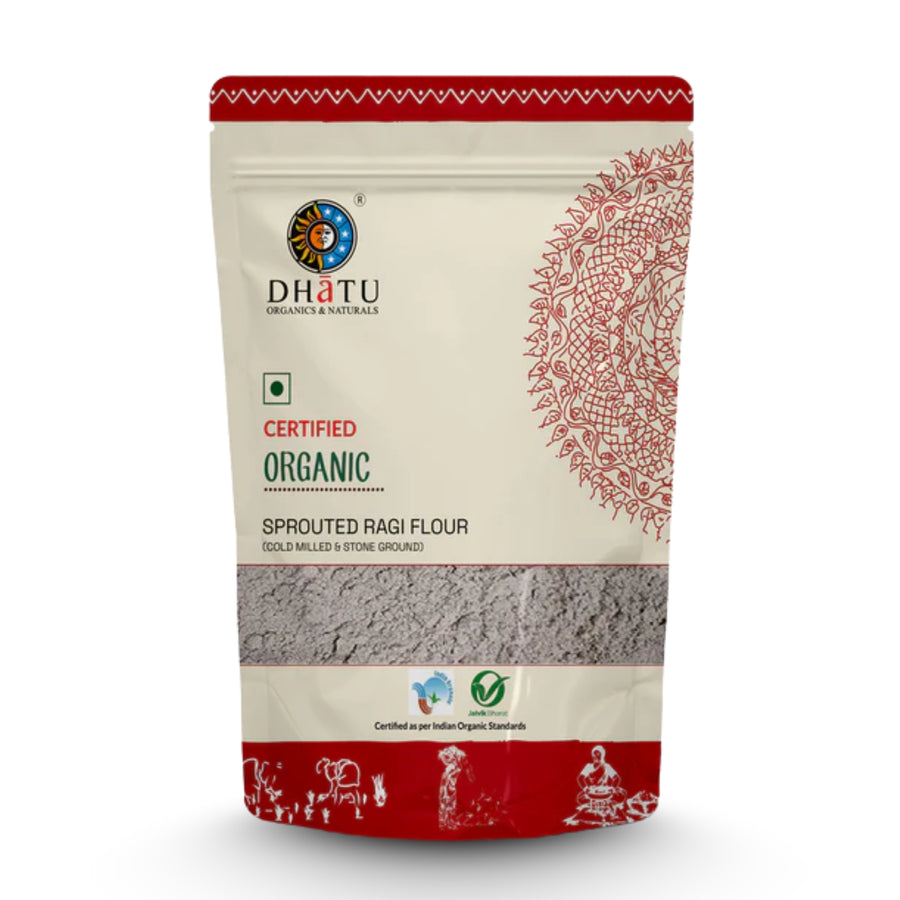
Sprouted Ragi Flour (Nachni Satva) · 500g to 5kg
Sprouted ragi flour (nachni satva): softer dough, milder taste
Cold-milled from grain that has been sprouted first. Use it just like your regular ragi flour, with a noticeably softer dough and a milder, slightly sweet flavour.
- 364mg calcium per 100g, far more than rice or wheat
- Sprouting reduces phytic acid, a natural compound that binds minerals
- Cold-milled in small batches in Mysuru, with no high-heat processing
Choose pack size
Ships within 24 hrs · Free delivery above ₹749 · Direct checkout — no account needed

Sprouted Ragi Porridge Mix · 250g
Simple sprouted ragi porridge, ready in 5 minutes
A traditional ragi kanji for the whole family: whisk into water or milk and cook for 5 minutes. Nothing added, nothing removed, just sprouted ragi.
- Naturally rich in calcium: 364mg per 100g, without dairy
- Ragi is naturally rich in iron
- No rice flour filler, no added sugar, no preservatives — pure sprouted ragi
250g pack · Ships within 24 hrs · Always consult your paediatrician before introducing new foods
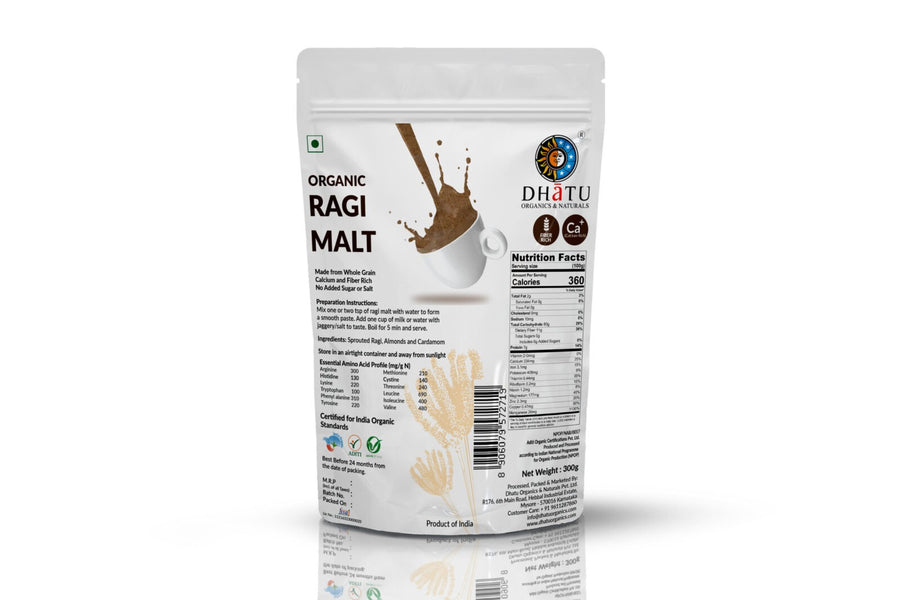
Organic Ragi Malt · 300g
The malted grain drink — naturally sweet, ready in 90 seconds
Sprouted ragi, gently malted for a naturally sweet, nutty character. Stir two spoons into warm milk or water. Ready in 90 seconds. One glass in the morning tells you why this has lasted.
- Naturally malted — no added flavours, no artificial sweeteners
- Made from sprouted ragi for a naturally sweet, nutty taste
- Works warm or cold, with milk or water — no special preparation needed
Choose pack
300g — approx. 30 servings · Ships within 24 hrs · Free delivery above ₹749

Huri Hittu · Popped Ragi Flour 300g
No cooking needed — eat dry or stir into water in 60 seconds
Huri Hittu is ragi that has been popped — not milled from raw grain, not baked. This traditional method gives a distinct roasted character and makes it instantly ready to eat, no cooking required.
- No cooking needed — eat dry, mix into water, stir into buttermilk, or blend into a quick drink
- Traditional Huri Hittu method — ragi grain is popped like popcorn, then ground
- Ready to eat: the heat from popping pre-cooks the starch
300g — Karnataka tradition · Ships within 24 hrs · Free delivery above ₹749
About finger millet
Why ragi is unlike any other grain in your kitchen
Finger millet has been cultivated on the Deccan Plateau for over 4,000 years. It is not a trendy superfood — it is the original everyday grain of South India, eaten across all seasons and all ages, from infants to elders.
Naturally rich in calcium
At 364mg calcium per 100g, finger millet is one of the richest cereal sources of calcium, with far more than rice or wheat. For dairy-free and vegan households, it is a useful everyday grain.
The traditional grain for every stage of life
South Indian tradition uses ragi from infancy through old age. Kanji (porridge) for babies. Rotis and dosas for daily meals. Laddoos for nursing mothers. Malt drinks for the elderly. No other grain has this range of traditional applications across generations.
A filling whole grain
Whole ragi flour keeps all of the grain’s fibre, which makes ragi mudde, rotti and porridge filling, everyday meals. It is still a carbohydrate food: if you have diabetes, ask your doctor or dietitian how ragi fits into your meals.
Questions people ask before buying
Is sprouted ragi flour the same as regular ragi flour I buy at the supermarket?
No — the main difference is what happens before milling. Regular ragi flour is ground from raw dried grain. Sprouted ragi flour starts with grain that has been germinated first, which reduces phytic acid (a natural compound that binds minerals) and wakes up the grain’s own enzymes. Read more about sprouted ragi flour (nachni satva). The flavour is also noticeably milder and less astringent than regular ragi flour.
At what age can I introduce ragi to my baby?
Ragi porridge is traditionally introduced from around 6 months in South Indian households, once a baby has started on solids. Our Sprouted Ragi Porridge Mix contains nothing except sprouted ragi, with no rice filler, no sugar and no preservatives. Please talk to your paediatrician first about when and how to introduce any new food.
How is Huri Hittu different from regular ragi flour or sprouted ragi flour?
Huri Hittu (also written as hurihittu) is made from ragi grain that has been popped using dry heat — similar in principle to how popcorn is made from maize. The popped grain is then ground into flour. Because the starch has been pre-gelatinised by the heat, Huri Hittu can be eaten without cooking — you simply mix it with water, milk, or buttermilk. It has a distinct roasted flavour that regular and sprouted ragi flour do not have.
Does ragi malt taste bitter like raw ragi flour?
No. The malting process (gentle controlled heating of sprouted grain) converts some of the starches into natural sugars, which gives ragi malt a noticeably sweeter, nuttier flavour compared to raw milled ragi. Most people find the bitterness they associate with ragi flour is largely absent in a well-made ragi malt. Our Ragi Malt has no added sweeteners — the mild sweetness is natural.
Can I make regular soft rotis with ragi flour, or does it need special technique?
Ragi dough behaves differently from wheat dough because finger millet has no gluten. The trick is to use warm water when kneading and to add a small amount of whole wheat flour (about 20–25%) if you want a pliable roti that rolls out cleanly. Many South Indian households make ragi rotis by shaping them by hand directly on a wet banana leaf or plastic sheet rather than rolling. With practice, pure ragi rotis are achievable — but the wheat blend makes the process more forgiving for beginners.