

Dhatu Organics Certified Organic Rice
Heritage rice varieties with a lower glycaemic impact — Rajamudi, GABA, Black, Red & Brown
Five organically grown rice varieties, each with a distinct nutrition profile and a glycaemic index meaningfully lower than polished white rice. Grown without pesticides, milled without refining, shipped from Mysore.
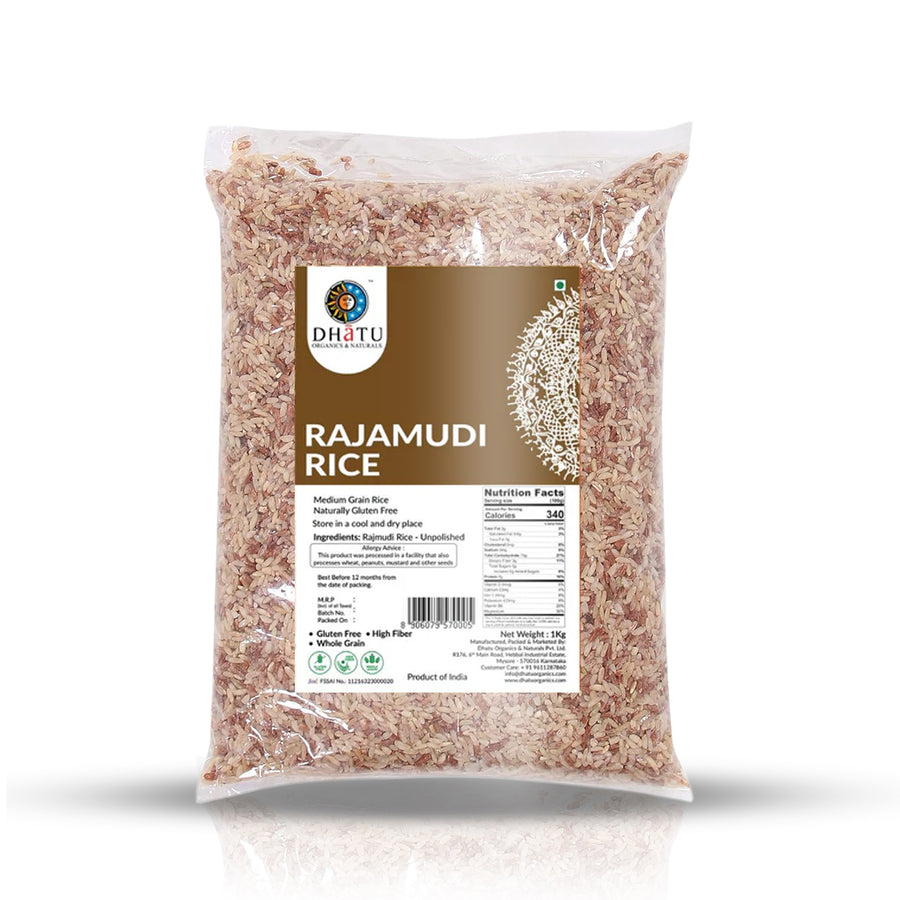
Rajamudi Rice · 1kg & 5kg
Unpolished heritage grain — earthy flavour, GI ~52, bran fully intact
Rajamudi was the preferred rice of the Mysore royal household and remains one of India's most culturally significant heritage varieties. Grown in the Deccan plateau, the bran layer is left intact — which is where the nutrition and the flavour both live.
- Unpolished — bran layer intact means more dietary fibre, zinc, and B vitamins per serving
- GI of approximately 52, compared to polished white rice at 70–80 — a meaningful difference when eaten daily
- Earthy, slightly nutty flavour with a firmer grain that holds its shape in dal and curd rice
Choose pack size
Ships within 24 hrs · Free delivery above ₹499 · NPOP certified organic
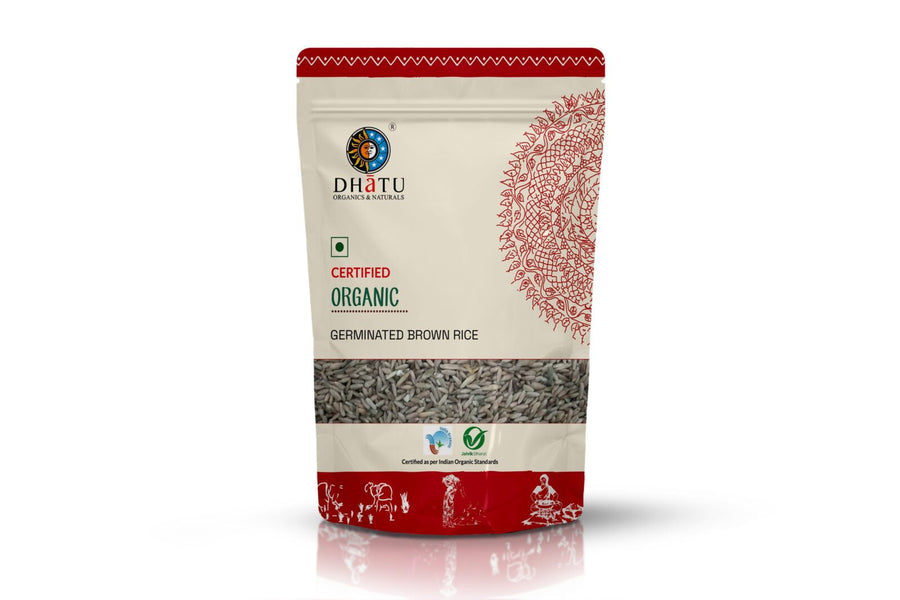
GABA Rice · Germinated Brown Rice
10× more GABA than regular brown rice — softer texture, lower GI
Germination activates enzymes inside the grain that convert glutamic acid to GABA (Gamma-Aminobutyric Acid). You get all the fibre and minerals of brown rice, a softer texture than regular brown rice, and a naturally elevated GABA content — without any processing or fortification.
- GABA content increases approximately 10× compared to non-germinated brown rice during sprouting
- Softer and more digestible than regular brown rice — germination partially breaks down the bran layer
- GI of approximately 50, lower than standard brown rice — germination slows glucose release further
Ships within 24 hrs · Free delivery above ₹499 · No additives, no fortification — natural germination
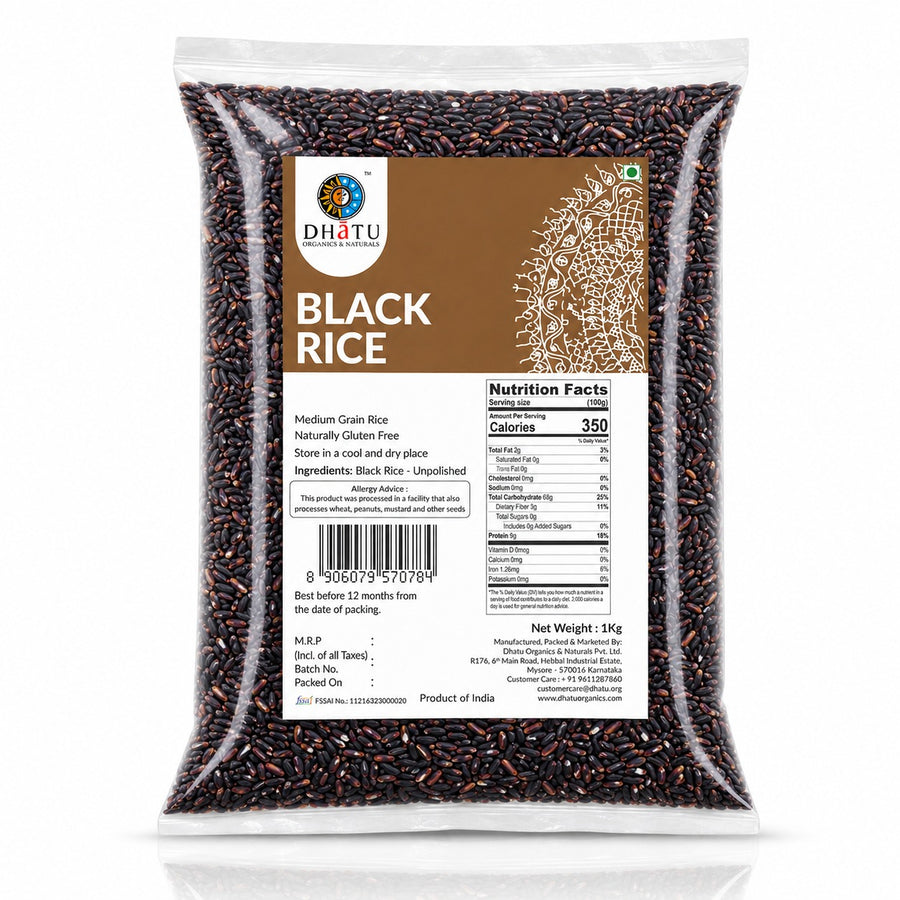
Black Rice · 1kg
Anthocyanins, 8–9g protein per 100g, lowest GI of all five varieties
The deep purple-black colour of black rice is not aesthetic — it comes from anthocyanins in the bran layer, plant compounds studied extensively for their antioxidant properties. This is also why black rice has a higher protein content and one of the lowest glycaemic indices of any rice variety available.
- Anthocyanin content comparable to blueberries — the pigment that makes it black is a plant antioxidant
- 8–9g protein per 100g — significantly higher than white rice at 6–7g
- GI of approximately 42 — the lowest GI of the five varieties on this page, making it the most gradual for glucose release
1 kg — approximately 10 servings · Ships within 24 hrs · Free delivery above ₹499
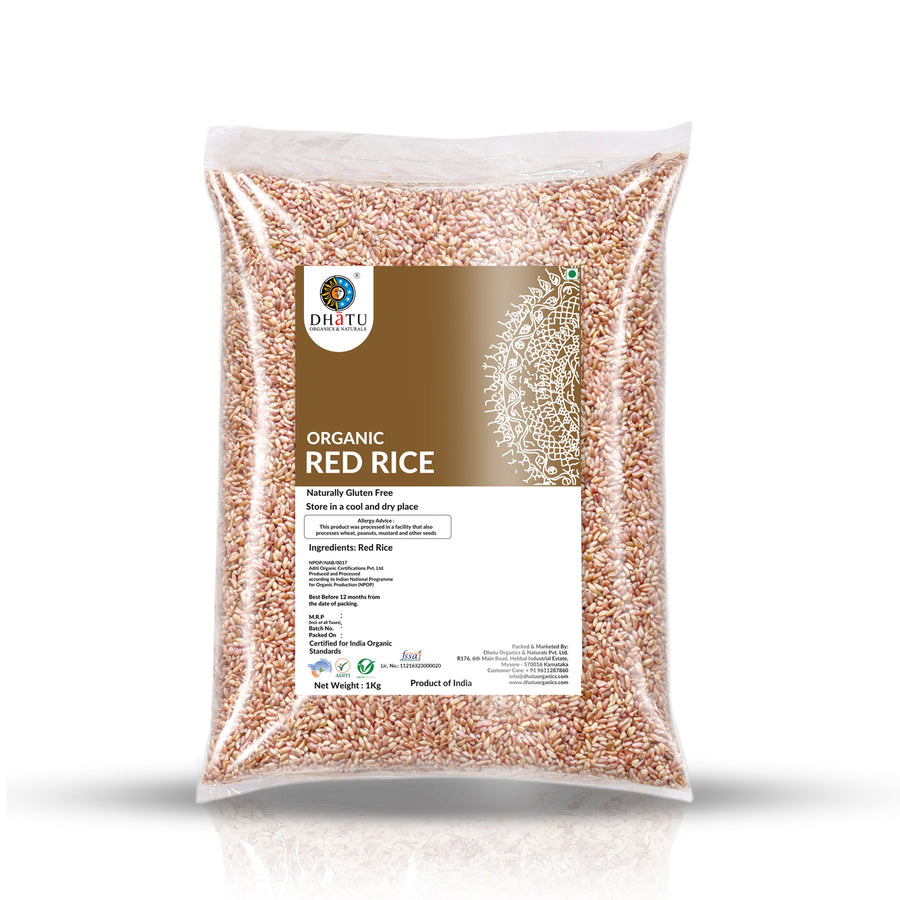
Organic Red Rice · 1kg
Iron-rich, red bran intact — cooks the same as white rice
Red rice gets its colour from proanthocyanidins concentrated in the bran layer. Before polished white rice became the norm, red rice was the staple grain across coastal Karnataka, Kerala, and Goa. Switching back requires no new cooking skill — same cooker, same method, meaningfully better mineral retention.
- Iron content higher than white rice — the bran layer contains most of the mineral content lost in polishing
- Zinc, manganese, and magnesium retained — all three are absent in comparable quantities in polished white rice
- Cooks the same as white rice, holds its texture well in sambar, curd rice, and one-pot dishes
Ships within 24 hrs · Free delivery above ₹499 · NPOP certified organic
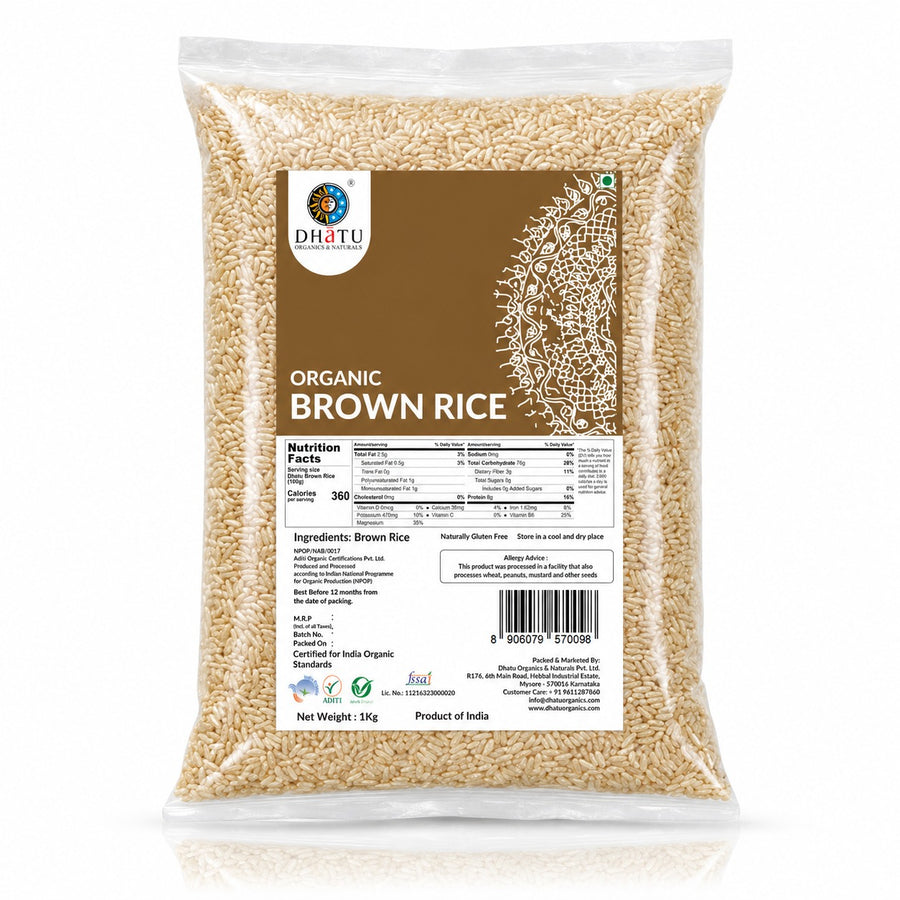
Brown Rice · Sonamasoori 1kg
GI ~53 vs white rice at 70–80 — same cooker, half the glycaemic impact
The difference between white rice and brown rice is a single milling step. That step removes the bran and germ — along with the fibre, B vitamins, and the slower digestion they produce. Sonamasoori brown rice is a naturally lower-starch variety, making the glycaemic difference even more pronounced.
- Fibre: 3.5g per 100g vs 0.4g in white rice — dietary fibre slows the rate of glucose absorption after eating
- GI ~53 vs white rice GI of 70–80 — at 200g daily serving, a meaningful difference in post-meal blood glucose response
- Sonamasoori variety — naturally shorter grain with lower amylose content than long-grain varieties, suitable for everyday South Indian cooking
Choose variety
Ships within 24 hrs · Free delivery above ₹499 · Certified organic, no pesticide residue
The science of rice and blood sugar
Why your choice of rice variety produces a different glycaemic response
Rice is the staple grain for over a billion South Asians. The question is not whether to eat rice — it is which rice, and in what form. The difference between a polished white grain and an intact whole grain is the bran layer: a thin coating that changes how quickly glucose enters the bloodstream after a meal.
What the glycaemic index actually measures
The glycaemic index (GI) measures how quickly carbohydrates in a food raise blood glucose levels compared to pure glucose (GI 100). Foods with GI below 55 are considered low GI. All five rice varieties on this page fall in the low-to-medium GI range. Polished white rice typically scores 70–80 — classified as high GI.
What polishing removes — and why it matters
Milling white rice from brown removes the bran layer and germ. That process strips out: 75% of dietary fibre, 80% of B vitamins, most of the zinc, magnesium, and manganese, and the phytochemicals responsible for the antioxidant properties. What remains is largely starch — which digests quickly and produces a rapid glucose spike.
Heritage varieties vs modern high-yield rice
Modern white rice varieties were bred for yield and cooking speed, not nutritional density. Heritage varieties like Rajamudi, Red Rice, and Black Rice were selected over centuries for flavour and resilience. They tend to have lower amylose content (a form of resistant starch), different grain structure, and a lower glycaemic response — characteristics that have been largely lost in commodity rice.
How these five varieties compare at a glance
Approximate values based on published nutritional research. GI values can vary with cooking method, grain age, and meal composition.
| Rice variety | GI (approx.) | Fibre per 100g | Key distinction |
|---|---|---|---|
| Polished white rice | 70–80 (high) | 0.4g | Reference baseline — bran removed |
| 🏺 Rajamudi Rice | ~52 (low) | ~2.8g | Heritage Karnataka variety, earthy flavour |
| 🌱 GABA Rice (Germinated) | ~50 (low) | ~3.5g | 10× higher GABA, softer than regular brown |
| 💜 Black Rice | ~42 (low) | ~3.4g | Highest anthocyanin content, premium flavour |
| ❤️ Red Rice | ~55 (low–med) | ~2.0g | High iron, traditional South Indian staple |
| 🌾 Brown Rice (Sonamasoori) | ~53 (low) | ~3.5g | Most familiar switch from white rice, easy to cook |
GI values from published peer-reviewed research. Cooking method, grain-to-water ratio, cooling, and reheating all affect the final GI of a cooked rice serving. Values shown are for freshly cooked rice eaten at a standard 150g serving.
Questions people ask before switching to whole-grain rice
Which of these rice varieties is best for someone managing blood sugar or diabetes?
All five varieties have a lower glycaemic index than polished white rice, so any of them represents a meaningful dietary improvement for blood sugar management compared to the standard supermarket staple. Black rice (GI ~42) has the lowest GI of the group. GABA rice and brown rice are the closest in taste and texture to regular white rice, making them the easiest transition. Red rice and Rajamudi have the most distinctive flavour and work best in traditional South Indian cooking. We recommend starting with the variety closest to your current taste preference — the best switch is the one you'll maintain. Please consult your dietitian or doctor for personalised dietary guidance.
Does switching to brown or whole-grain rice require a different cooking method?
Not significantly. Red rice, Rajamudi, and brown rice all cook in a standard rice cooker or pressure cooker using the same absorption or open-pot method as white rice. The key differences: (1) whole-grain varieties typically need 5–10 minutes more cooking time than polished white rice; (2) soaking for 30 minutes before cooking reduces cooking time and improves texture; (3) the grain-to-water ratio is usually slightly higher — 1:2 to 1:2.5 instead of 1:1.5. Black rice has its own timing — it takes about 35–40 minutes in a pressure cooker. GABA rice cooks most similarly to regular brown rice.
What is GABA rice and how is it different from regular brown rice?
GABA rice is brown rice that has been germinated (sprouted) before drying. Germination activates enzymes inside the grain that convert glutamic acid to GABA (Gamma-Aminobutyric Acid), a naturally occurring amino acid. Published studies have found GABA levels in germinated brown rice to be approximately 10 times higher than in regular brown rice. Practically, germination also makes the bran layer softer, which means GABA rice has a more tender texture and milder flavour than standard brown rice — the most common complaint people have about switching. It cooks slightly faster than regular brown rice for the same reason.
Why is black rice so expensive compared to white or brown rice?
Black rice (also called forbidden rice or purple rice) is a pigmented heirloom variety that produces lower yields per acre than modern commercial white rice varieties. It cannot be mass-produced at the same scale as commodity white rice. Its higher protein content, elevated anthocyanin profile, and significantly lower glycaemic index are properties tied directly to the variety — not to any processing step. The price reflects genuinely different nutritional characteristics and a different agricultural supply chain. At ₹310 per kg, one serving of cooked black rice costs roughly ₹25–30.
Can I mix these varieties with white rice to ease the transition?
Yes — mixing is a practical and widely used approach. Starting with a 50:50 blend of brown or red rice with your regular white rice is a common recommendation from dietitians for patients making dietary transitions. It reduces the flavour change while still meaningfully lowering the glycaemic load of the meal. The blend needs slightly more water and slightly longer cooking than pure white rice. Over 2–4 weeks, most households find they can increase the whole-grain proportion as taste preferences adjust.